A wedding guest rarely sets out to cause trouble. More often, it's a missed RSVP, a phone raised at the wrong moment, or a question that should have been asked before the day itself.
The main things not to do at a wedding are bring people who weren't invited, ignore the dress code, arrive late, interrupt the ceremony, make surprise announcements, or post photos against the couple's wishes. Most other etiquette comes down to the same idea: don't create extra work or discomfort for your hosts and fellow guests.
The details aren't identical at every wedding. A formal religious ceremony and a relaxed garden reception may have very different expectations. Start with the invitation, follow the couple's instructions, and use the guidance below when something isn't clear.
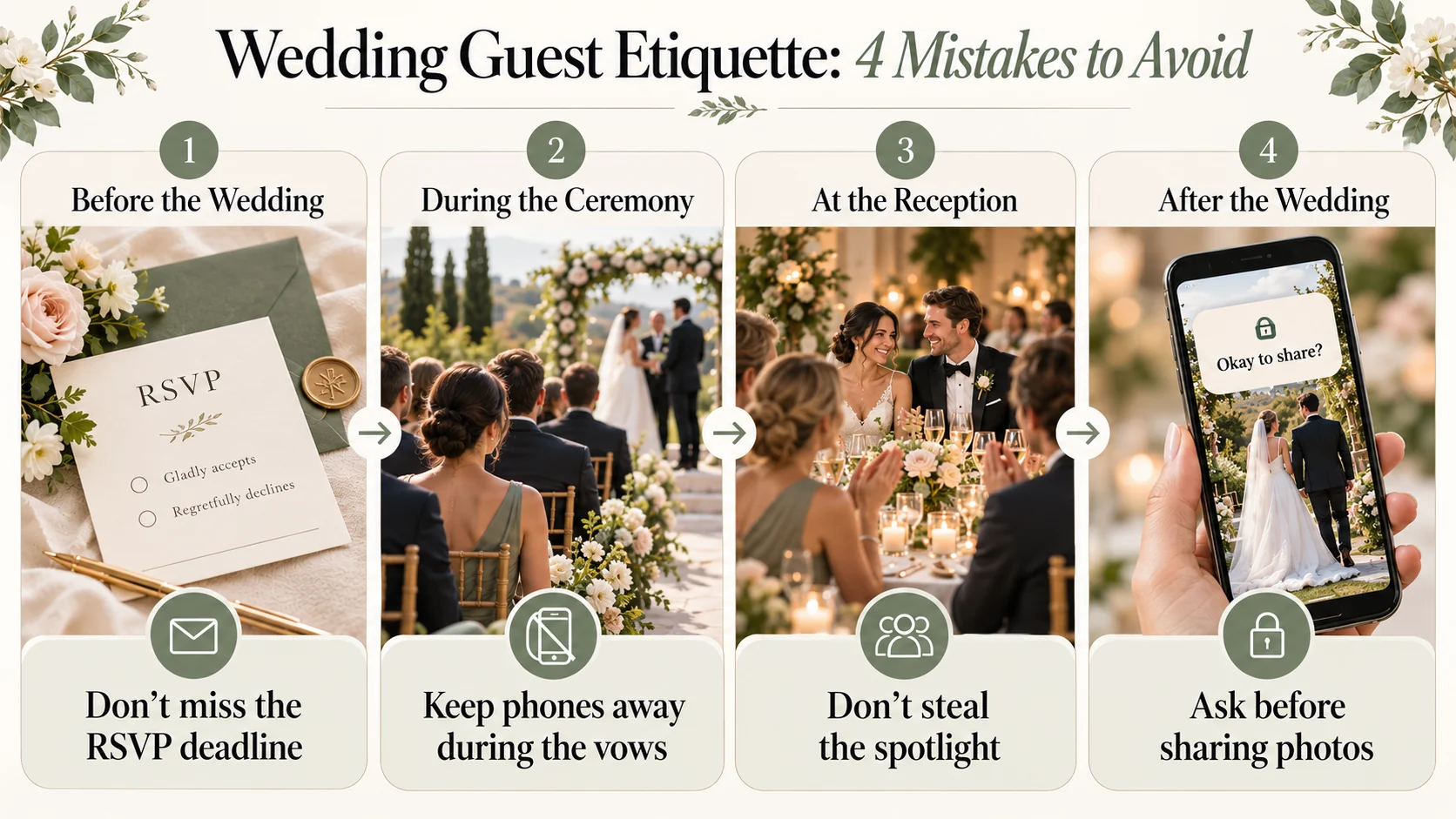
What Not to Do at a Wedding: The Quick Answer
| Avoid | Do instead |
|---|---|
| Missing the RSVP deadline | Reply on time, even if you can't attend |
| Assuming you can bring someone | Check exactly who's named on the invitation |
| Guessing at the dress code | Read the invitation and wedding website |
| Walking in during the vows | Arrive early or wait for an usher's guidance |
| Taking photos during an unplugged ceremony | Put your phone away until photography is welcome |
| Changing seats or making an unplanned speech | Respect the seating plan and reception schedule |
| Posting photos immediately | Check the couple's sharing preferences first |
Here's what each rule looks like in practice, including the occasions when an exception makes sense.
Before the Wedding: Five Mistakes to Avoid
1. Ignoring the RSVP Deadline
A late RSVP doesn't just leave a question mark beside your name. It can affect catering numbers, seating plans and transport arrangements. And if you've already accepted, not turning up without warning may leave the hosts paying for a place they can't fill.
Reply by the date on the invitation, including when your answer is no. If meal choices or dietary information are requested, send those at the same time rather than making someone chase you.
If your plans change, say so promptly. Illness, family emergencies and other unexpected circumstances happen. A brief, apologetic message is far better than silence. You don't need to provide a detailed account of a private situation.
2. Bringing an Uninvited Plus-One or Children
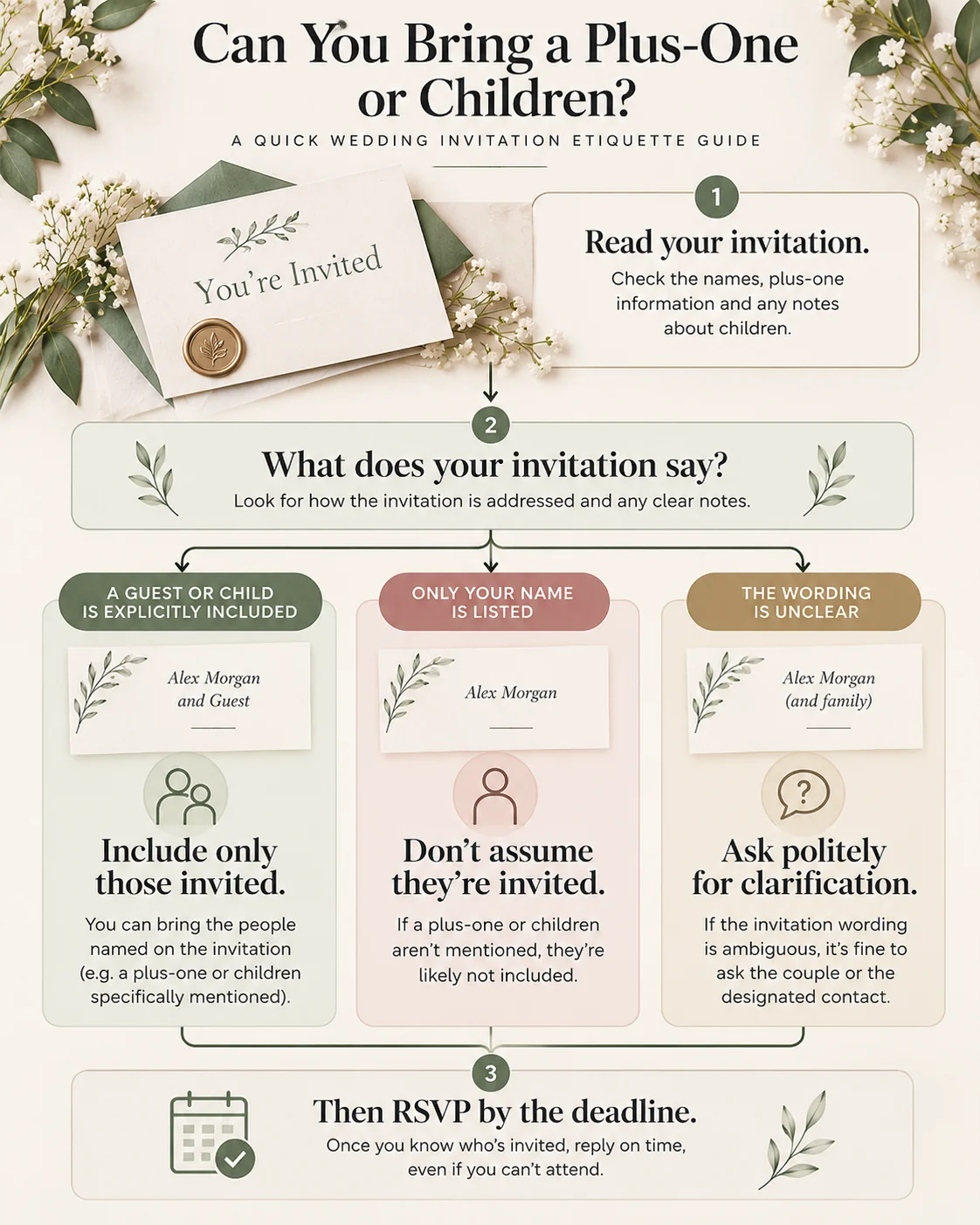
Your invitation tells you who's invited. If it's addressed only to you, don't arrive with a partner, friend or child and assume the venue will find another chair.
The distinction is between clarifying an unclear invitation and asking the couple to change a decision they've already made. If your invitation's wording genuinely confuses you, it's fine to ask politely. If the answer is no, accept it.
This is a sensitive topic for many couples. In Zola's 2026 First Look Report, 78% of surveyed couples said asking for a plus-one when one hadn't been offered was unacceptable. That doesn't mean you must guess when invitation details are ambiguous; it means you shouldn't pressure the hosts for an extra place.
Can't attend without childcare or a companion? Declining is a reasonable choice.
3. Not Reading the Wedding Details
It's easy to focus on the date and overlook the details that make the day run smoothly. A ceremony might be at one venue and dinner at another. Parking may be limited. An outdoor celebration might require shoes that work on grass or gravel.
Before you leave home, check the invitation or wedding website for:
- The ceremony start time and when guests should be seated
- Ceremony and reception addresses
- Parking, shuttle or transport instructions
- Dress code and any cultural or religious guidance
- Meal selections, accessibility information and photography requests
If something important is missing, contact the designated guest contact or coordinator in advance. The couple probably has enough questions to answer on the morning of the wedding.
4. Wearing Something That Ignores the Dress Code
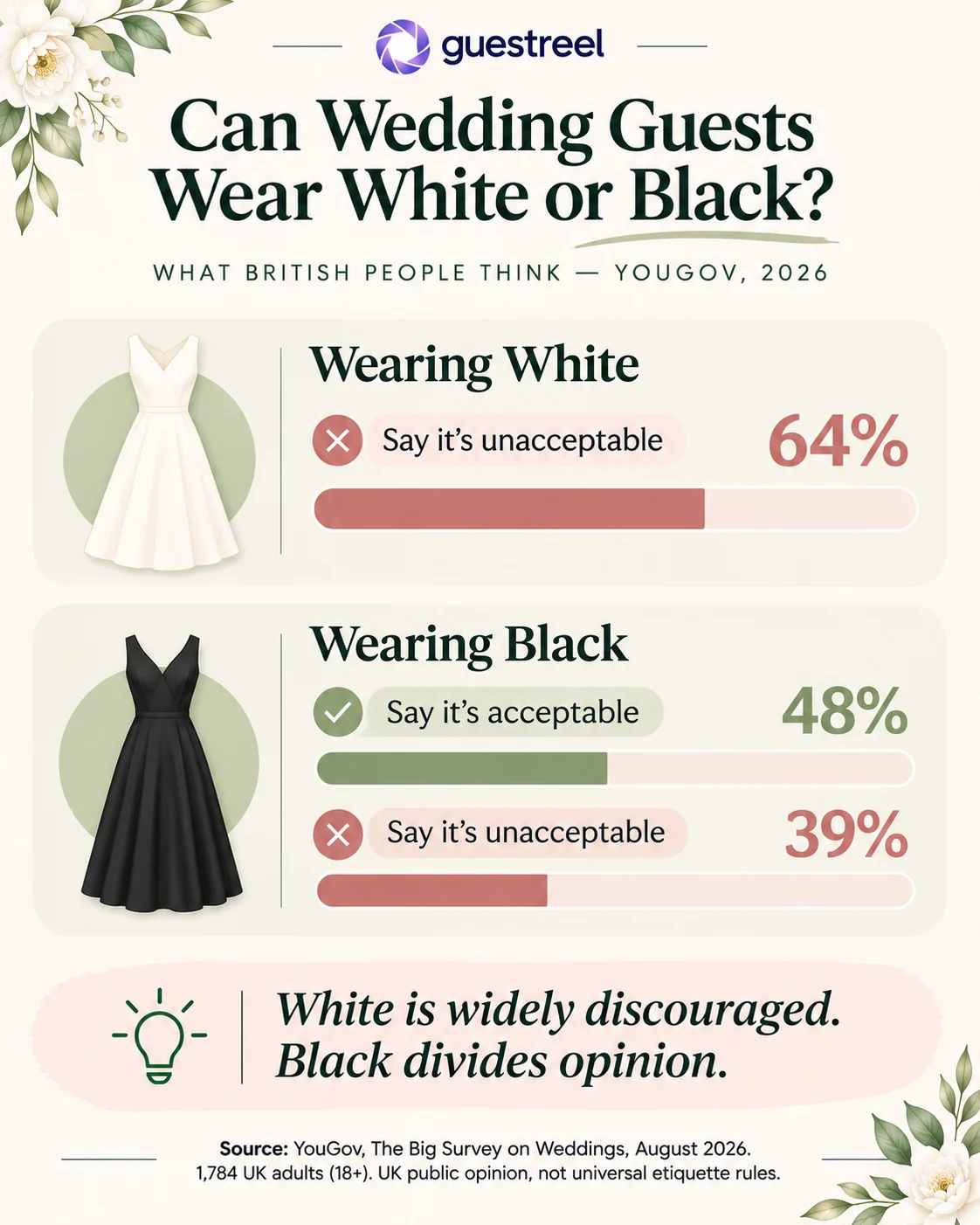
At many Western weddings, a predominantly white, ivory or bridal-looking outfit is best avoided unless the couple has specifically requested it. But the idea that every colour has a universal meaning is misleading. Wedding customs vary, and the invitation matters more than an internet rule.
In a YouGov survey of 1,784 UK adults conducted in August 2026, 64% thought it was unacceptable for a guest to wear a white dress. Opinion on black was far more divided: 48% considered a black dress acceptable, compared with 39% who did not. Those results describe British attitudes, not the rules for every culture or couple.
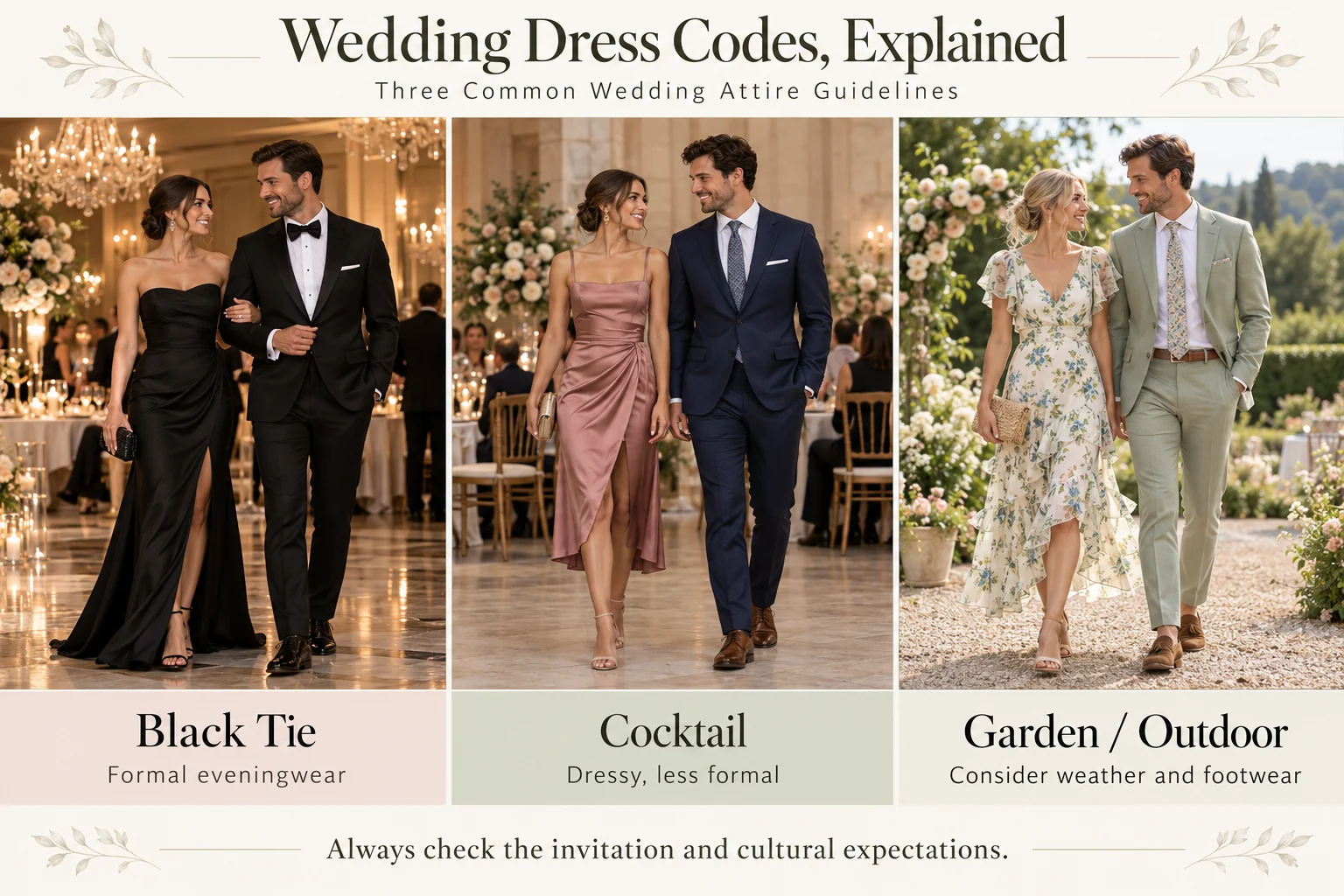
For clothing, take the stated formality seriously. Black tie usually calls for formal eveningwear; cocktail attire is dressy but less formal; a casual dress code still deserves a considered outfit. If the ceremony is religious or culturally specific, check whether there are expectations around covered shoulders, headwear or other details.
When in doubt, choose something appropriate to the setting rather than something that will need explaining when you arrive.
5. Treating the Gift Registry as a Requirement, or Ignoring the Couple's Wishes
A registry is a useful clue about what the couple would enjoy, not a shopping order. You can choose something else, contribute to a cash fund if one is offered, or honour a request for no gifts.
The Emily Post Institute's wedding gift advice makes two points worth remembering: you aren't required to buy from the registry, and you don't need to spend the equivalent of your reception meal.
Give within your means. Don't put yourself under financial pressure to meet an imagined price tag. And if you're considering a large physical gift, check whether the couple would prefer it delivered rather than carried home from the venue.
During the Ceremony: Four Mistakes to Avoid
6. Arriving Late and Walking Straight In
Few things draw attention quite like the doors opening during the vows. Even if the delay was unavoidable, walking down the aisle while everyone is looking forward adds another distraction.
Unless the invitation says otherwise, aim to be at the venue 15 to 30 minutes before the ceremony. Build in time for parking and finding the right entrance.
If you do arrive late, look for an usher or coordinator. They may ask you to wait for a suitable moment or use a side entrance. Follow their lead instead of trying to slip into a front-row seat.
7. Taking Photos During an Unplugged Ceremony
An unplugged ceremony means the couple has asked guests to keep phones and cameras away. Sometimes that request covers only the vows; sometimes it covers the entire ceremony.
The reason may be privacy, a clear view for the photographer, or simply a wish for everyone to be present. Whatever the motivation, it's their choice. Put your phone on silent and leave it in your bag or pocket until photography is allowed.
This doesn't mean you can never take a wedding photo. Reception candids may be welcomed even when ceremony photos aren't. Check which moments are off-limits instead of assuming one rule applies all day.
If you need to use your phone for an urgent health or safety reason, deal with the need discreetly. Essential care takes precedence over etiquette.
8. Getting in the Photographer's Way
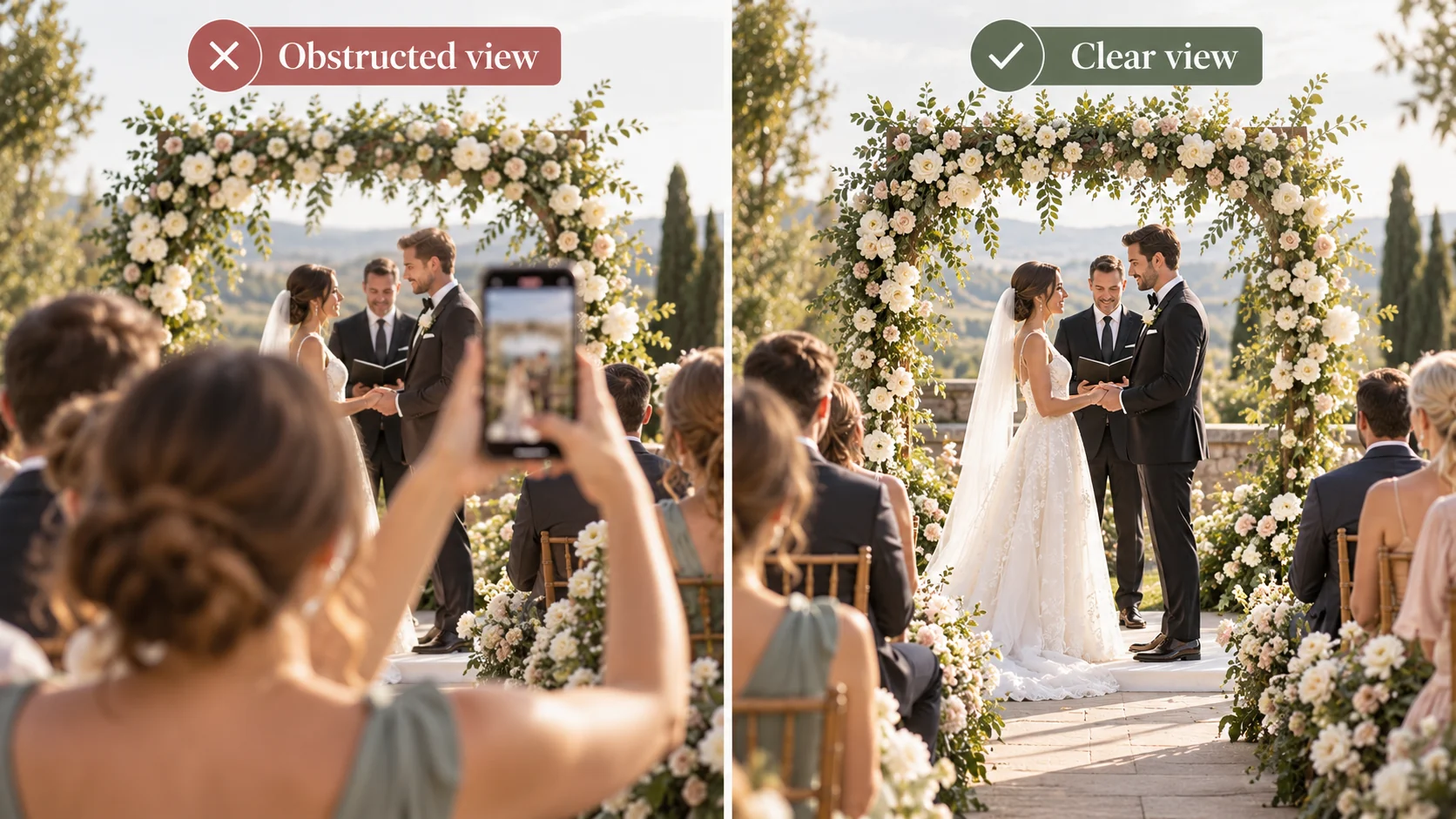
It's understandable to want a picture of the processional or the first kiss. But stepping into the aisle, holding a phone above everyone's heads, or asking for a separate portrait while the photographer is working can spoil the view for other guests and interfere with the scheduled coverage.
Stay in the designated guest areas during key moments. If formal family photographs are underway, wait until the photographer invites additional people into the frame. You can capture candid moments later when it's appropriate.
Guests can catch lovely moments the photographer doesn't see. Just leave the aisle and formal portraits to the person hired to cover them.
9. Talking Through the Ceremony or Making Jokes at the Wrong Moment
A quiet aside during the processional can be much louder than you think, especially at an intimate ceremony. Keep conversations for before or after the service, and don't interrupt readings, vows, prayers or other meaningful moments.
You may be unfamiliar with some religious or cultural traditions. That's fine. Listen to the officiant's instructions, observe respectfully, and don't feel you must join in a religious practice that conflicts with your beliefs.
One thing is particularly easy to avoid: don't make a joke about objecting to the marriage. YouGov's 2026 British survey found that 83% of respondents considered a joking objection unacceptable. There's no need to test how the room would react.
At the Reception: Seven Mistakes to Avoid
10. Switching Seats Without Asking
A seating plan might take family relationships, accessibility, meal choices and table capacity into account. Moving place cards because you'd rather sit with friends can leave another guest without the seat they expected.
Follow the assigned table and seat, if one is specified. If you have a genuine problem, such as an accessibility need or a serious conflict, ask the coordinator to help. Don't rearrange the table yourself.
11. Giving a Surprise Speech or Making a Big Announcement
A microphone isn't an open invitation. Toasts are often timed around dinner and other events, so an unexpected speech can throw off the schedule as well as put the couple on the spot.
The same goes for proposing to your partner or revealing major personal news at someone else's wedding. Unless the couple has clearly agreed in advance, save that moment for another day.
In YouGov's 2026 survey of UK adults, 73% considered an uninvited speech unacceptable and 75% felt the same about a wedding proposal by a guest. A private congratulations or a thoughtful card is a much better place for your personal message.
12. Drinking Too Much, or Pressuring Anyone Else to Drink
Enjoy the bar if you want to, but know your limits. Being the guest who needs rescuing, starts an argument or makes others uncomfortable isn't a memorable contribution to the evening.
Eat, drink water and arrange safe transport. Just as importantly, don't quiz people who choose not to drink. Nobody owes you an explanation about their health, religion, pregnancy, or personal preferences.
13. Complaining About Every Detail
Maybe the music isn't to your taste. Maybe you would have chosen different flowers. Neither observation needs to become a running commentary at the table.
There's a difference, though, between criticising personal choices and raising a genuine problem. If a meal contains an allergen, someone is being harassed, or a walkway is unsafe, speak up. Find a coordinator or appropriate staff member rather than leaving an urgent concern unaddressed.
A considerate guest doesn't pretend everything is perfect. They know which problems need action and which opinions can wait.
14. Keeping the Couple in a Long Conversation
You may have travelled a long way to celebrate, and of course you'd like a few minutes with the newlyweds. But they may be juggling dinner, family photographs and conversations with dozens of other guests.
Say congratulations when there's a natural opening. If they're clearly trying to move on, let them. Save longer stories for another occasion.
If there's a wedding guestbook, leave a message. It can be a lovely way to say something personal without asking the couple to stop what they're doing.
15. Being Rude to Staff or Ignoring Boundaries
Caterers, venue staff, photographers and coordinators aren't there to absorb a guest's frustration. A polite request will usually achieve more than a public complaint.
Stay out of staff-only areas. Don't interfere with lighting, sound equipment or the DJ's setup, and respect venue instructions about smoking, candles and restricted spaces. Likewise, don't pressure anyone to dance, pose for a photo or take part in an activity they don't want to do.
The celebration should feel welcoming for the people working there as well as the people attending.
16. Leaving at an Awkward Moment Without Thinking Ahead
You don't have to stay until the last song. Sometimes you have an early journey, children waiting at home or simply need to leave. What matters is how you handle your departure.
If possible, avoid walking out during a speech, the first dance or another key moment. Wait until there's a natural break. You don't need to interrupt the couple's dinner to announce that you're going; a quiet goodbye to a family member or a message the next day is enough.
If you feel unwell or unsafe, leave when you need to. Your wellbeing comes first.
During and After the Wedding: Photos and Privacy
17. Posting Wedding Photos Without Checking First
Being allowed to take a photo doesn't automatically mean you're free to publish it. The couple may want to announce their marriage themselves, keep children out of public posts, or avoid sharing particular family moments.
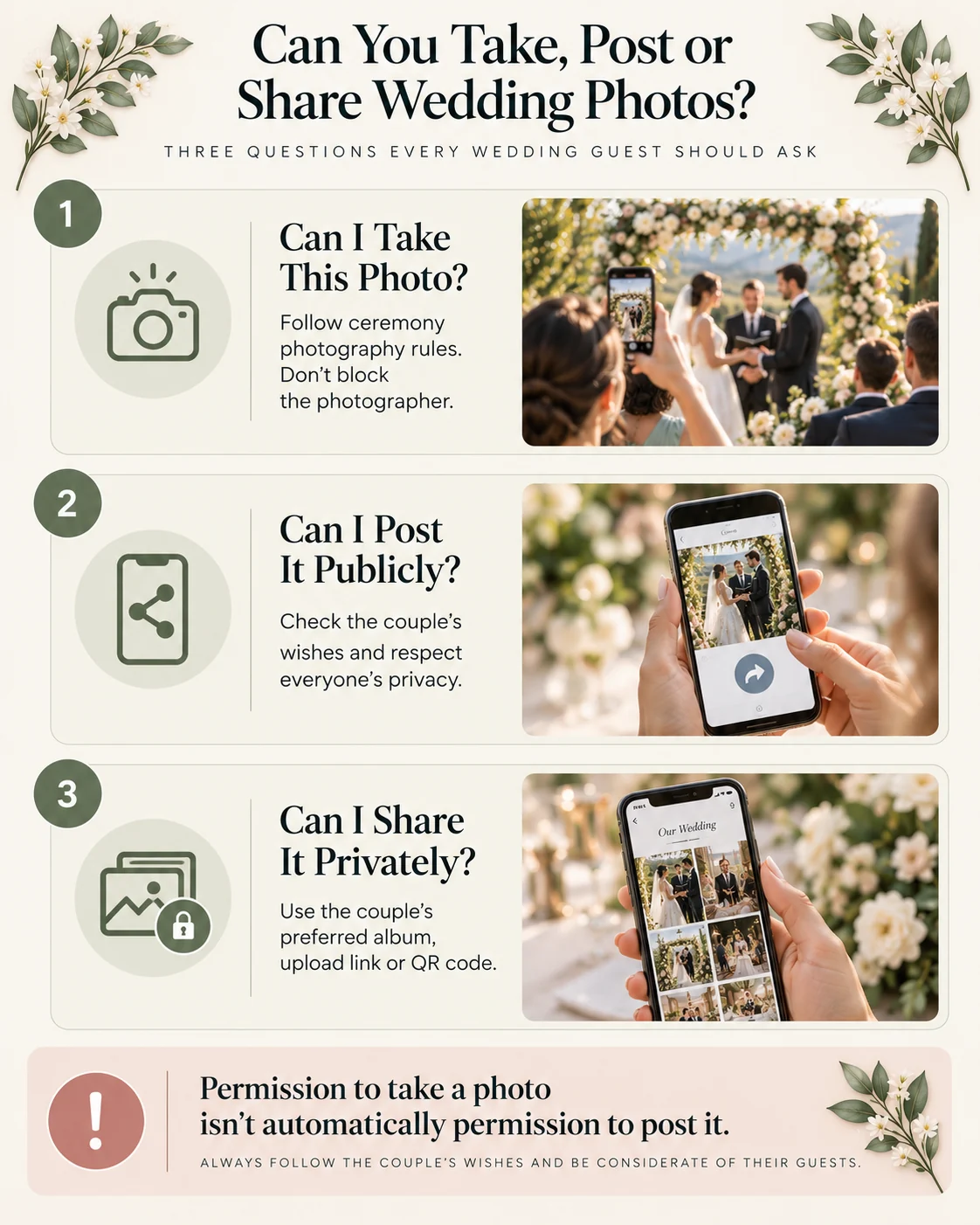
Check the wedding website or any signs about photography. If you're unsure, ask before posting. Be especially careful with images of guests who may not want to appear publicly.
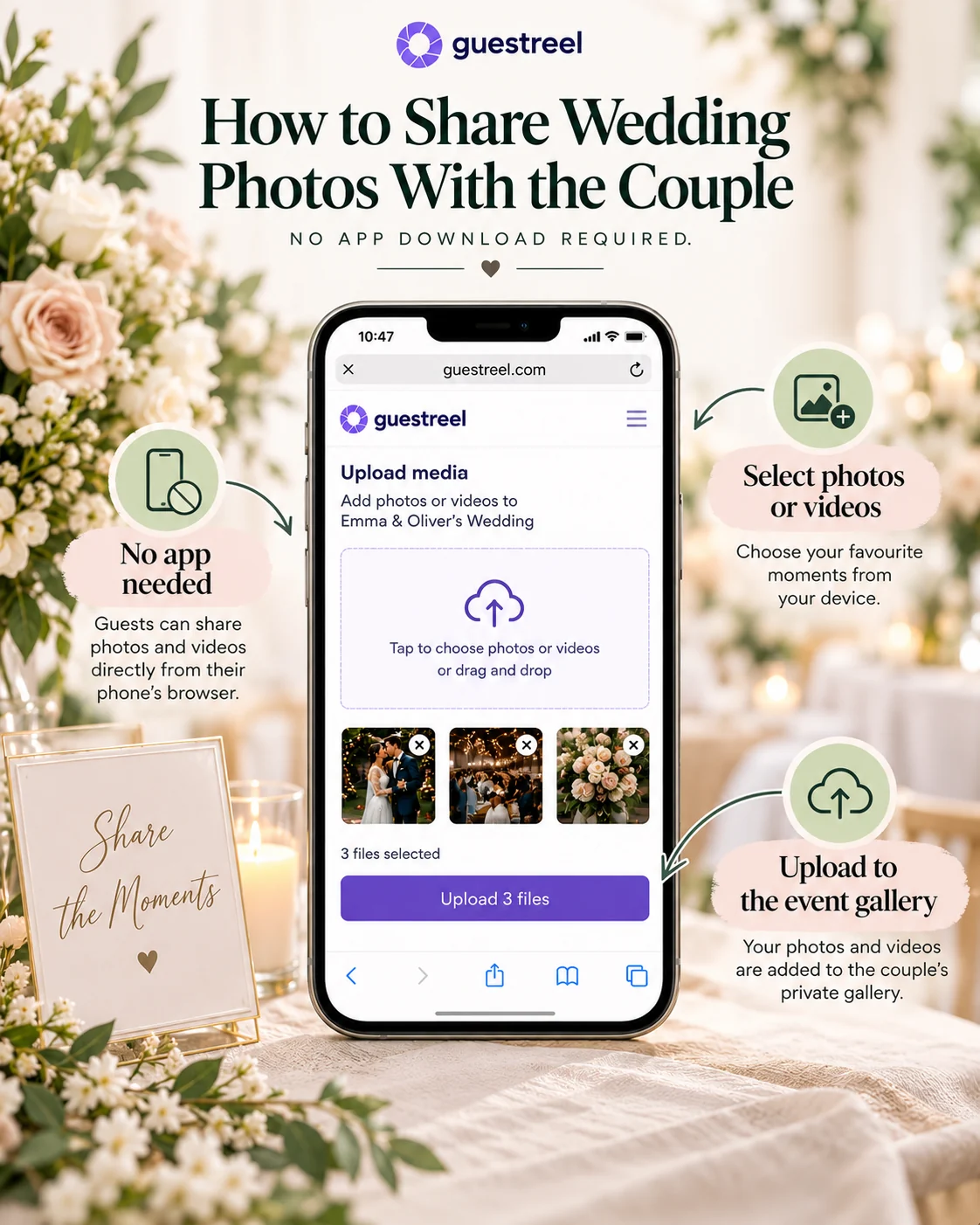
Private sharing and public posting are different. If the hosts have set up a way of collecting wedding photos from guests, such as a shared album, upload link or QR code, use that to send your pictures without putting them on social media. For instance, Guestreel's QR code photo sharing lets guests upload photos and videos through their browser to the host's event gallery without needing an app or account.
And if you're waiting for the photographer's edited gallery, give the couple time. They may not have received it themselves.
Made a Mistake? Here's How to Handle It
Even considerate guests get something wrong occasionally. What usually matters next is whether you handle it quietly and promptly.
| If this happens... | A sensible response |
|---|---|
| You missed the RSVP deadline | Contact the hosts promptly; don't assume your place is still available |
| You can no longer attend | Tell the hosts as soon as possible, with a brief apology |
| You arrive after the ceremony starts | Wait for an usher or coordinator to guide you |
| Your seat or meal creates a genuine problem | Speak discreetly to the appropriate staff member |
| You post a photo the couple wanted private | Remove it promptly and apologise |
| You say something thoughtless | Acknowledge it briefly; avoid demanding reassurance |
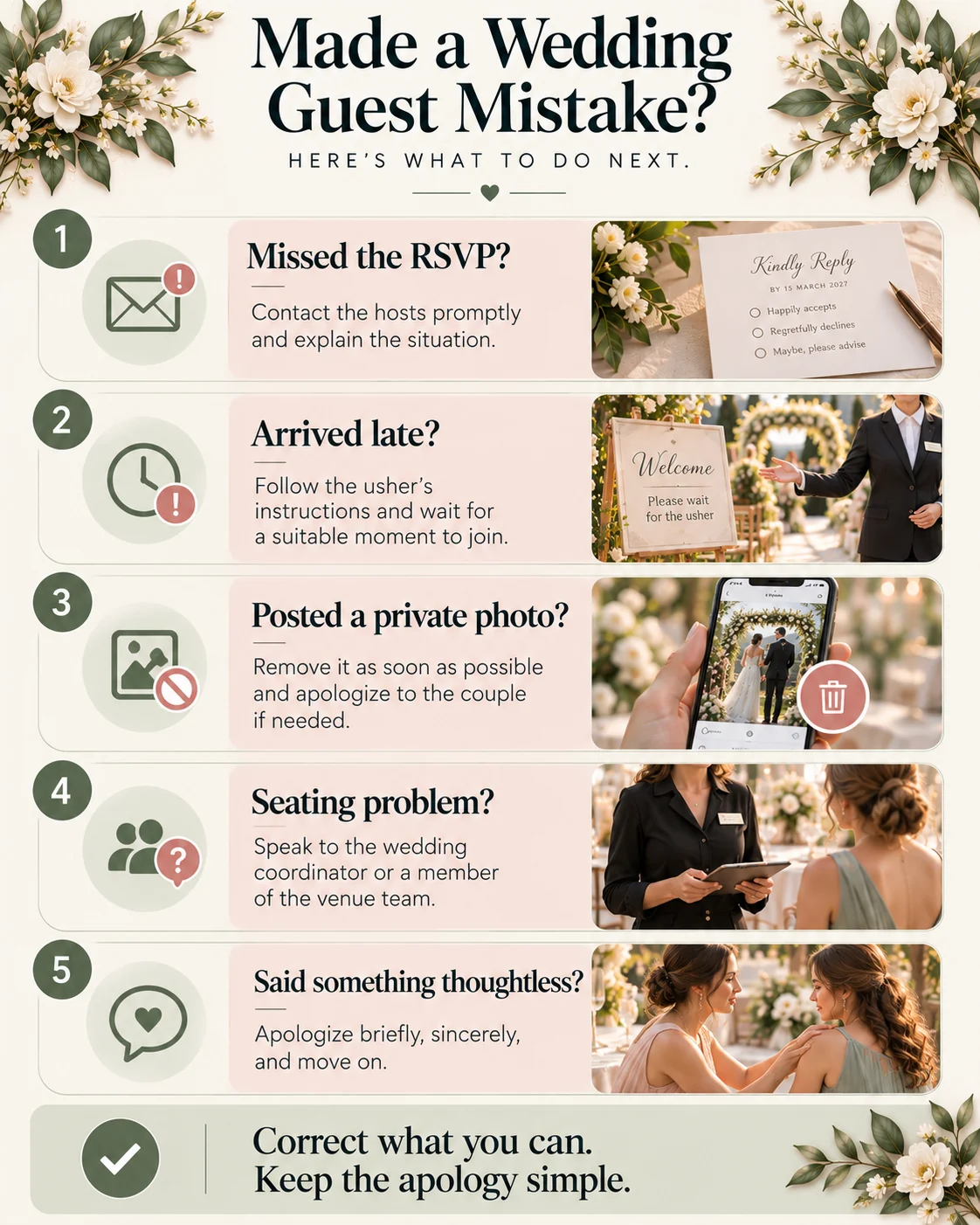
A good apology needn't become a speech. "I'm sorry, I didn't realise you wanted those photos kept private. I've taken the post down" is clear, specific and gives the other person room to move on.
When the Usual Wedding Etiquette Rules Don't Fit
Etiquette isn't a reason to ignore an urgent medical need, stay in an unsafe situation or hide an accessibility problem. If you need to step outside, request a suitable seat or speak to staff about a safety concern, do so.
Cultural context matters too. A colour considered inappropriate at one wedding might be encouraged at another. Expectations around gifts, clothing, ceremony participation and photography can vary between families and traditions. If you're unfamiliar with the celebration, read the guidance provided and ask respectful questions ahead of time.
A useful rule: follow the couple's reasonable, stated preferences, without sacrificing anyone's safety, dignity or essential needs.
A Last-Minute Wedding Guest Checklist
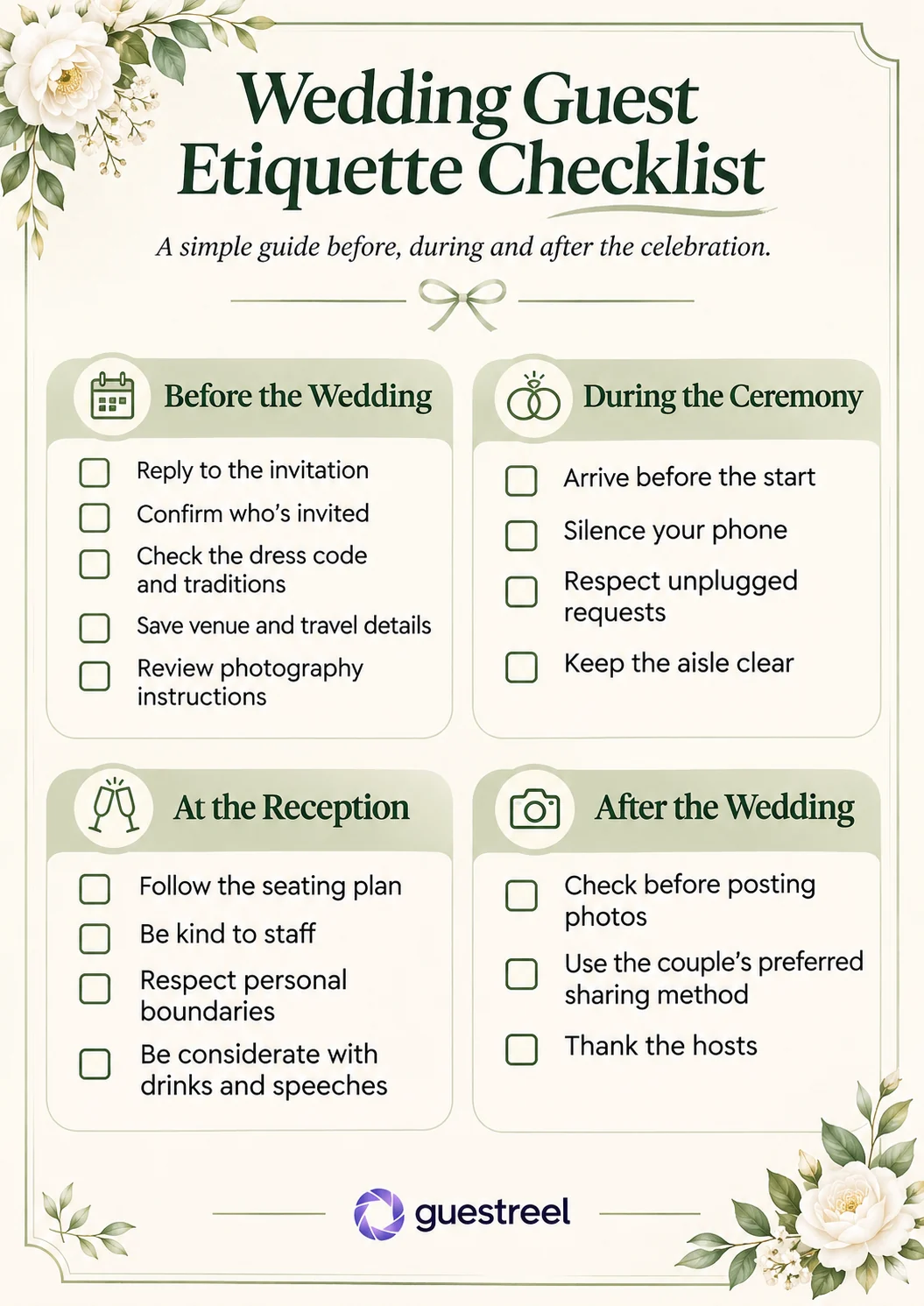
Before heading out, check that you've:
- RSVP'd and confirmed who's invited
- Read the dress code and any cultural guidance
- Checked both venue addresses and your route
- Allowed enough time to arrive before the ceremony
- Reviewed any phone or social media requests
- Sorted your gift or card, if you're bringing one
- Saved the details for a coordinator or guest contact, if provided
At the wedding, you don't need to keep checking a rulebook. Be present, pay attention to the schedule, treat people kindly, and ask discreetly when something matters.
One Rule Covers Most of Them
You don't have to know every wedding tradition to be a good guest. Read the details, respect the people around you, and use your judgement when plans change. The goal isn't perfect etiquette. It's to help the couple enjoy the day, and to have a good time celebrating with them.
Frequently asked questions
Can you wear black or red to a wedding?
Often, yes. Both colours are common at many modern Western weddings, but traditions and dress codes differ. Check the invitation and consider any cultural or religious expectations. The more important question is whether your outfit fits this wedding, not whether the colour is universally allowed.
Is it rude to wear jeans to a wedding?
At a formal or cocktail-attire wedding, jeans generally don't meet the dress code. At an explicitly casual event, they may be fine. Look for the wording on the invitation and consider the venue; "casual" doesn't always mean everyday clothes.
Is it rude to decline a wedding invitation because of cost?
No. Travel, accommodation and childcare can make attendance expensive. Reply by the deadline, thank the hosts for inviting you, and decline without feeling obliged to give a detailed financial explanation.
Do you have to dance at a wedding?
No. You're welcome to enjoy the music from your seat, chat with other guests or step outside for a break. Joining in can be fun, but it should be a choice. It's also good etiquette not to pressure someone else to dance.
What if you're invited to the reception but not the ceremony?
Attend the part of the wedding specified on your invitation. Some couples have small or private ceremonies and larger receptions. There's no need to treat a reception-only invitation as an insult; just RSVP for the event you've been invited to.
Written by Linda DoWrites Guestreel’s planning guides.