Wedding Planning Checklist & Timeline: What to Do and When
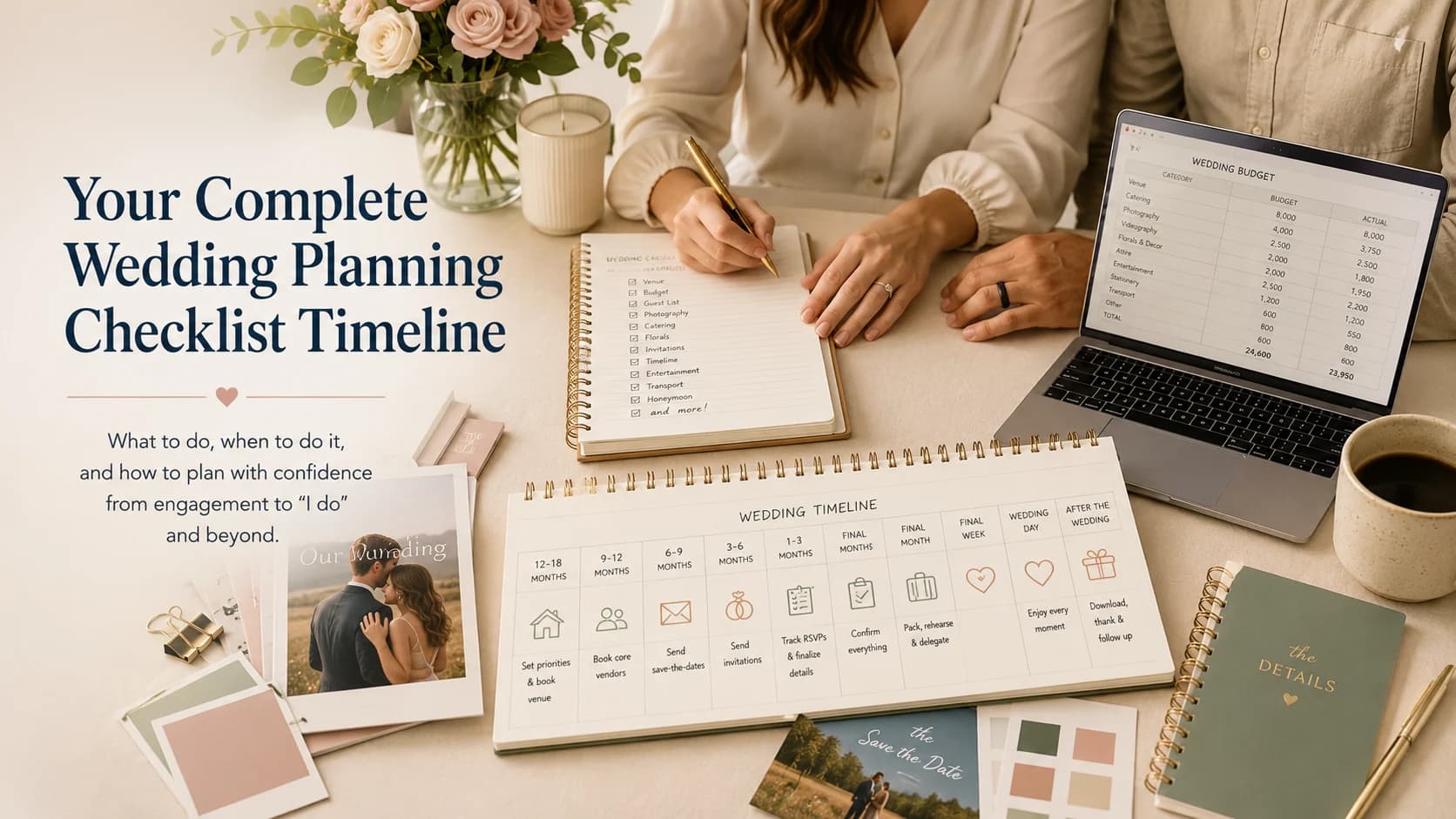
Planning a wedding becomes much easier when you know what needs to happen next.
A wedding planning checklist timeline organizes every major decision, booking, payment, and final detail according to when it should be completed. Instead of trying to plan the entire celebration at once, you can focus on the tasks that matter most at your current stage.
Many couples plan their wedding over approximately 12 months, but there is no single correct schedule. A smaller or simpler wedding may come together in a few months, while a destination wedding or celebration at a highly sought-after venue may require considerably more time.
Use this guide as a flexible framework. Move tasks forward when availability is limited, combine steps when your engagement is shorter, and remove traditions that do not matter to you.
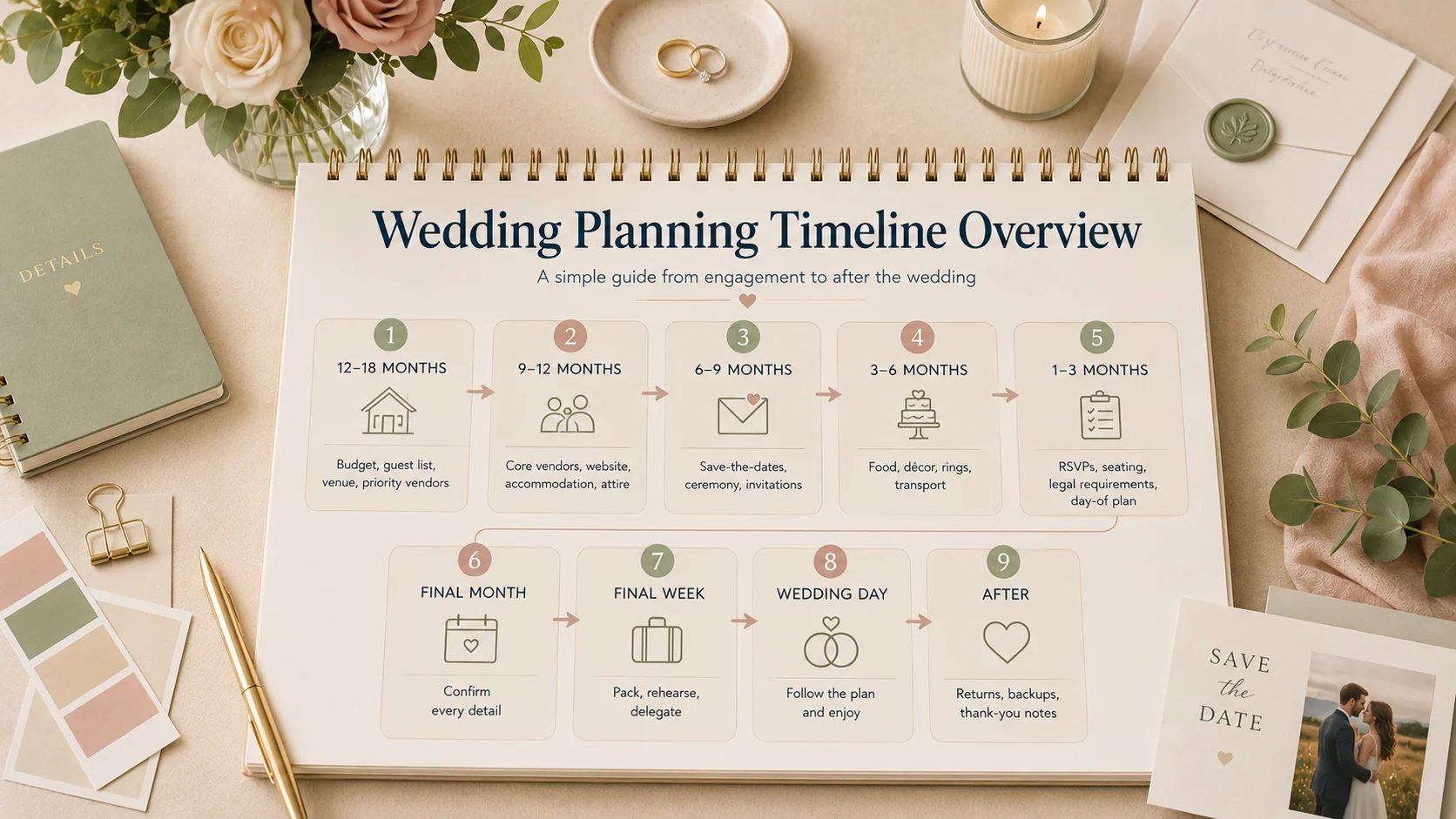
Wedding Planning Timeline at a Glance
| Time before the wedding | Main priorities |
|---|---|
| 12–18+ months | Set priorities, establish a budget, draft the guest list, choose a date range, book the venue, and secure priority vendors |
| 9–12 months | Complete the core vendor team, create the wedding website, arrange accommodation, and begin attire shopping |
| 6–9 months | Send save-the-dates, book remaining vendors, plan the ceremony, and begin invitation design |
| 3–6 months | Send invitations, finalize food and décor, arrange transport, buy rings, and plan guest communications |
| 1–3 months | Track RSVPs, create the seating plan, confirm legal requirements, and build the wedding-day timeline |
| Final month | Confirm guest numbers, vendors, payments, signage, responsibilities, and backup plans |
| Final week | Pack, rehearse, distribute final information, and hand responsibility to your coordinator or trusted contacts |
| Wedding day | Follow the schedule, delegate problems, and enjoy the celebration |
| After the wedding | Return rentals, collect media, back up files, send thank-you notes, and follow up on vendor deliverables |
What Is a Wedding Planning Timeline?
A wedding planning timeline is a chronological schedule of the tasks a couple needs to complete before, during, and after their wedding. It organizes decisions such as budgeting, booking vendors, sending invitations, confirming logistics, and preparing for the wedding day according to when they should happen.
A useful timeline helps you understand:
- Which tasks are urgent
- Which decisions affect later tasks
- Who is responsible for each item
- What can be postponed
- What can be removed entirely
Wedding Planning Timeline vs. Wedding-Day Timeline
| Wedding planning timeline | Wedding-day timeline |
|---|---|
| Covers the months leading up to the wedding | Covers the schedule on the wedding day |
| Tracks bookings, decisions, and deadlines | Tracks arrivals, preparation, ceremony, meals, speeches, and entertainment |
| Used by the couple and planner throughout the process | Shared with vendors, the wedding party, and key family members |
| May begin more than a year before the wedding | Usually begins with the first vendor arrival and ends after cleanup |
The planning timeline helps you create the wedding. The wedding-day timeline helps everyone deliver it.
How to Use This Wedding Checklist
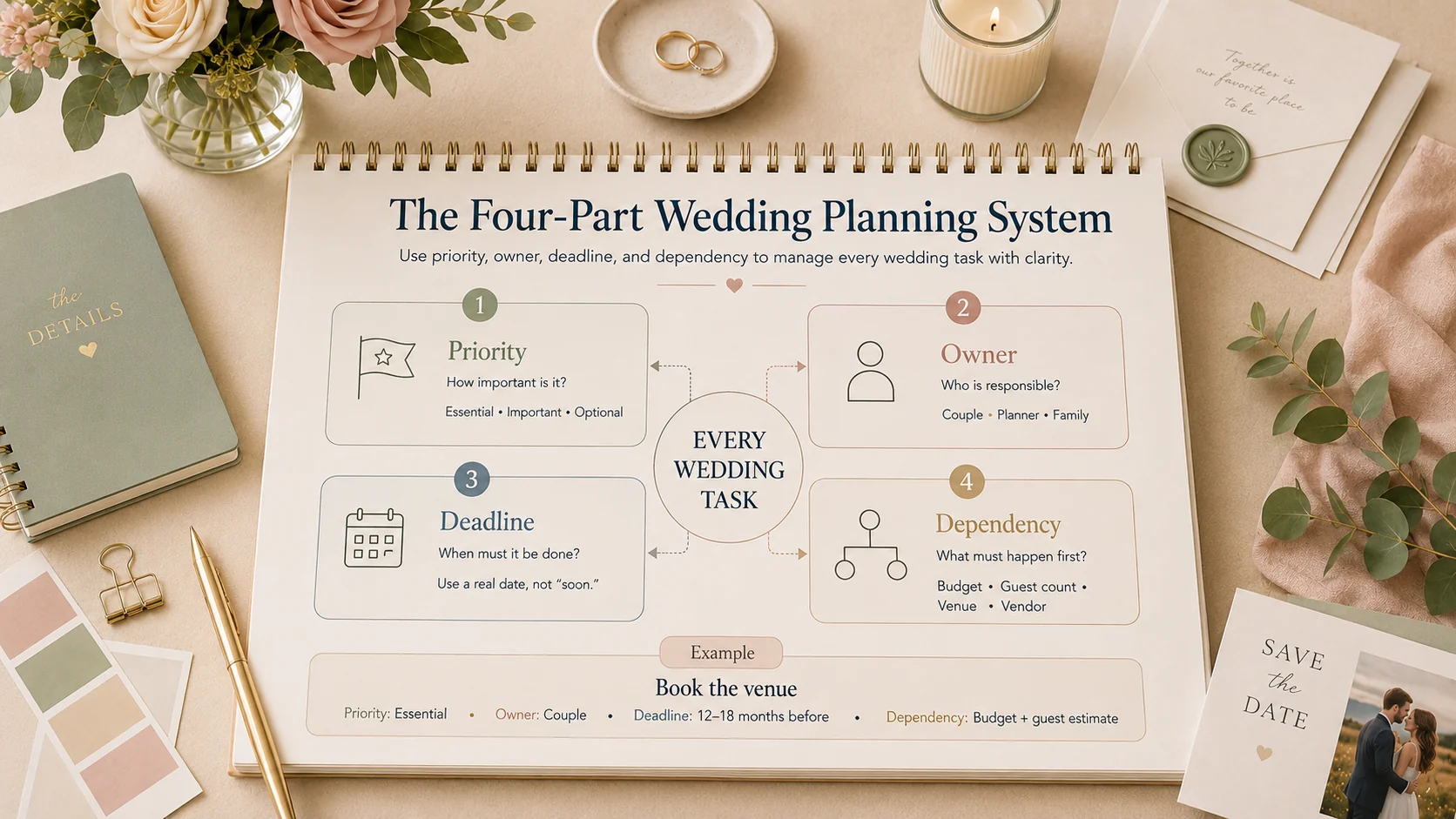
Assign four things to every task:
- Priority: Is it essential, recommended, or optional?
- Owner: Who is responsible for completing it?
- Deadline: When does it need to be finished?
- Dependency: What must happen before this task can begin?
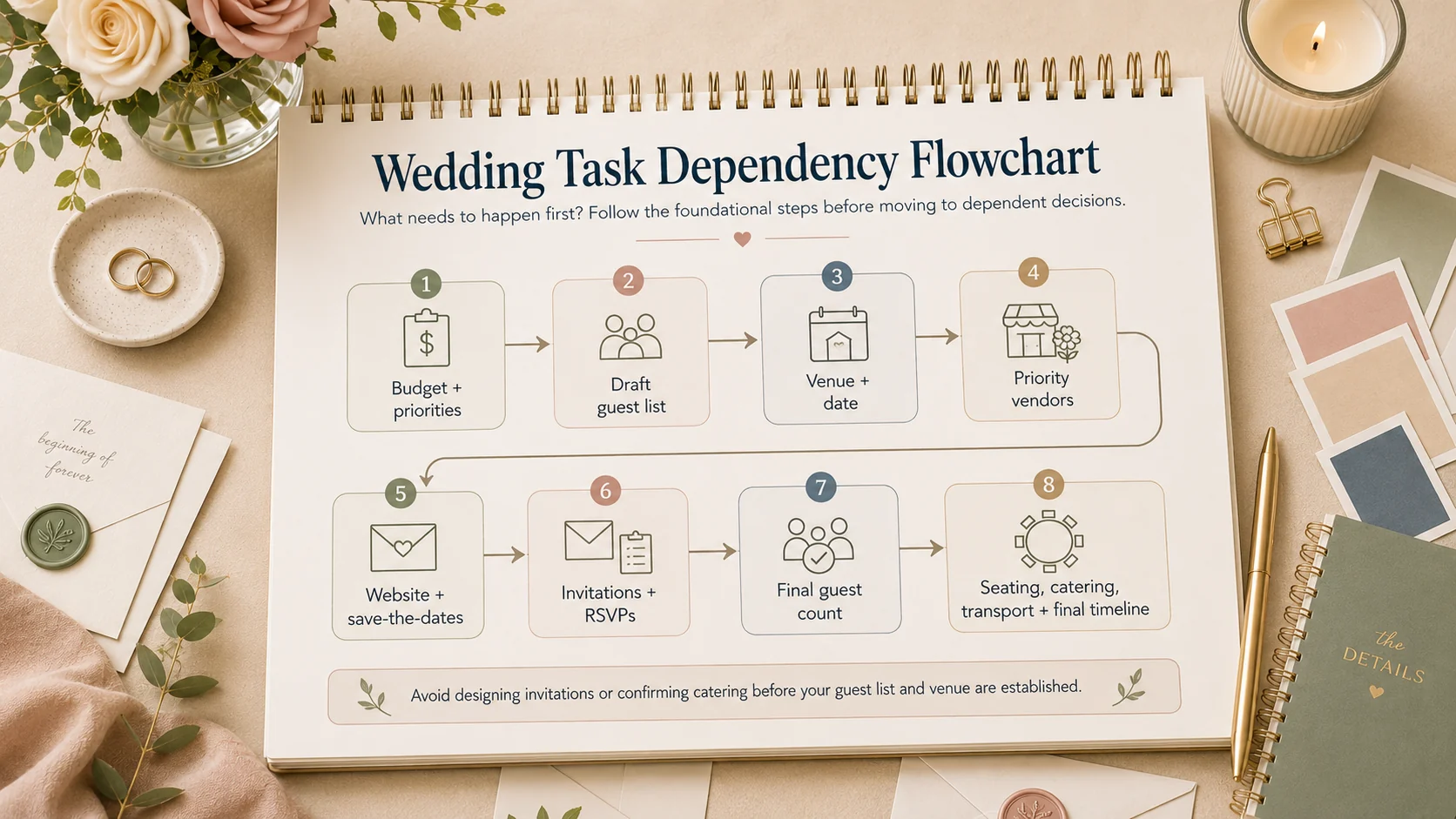
For example, you need a realistic guest estimate before choosing a venue because capacity and catering costs depend on it.
A shared spreadsheet, planning app, or project-management board can help you track owners, deadlines, payments, and status in one place.
First Steps After Getting Engaged
Discuss Your Priorities
Before comparing venues or saving decoration ideas, decide what matters most to both of you.
Consider:
- The experience you want guests to have
- Large celebration or smaller gathering
- Local or destination wedding
- Indoor or outdoor setting
- Formal or relaxed atmosphere
- Traditions you want to keep
- Traditions you are comfortable removing
- Whether food, photography, entertainment, design, or location matters most
Choose three to five shared priorities. Use them to guide later decisions when budget, time, or preferences conflict.
Set a Working Wedding Budget
Determine how much money is available before booking anything. If you are looking for ways to stretch it further, our guide on how to cut wedding costs covers practical savings across every category.
Discuss:
- How much you and your partner can contribute
- Whether family members will contribute
- Whether those contributions come with expectations
- How much contingency money you want to reserve
- Which categories matter most
Track:
- Estimated cost
- Quoted cost
- Deposit
- Remaining balance
- Payment deadline
- Payment status
- Contract link
- Notes
Leave room for delivery fees, taxes, service charges, alterations, overtime, and other expenses that may not appear in the first quote.
Draft the Guest List
Create three groups:
- Must invite
- Would like to invite
- Invite if capacity and budget allow
Your guest count affects the venue, catering, tables, transport, accommodation, invitations, staffing, and overall cost.
Choose a Location and Date Range
Start with a season or range of possible dates rather than one fixed date.
Consider:
- Weather
- Public holidays
- School breaks
- Major local events
- Travel requirements
- Important guest availability
- Venue and vendor availability
Decide Whether You Need a Planner
A full-service planner can help with sourcing, negotiation, design, logistics, and coordination.
A partial planner supports selected parts of the process.
A month-of or wedding-day coordinator usually focuses on final logistics and execution.
A planner may be especially useful when:
- You are planning from another city or country
- The wedding uses several locations
- The venue requires substantial setup
- You are hiring many independent vendors
- Your planning time is limited
- Family expectations are difficult to manage
Create a Shared Planning System
Keep these in one central place:
- Budget
- Guest list
- Vendor contacts
- Contracts
- Inspiration
- Payments
- Tasks
- Ceremony notes
- Wedding-day schedule
Avoid scattering important information across messages, notebooks, and multiple email accounts.
12–18 Months Before the Wedding
Research and Book the Venue
Your venue confirms your date, location, and capacity, so it is often the first major booking. For inspiration, see our outdoor wedding venue ideas.
Confirm:
- Comfortable capacity
- Ceremony and reception options
- Accessibility
- Setup and cleanup times
- Indoor weather backup
- Noise restrictions
- Catering and alcohol rules
- Furniture and equipment included
- Required or preferred vendors
- Parking and transport access
- Nearby accommodation
- Payment schedule
- Cancellation and postponement terms
- Overtime charges
- Insurance requirements
Visit at roughly the same time of day as your planned event when possible.
Confirm the Date
Do not announce or print the date until the venue agreement is signed and essential ceremony arrangements are confirmed.
Once secured, update:
- Immediate family
- Wedding party
- Planner
- Priority vendors
- Shared calendar
- Wedding website draft
Review Contracts and Insurance
Each vendor agreement should clearly explain:
- Services included
- Deliverables
- Setup and finish times
- Payment schedule
- Travel charges
- Overtime
- Cancellation
- Postponement
- Substitutions
- Refund conditions
- Ownership and usage of photos or video
If you are considering wedding insurance, check what is covered, what is excluded, and whether the venue requires liability protection.
Hire Priority Vendors
Depending on your wedding, early bookings may include:
- Wedding planner
- Photographer
- Videographer
- Caterer
- Officiant
- DJ or band
- Rental company
- Wedding content creator
Book according to your priorities and vendor availability rather than following one universal order. Choosing a photographer is one of the most important early decisions — our guide on how to choose a wedding photographer walks through what to look for.
Define the Wedding Style
Agree on a broad direction:
- Formal or relaxed
- Traditional or modern
- Indoor or outdoor
- Minimal or decorative
- Daytime or evening
- One location or several
- Seated meal or informal service
A focused reference board is more useful than hundreds of disconnected inspiration images. If you need a starting point, browse our wedding theme and decor ideas.
Begin Attire Research
Start by:
- Setting an attire budget
- Researching designers and shops
- Booking initial appointments
- Checking production lead times
- Considering the season and venue
- Discussing wedding-party expectations
Check Destination Requirements
For a destination wedding, investigate:
- Passport validity
- Visas
- Legal ceremony rules
- Residency requirements
- Document translation
- Travel insurance
- Vendor payment methods
- Local taxes
- Shipping and customs
- Weather patterns
- Local holidays
Verify legal requirements through the official authority where the ceremony will take place.
9–12 Months Before the Wedding
Complete the Core Vendor Team
Depending on what your venue includes, this may involve booking:
- Photographer
- Videographer
- Caterer
- Florist
- Entertainment
- Officiant
- Rentals
- Hair and makeup
- Transportation
- Cake or dessert supplier
- Lighting or production
- Planner or coordinator
Compare complete proposals rather than headline prices. Check whether staffing, delivery, travel, setup, equipment, and taxes are included.
Create Your Wedding Website
Include:
- Your names
- Wedding date
- City or location
- Schedule when confirmed
- Travel information
- Accommodation
- Dress code
- Accessibility information
- Registry
- FAQs
- RSVP instructions
- Contact method
Keep it mobile-friendly and avoid publishing sensitive information publicly where password protection is available.
Arrange Accommodation and Transportation
For travelling guests, compare:
- Price
- Distance
- Cancellation terms
- Accessibility
- Parking
- Breakfast
- Shuttle availability
- Check-in and checkout times
Plan how guests will travel:
- To the ceremony
- Between venues
- Back to accommodation
- Home after the reception
Confirm capacity, pickup points, departure times, accessibility, and emergency contact details.
Build the Registry
Choose items, experiences, or funds that suit your life together.
Make the registry easy to find through the wedding website, following the etiquette that is appropriate for your culture or region.
Take Engagement Photos
You may use engagement photos for:
- Save-the-dates
- Wedding website
- Guest book
- Signage
- Social announcements
- Personal keepsakes
The session also helps you become more comfortable with your photographer.
Order Long-Lead Attire
Confirm:
- Delivery date
- Alteration schedule
- Accessories
- Shoes
- Undergarments
- Storage
- Collection date
6–9 Months Before the Wedding
Send Save-the-Dates
Save-the-dates are especially important when:
- Guests need to travel
- Accommodation is limited
- The wedding is abroad
- The date falls during a busy season
- The event is on a weekday
- The celebration lasts several days
Include your names, the date, general location, wedding website, and a note that the formal invitation will follow.
Only send them to confirmed guests.
Book Remaining Vendors
Possible remaining vendors include:
- Florist
- Cake or dessert supplier
- Hair stylist
- Makeup artist
- Rental supplier
- Transport provider
- Lighting company
- Stationery designer
- Calligrapher
- Photo booth
- Childcare provider
- Pet attendant
- Live artist
- Wedding content creator
Choose services that support your priorities rather than adding every traditional extra.
Begin Ceremony Planning
Discuss:
- Ceremony length
- Readings
- Music
- Vows
- Cultural or religious traditions
- Participants
- Processional order
- Recessional
- Microphones
- Seating
- Accessibility
- Translation needs
Confirm what the officiant and venue allow. If you are writing your own, our guide on how to write wedding vows can help.
Start Invitation Design
Before approving the design, confirm:
- Names
- Date
- Time
- Venue wording
- Dress code
- RSVP deadline
- RSVP method
- Website address
- Meal-selection requirements
- Additional event details
Order extra copies for mistakes, late additions, and keepsakes. For wording help, see how to write wedding invitations.
Plan the Honeymoon
Confirm:
- Passports
- Visas
- Travel insurance
- Flights
- Accommodation
- Airport transfers
- Time away from work
- Health documentation
- Payment methods
- Mobile data
- Pet or home care
Review Accessibility and Guest Needs
Consider whether guests may need:
- Step-free access
- Accessible toilets
- Supportive seating
- Dietary accommodations
- Hearing assistance
- Quiet space
- Transport support
- Space for service animals
- Language assistance
- Childcare information
Ask guests directly where appropriate.
3–6 Months Before the Wedding
Send Wedding Invitations
Choose an RSVP deadline that gives you enough time to:
- Follow up with missing responses
- Confirm the final headcount
- Complete the seating plan
- Print place cards
- Inform the caterer
- Arrange transport
- Update rentals
Destination weddings and events requiring significant travel may need an earlier invitation schedule.
Finalize Food, Drinks, Flowers, and Décor
Confirm:
- Menu
- Dietary alternatives
- Children's meals
- Vendor meals
- Late-night food
- Drinks package
- Alcohol-free options
- Cake service
- Service times
- Final-count deadline
- Ceremony flowers
- Bouquets and personal flowers
- Table arrangements
- Signage
- Candles and lighting
- Furniture and linens
- Installation and cleanup
- Whether arrangements will move between spaces
When choosing blooms, our guide to seasonal wedding flowers helps you match arrangements to the time of year.
Arrange Transportation
Provide the transport company with:
- Addresses
- Timings
- Passenger estimates
- Accessibility requirements
- Main contact
- Backup contact
- Route information
Do not make yourself the main transport contact on the wedding day.
Buy the Wedding Rings
Allow time for:
- Sizing
- Engraving
- Custom production
- Adjustments
- Insurance
- Secure storage
Plan Wedding Signage and Stationery
You may need:
- Welcome sign
- Direction signs
- Seating chart
- Table numbers
- Place cards
- Menus
- Ceremony program
- Bar menu
- Guest book instructions
- Photo-sharing instructions
- Transport details
Keep instructions concise and easy to understand.
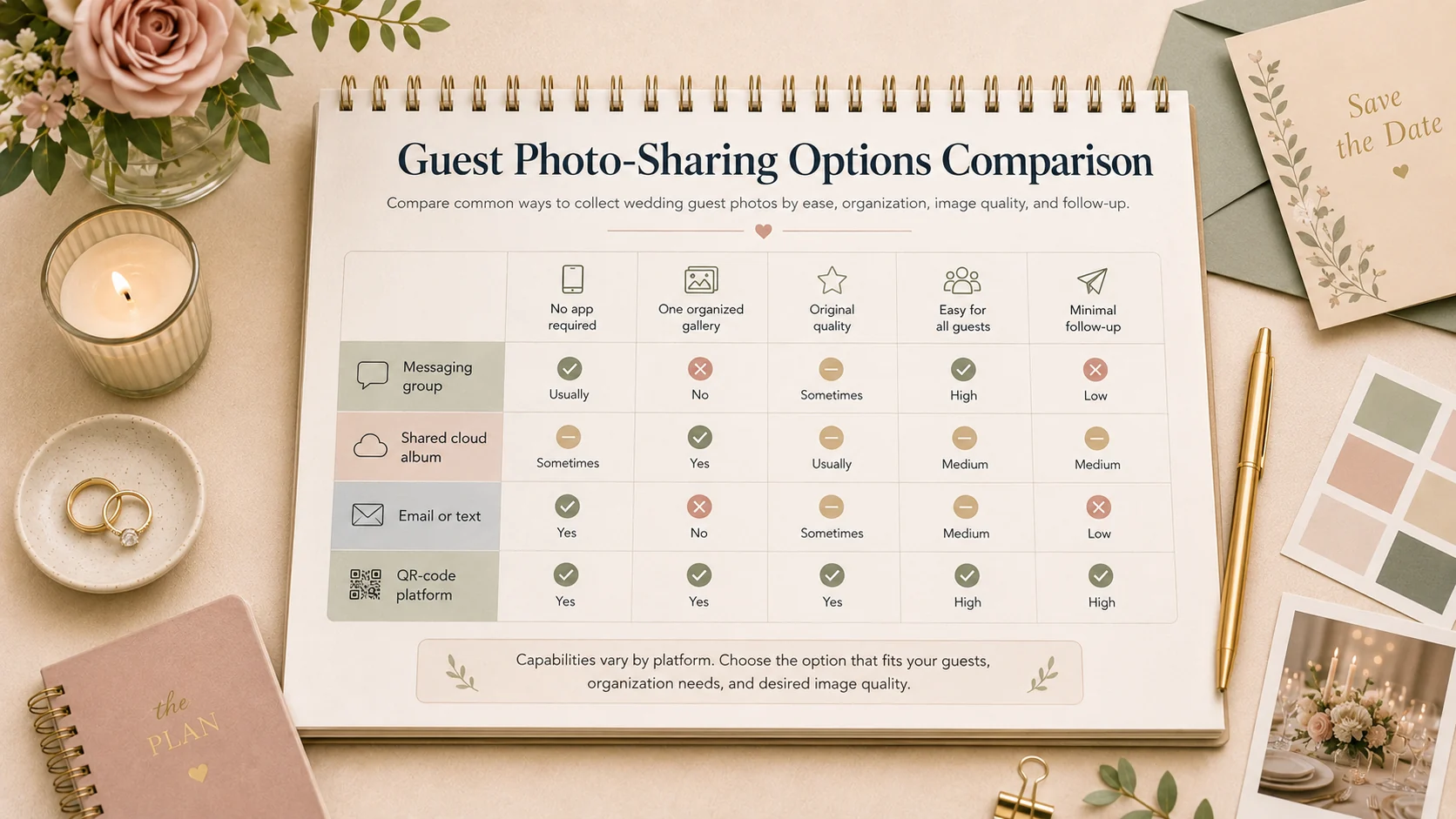
Decide How Guests Will Share Photos and Videos
Your professional photographer will document key moments, but guests will also capture candid scenes and perspectives happening throughout the day. Learn more about making the most of wedding photos from guests.
Common collection options include:
| Method | Main advantage | Main limitation |
|---|---|---|
| Messaging group | Familiar to many guests | Media can become scattered or compressed |
| Shared cloud album | Convenient for existing users | Some guests may need an account or app |
| Email or text | No new platform required | Difficult to organize and requires follow-up |
| QR-code photo-sharing platform | One upload destination for everyone | Requires visible instructions and reminders |
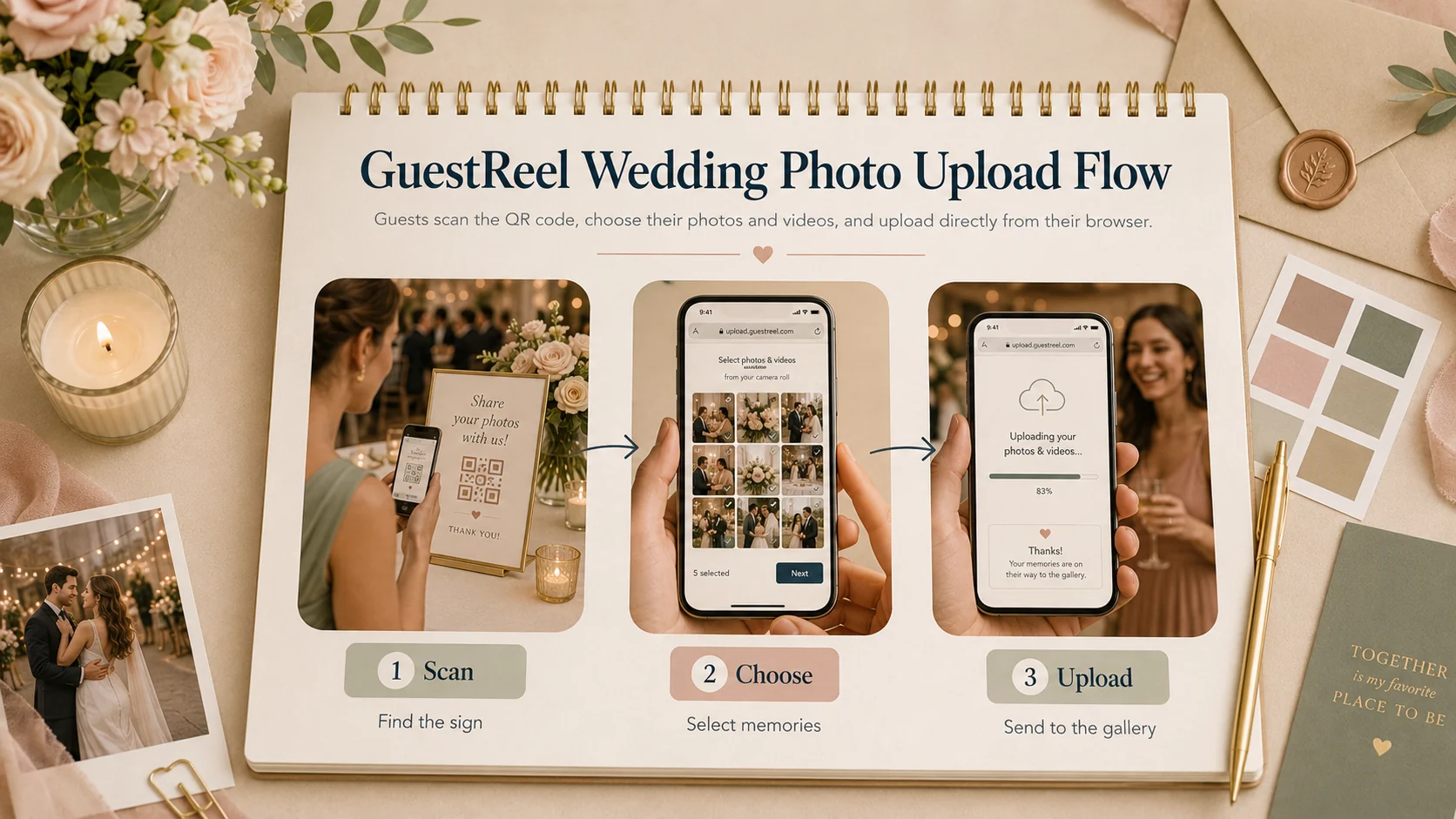
Guestreel provides a personalized QR code and event link that guests can use to upload photos and videos through their browser without creating an account or downloading an app. Uploads are collected in one private gallery. If you are weighing your options, our comparison of the best photo sharing apps for events breaks down each method.
If you use a QR-code system:
- Create the event in advance
- Test it on several phones
- Prepare printed signs
- Add the link to the wedding website
- Ask the MC, DJ, or coordinator to mention it
- Place reminders in several visible locations
- Confirm how you will download the files
1–3 Months Before the Wedding
Track RSVPs and Create the Seating Plan
Confirm:
- Attendance
- Meal choice
- Dietary needs
- Accessibility needs
- Transport
- Accommodation
- Plus-one details
- Children attending
- Additional event attendance
Once most responses are received, create the seating plan.
Consider:
- Family relationships
- Accessibility
- Children
- Guests who know few others
- Distance from speakers
- Proximity to exits or toilets
- Mobility
- Language
- Dietary communication
Confirm Marriage Requirements
Check the official authority for the location where the legal ceremony will take place.
Confirm:
- Application process
- Identification
- Waiting period
- Expiry date
- Witness requirements
- Fees
- Appointment availability
- Registration process
Complete Final Fittings, Trials, and Ceremony Details
For fittings, bring:
- Shoes
- Undergarments
- Accessories
- Veil or headpiece
For hair and makeup trials, photograph the result in different lighting and wear it for several hours if possible.
Finalize:
- Vows
- Readings
- Music
- Participants
- Seating
- Processional order
- Recessional
- Microphones
- Legal wording
- Estimated duration
Create the Wedding-Day Timeline
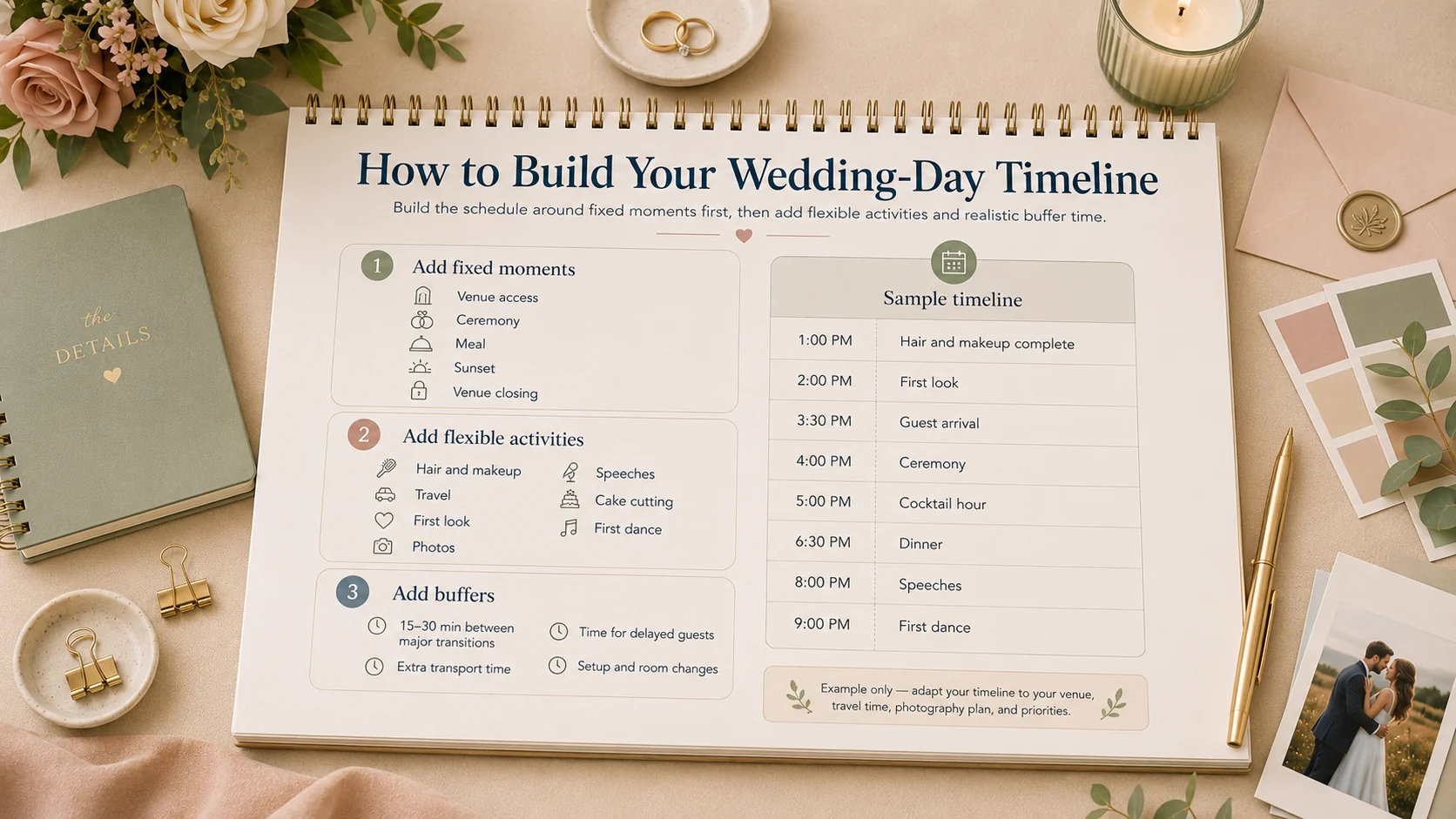
Build the schedule around fixed moments:
- Venue access
- Ceremony time
- Meal service
- Sunset
- Entertainment finish
- Venue closing time
Then add:
- Hair and makeup
- Getting dressed
- Travel
- First look
- Family and wedding-party photos
- Guest arrival
- Ceremony
- Cocktail hour
- Reception entrance
- Meal
- Speeches
- Cake cutting
- First dance
- Evening food
- Final song
- Transport
- Cleanup
Add buffer time between major activities.
Confirm Photo Sharing and Final Payments
For your guest upload setup:
- Finalize the event page
- Test the QR code
- Download print-quality files
- Add it to signs or stationery
- Check venue internet and mobile coverage
- Decide whether guests can upload later
- Assign someone to remind guests
For payments, create one list showing:
- Vendor
- Amount due
- Due date
- Payment method
- Person responsible
- Whether gratuity is included
- Confirmation received
Final Month
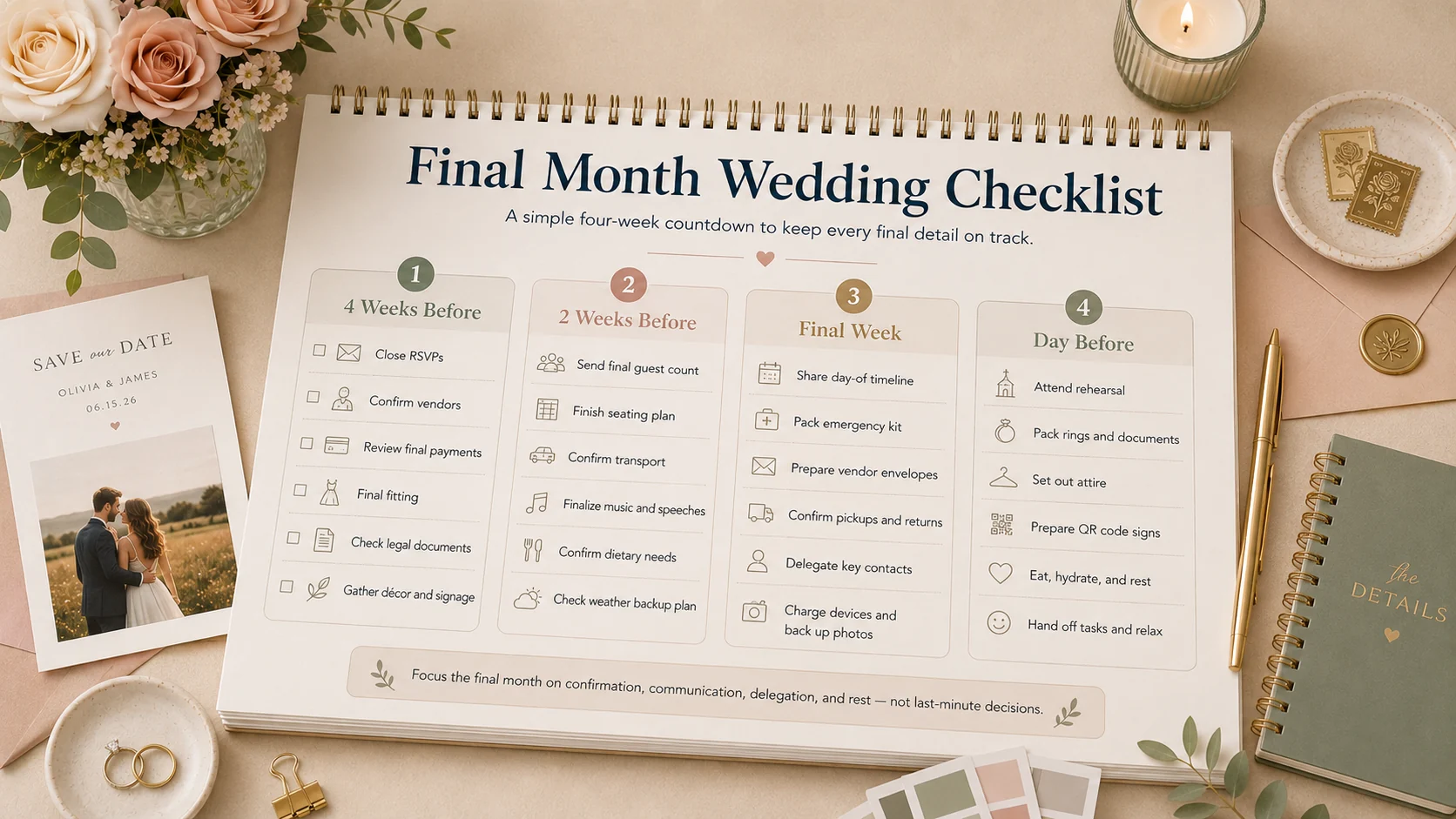
Four Weeks Before
- Confirm the final guest count
- Send approved numbers to relevant vendors
- Complete the venue walk-through
- Confirm vendor access and deliveries
- Review the ceremony and reception layout
- Check weather backup arrangements
- Confirm gift and card security
- Approve signage and printed materials
- Test printed QR codes
- Assign wedding-day responsibilities
Two Weeks Before
- Distribute the final timeline
- Confirm vendor arrival and collection times
- Check rentals, flowers, cake, attire, and transport
- Prepare payments
- Pack wedding and honeymoon essentials
- Review weather, transport, power, and internet contingencies
- Confirm the coordinator or main wedding-day contact
Final Week
- Confirm legal documents
- Check the rings
- Attend the rehearsal
- Steam or press attire
- Pack personal items
- Prepare the emergency kit
- Charge devices and portable batteries
- Download offline contact details
- Confirm transport
- Deliver décor where permitted
- Share vendor contacts
- Arrange food and water for getting ready
- Avoid unnecessary last-minute changes
Day Before
- Check in with the coordinator
- Confirm rings and documents
- Place attire and accessories together
- Charge devices
- Review transport
- Hand over payments and vendor communication
- Eat properly
- Drink water
- Set alarms
- Rest
Wedding Day
Your planner, coordinator, or assigned contact should handle:
- Vendor questions
- Deliveries
- Schedule changes
- Guest transport
- Setup
- Payments
- Weather decisions
- Lost items
- Cleanup instructions
Keep these secure:
- Rings
- Marriage documents
- Personal vows
- Identification
- Phone
- Medication
- Room key
- Emergency contacts
Check that guest photo-sharing signs are displayed and that the MC, DJ, or coordinator knows whether to mention them.
Then let the plan work and enjoy the celebration.
Post-Wedding Checklist
Within the First 48 Hours
- Secure gifts and cards
- Return rental items
- Collect décor and personal belongings
- Store attire safely
- Retrieve leftover food where permitted
- Check hotel rooms and preparation spaces
- Collect disposable cameras or audio guest-book equipment
- Download guest photos and videos
- Create at least one backup
- Confirm who holds the legal documents
If you used Guestreel, review the gallery and download the collected files. Keep a second copy in another storage location.
During the First Month
- Send thank-you notes
- Review vendors
- Follow up on outstanding deliverables
- Preserve or clean wedding attire
- Organize gifts
- Complete name-change administration if desired
- Share selected photos with guests
- Pay approved final charges
- Back up planning files and contracts
When Professional Media Arrives
- Download the complete gallery
- Read usage instructions
- Store files in at least two locations
- Choose images for printing
- Build an album
- Share selected files with family
Combining professional photography with guest-captured photos and videos creates a fuller record of the day.
Essential, Recommended, and Optional Wedding Tasks
| Priority | Meaning | Examples |
|---|---|---|
| Essential | Required for the wedding to happen legally or practically | Legal documents, ceremony location, officiant where required, guest communication, food arrangements |
| Recommended | Reduces risk or significantly improves the experience | Timeline, vendor contracts, transport plan, accessibility review, weather backup, photo plan |
| Optional | Depends on preference, culture, and budget | Favors, matching wedding-party attire, elaborate signage, custom cocktails, photo booth |
When overwhelmed, complete essential tasks first, followed by recommended tasks that support your priorities.
Wedding Tasks Couples Commonly Forget
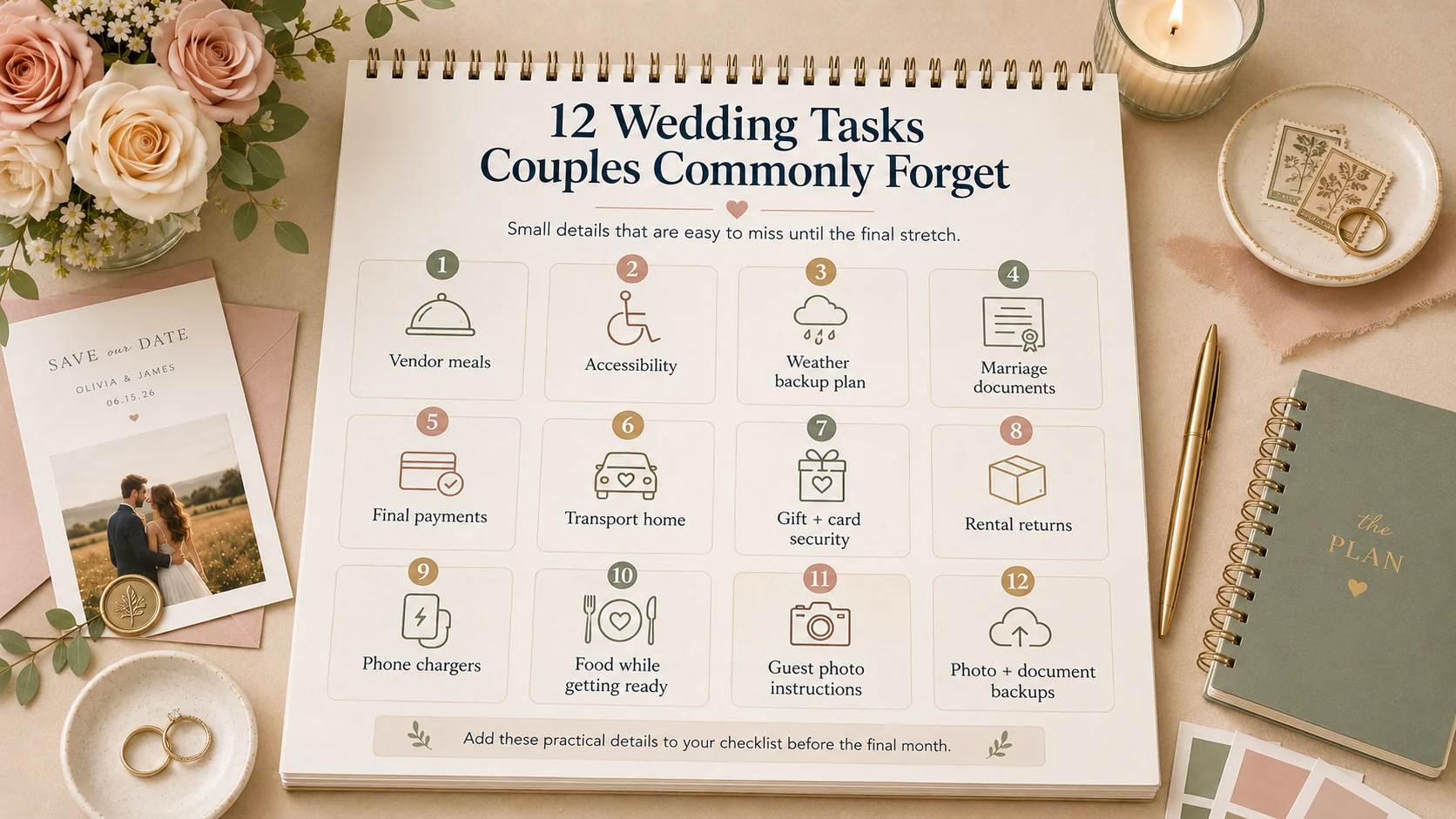
- Vendor meals
- Accessibility requirements
- Weather decision deadlines
- Sound restrictions
- Marriage documents
- Final payments
- Transport after the reception
- Gift and card security
- Rental returns
- Vendor collection times
- Phone chargers and portable batteries
- Guest photo-sharing instructions
- Food and water while getting ready
- Childcare or pet arrangements
- Passport validity
- Backup copies of documents, timelines, and media
- Responsibility for post-wedding cleanup and returns
Printable or Digital Wedding Checklist: Which Is Better?
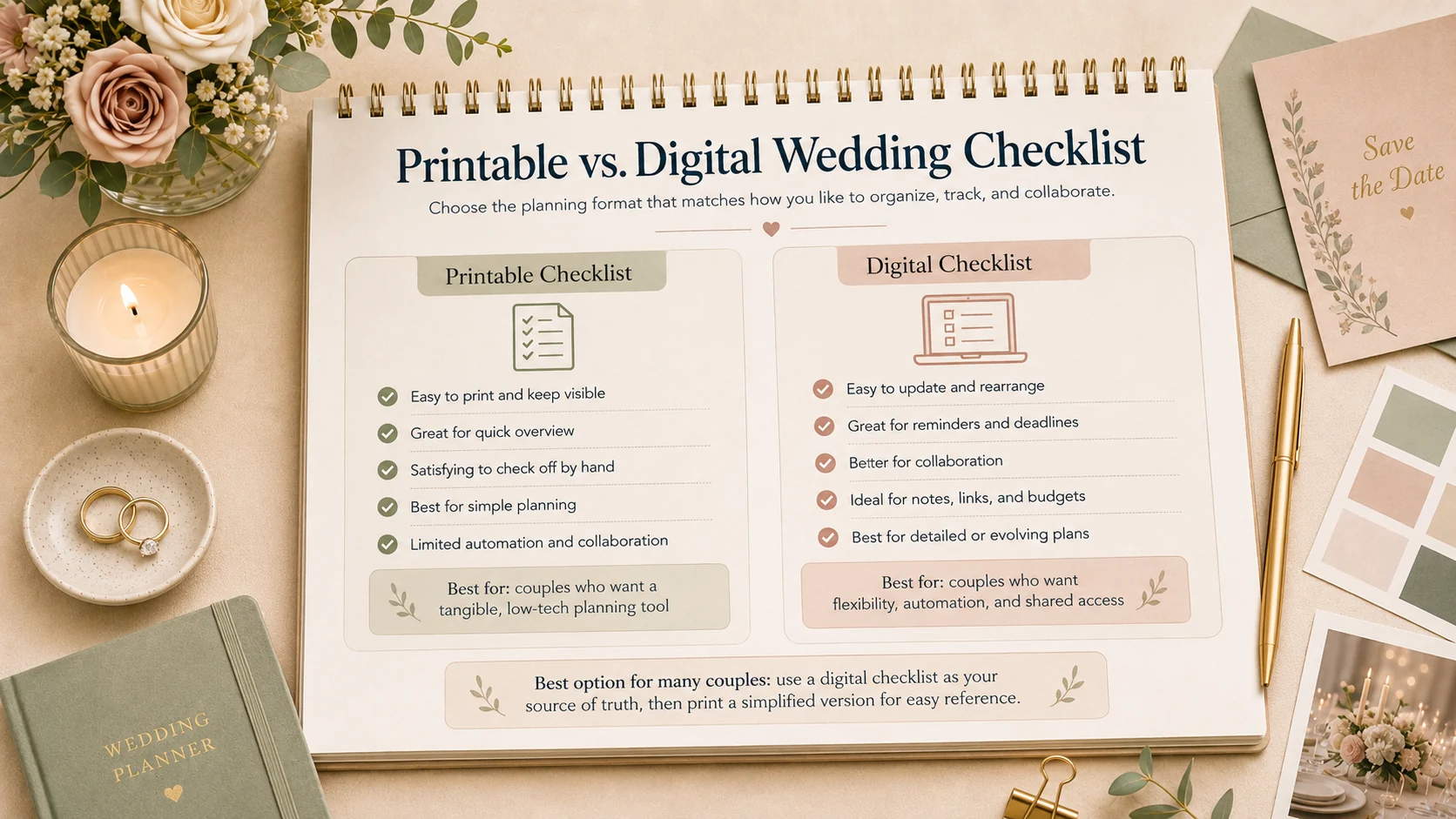
| Format | Best for | Limitation |
|---|---|---|
| Printable checklist | Simple daily reference and visible progress | Harder to update or share |
| Spreadsheet | Budgets, deadlines, owners, and sorting | Requires manual setup |
| Wedding planning app | Reminders and integrated tools | May not fit every planning style |
| Project-management board | Dependencies and collaboration | Can feel overly complex |
| Hybrid system | Couples who want both overview and detail | Requires consistent updates |
A practical hybrid system may include:
- A shared spreadsheet for the budget and guest list
- A task board for deadlines
- A printable final-month checklist
- A cloud folder for contracts
- A mobile-friendly wedding website for guests
Plan the Wedding, Not Every Possible Tradition
A wedding checklist should make planning more manageable, not create hundreds of new obligations.
Begin with the tasks your wedding genuinely depends on. Complete time-sensitive bookings early, assign responsibilities clearly, and remove traditions that do not support your priorities. If you want to avoid common pitfalls along the way, see our list of wedding mistakes to avoid.
The best wedding planning timeline is not the one with the most tasks.
It is the one that helps you arrive at your wedding feeling prepared, confident, and free to enjoy it.
FAQ
What is the first thing to do when planning a wedding?
Discuss your priorities, create a working budget, and draft the guest list. These decisions determine which venues, locations, and wedding formats are realistic.
What should you book first for a wedding?
The venue is often the first major booking because it confirms the date, location, and capacity. Priority vendors such as the planner, photographer, caterer, officiant, and entertainment may also need to be booked early.
How long does it take to plan a wedding?
Many couples use a timeline of around 12 months, but weddings can be planned in more or less time. The right schedule depends on availability, guest count, location, complexity, and flexibility.
Can you plan a wedding in six months?
Yes. Begin with the budget, guest count, venue, legal requirements, and priority vendors. Combine early planning stages and simplify optional details.
When should save-the-dates be sent?
Send them early enough for guests to arrange travel and accommodation. Destination weddings, holiday dates, and weddings with many travelling guests usually require more notice.
When should wedding invitations be sent?
Send them early enough for guests to respond while leaving time to follow up, confirm numbers, complete the seating plan, and notify vendors.
When should you apply for a marriage licence?
Timing depends on the jurisdiction because waiting periods, expiry dates, and appointment processes vary. Check the official authority where the legal ceremony will take place.
When should vendors receive the wedding-day timeline?
Send the near-final version around two weeks before the wedding. Communicate essential changes through one central contact.
What is the difference between a planning timeline and a wedding-day timeline?
A planning timeline covers decisions and deadlines during the months before the wedding. A wedding-day timeline covers the schedule on the day itself.
What do couples most often forget?
Commonly missed tasks include vendor meals, accessibility, transport home, payment responsibilities, weather deadlines, card security, rental returns, and guest photo-sharing instructions.
How can guests share their wedding photos?
Guests can use messaging groups, shared albums, email, or a QR-code photo-sharing platform. Guestreel allows guests to upload through their browser into one private gallery.
What should you do after the wedding?
Return rentals, collect personal items, secure gifts and cards, download and back up media, send thank-you notes, and follow up on vendor deliverables.