Some parties call for a seating plan and speeches. Others need little more than a few friends, food on the table, and a good playlist. Both count.
The main types of parties include milestone celebrations (such as birthdays and anniversaries), social formats (such as dinner and cocktail parties), activity-based gatherings (such as trivia or karaoke), and themed events (such as costume or decade parties). You can mix them, too: a graduation party could be an afternoon open house, while a birthday might be a murder mystery dinner.
If you're planning something, start with the people and the mood you want, not the decorations. Here's how the options compare, followed by 51 ideas and a practical way to choose.
The Main Types of Parties at a Glance
| Party format | Good for | What to expect | Main consideration |
|---|---|---|---|
| Dinner party | Close friends or family | A shared meal and conversation | Seating and menu |
| Cocktail party | Guests who like to mingle | Drinks, small bites, free movement | Enough food and space |
| Potluck | Informal, budget-conscious groups | Guests bring dishes to share | Coordinating contributions |
| Open house | People with different schedules | Guests drop in during a time window | Food that lasts |
| Garden or picnic party | Outdoor socializing | Relaxed food and conversation | Weather and accessibility |
| Game or trivia night | Groups who enjoy activities | Games provide the structure | Picking inclusive games |
| Costume party | Playful, creative groups | Theme-led outfits and atmosphere | Avoiding expensive expectations |
| Banquet or ball | Ceremonial occasions | Formal program, meal or dancing | Venue and logistics |
| Virtual party | People in different places | Shared activities over a call | Keeping everyone involved |
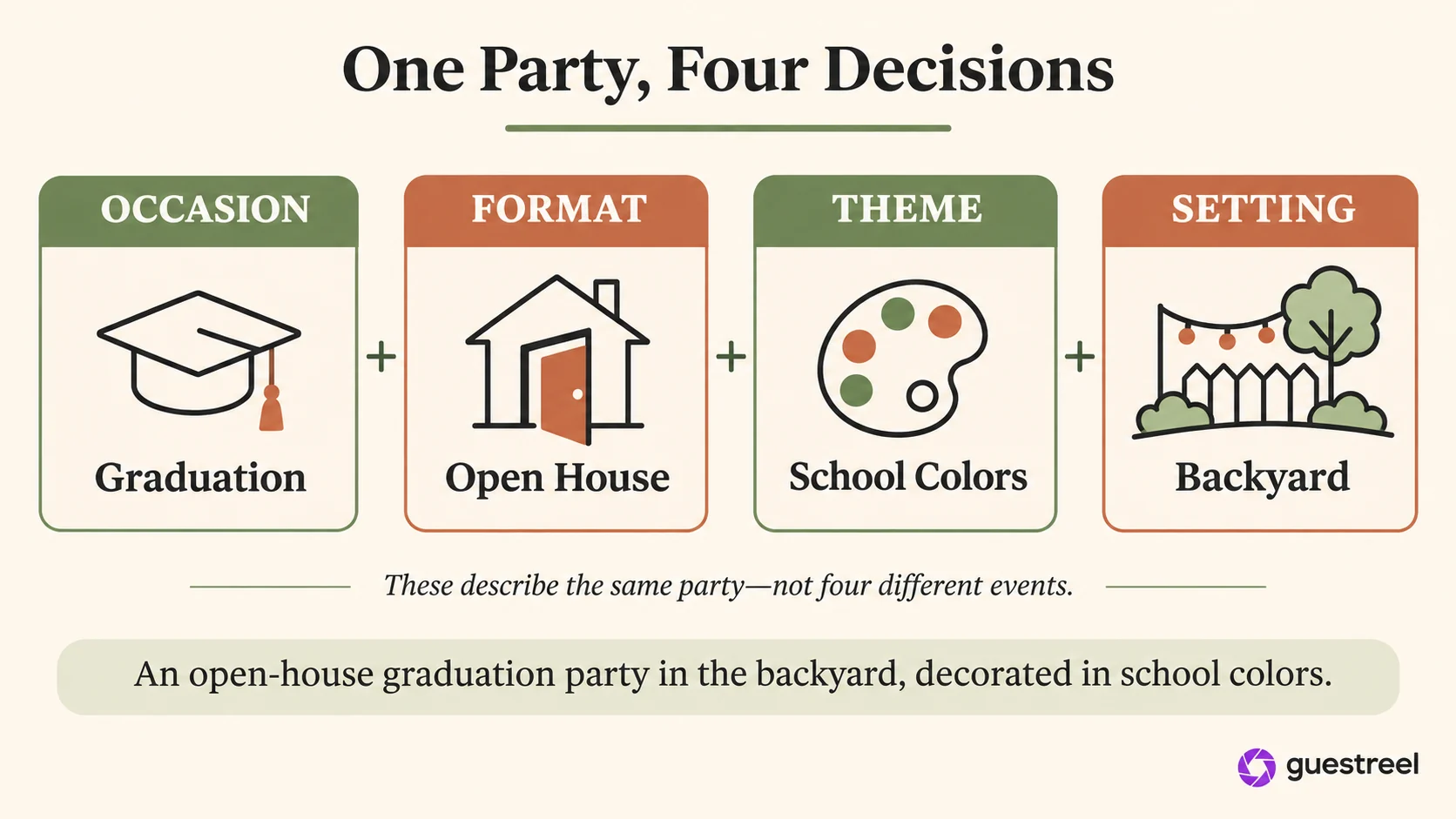
A useful distinction: the occasion is why you're celebrating; the format is how people spend the time; the theme is how the event looks or feels. A retirement party (occasion) could be a garden brunch (format) with a favorite-color dress code (theme). There's no need to choose just one label.
Parties for Birthdays and Life Milestones
These gatherings have one job in common: make a person, couple, or group feel celebrated. The best format depends more on their personality than on what the occasion supposedly requires.
-
Birthday party. A birthday can mean a quiet lunch, a backyard get-together, or a full evening out. Ask what the birthday person would actually enjoy before booking a venue or planning surprise entertainment.
-
Surprise party. Friends organize the gathering without revealing the plan to the guest of honor. It needs a reliable point person and an arrival plan. More importantly, it needs someone who enjoys being surprised.
-
Sweet sixteen party. This 16th-birthday celebration can be a formal dance, a restaurant meal, or a small gathering with friends. There's no obligation to make it lavish; a teenager's preferences should set the tone.
-
Quinceañera. A fifteenth-birthday milestone in many Latin American communities, a quinceañera may include a religious service, formal presentation, symbolic traditions, and a reception. The details differ by family and culture.
-
Bar or bat mitzvah celebration. Families may hold a meal or reception following this Jewish religious milestone. The ceremony and the party are distinct, and practices vary by congregation. For context, see Reform Judaism's guide to its origins.
-
Engagement party. A chance to congratulate the couple and introduce relatives or friends who haven't met. A relaxed drinks reception often leaves more room for conversation than an activity-packed schedule.
-
Wedding shower. A bridal or couples shower usually involves refreshments, gifts, and time with close friends or relatives. Recipe cards or advice notes can be more personal than games that put guests on the spot.
-
Bachelor or bachelorette party. These pre-wedding gatherings range from a dinner to a weekend away. Agree on the budget before anyone books travel; an exciting plan isn't much fun if half the group can't afford it.
-
Wedding reception. A celebration after the marriage ceremony, with anything from a buffet and speeches to a formal dinner and dancing. The couple's traditions, guest count, and priorities shape the schedule.
-
Baby shower. Guests celebrate an expected arrival and offer support to the parents-to-be. Brunch, afternoon tea, or an informal home gathering can keep the occasion comfortable for mixed-age groups.
-
Graduation party. An open house is useful when classmates and relatives have overlapping commitments. Set a visiting window and let people congratulate the graduate without requiring everyone to sit down at once. See our graduation party ideas.
-
Anniversary party. Whether it's a first anniversary or a fiftieth, the couple's story gives you a natural focus. Bring out old photographs, invite a few personal toasts, and choose a format they would enjoy. Browse anniversary party ideas.
-
Retirement party. A farewell to working life can include former colleagues, friends, and family. Leave room for stories, but don't turn the night into an endless run of speeches.
-
Housewarming party. People come to see a new home and spend time with its owners. An open house with simple snacks works even if the last moving box hasn't been unpacked.
-
Farewell party. A send-off for someone moving away or leaving a workplace. A collection of short messages or photos often means more than an elaborate theme, especially when the person is busy preparing for the move.
-
Family reunion. A chance for relatives across generations to reconnect. Consider name tags, family-photo displays, and activities with easy entry points. Not everyone wants to compete in a big team game.
Social and Food-Focused Party Formats
You don't need a birthday or holiday as an excuse to invite people over. These formats are mostly about how guests eat, talk, and move through the gathering.
-
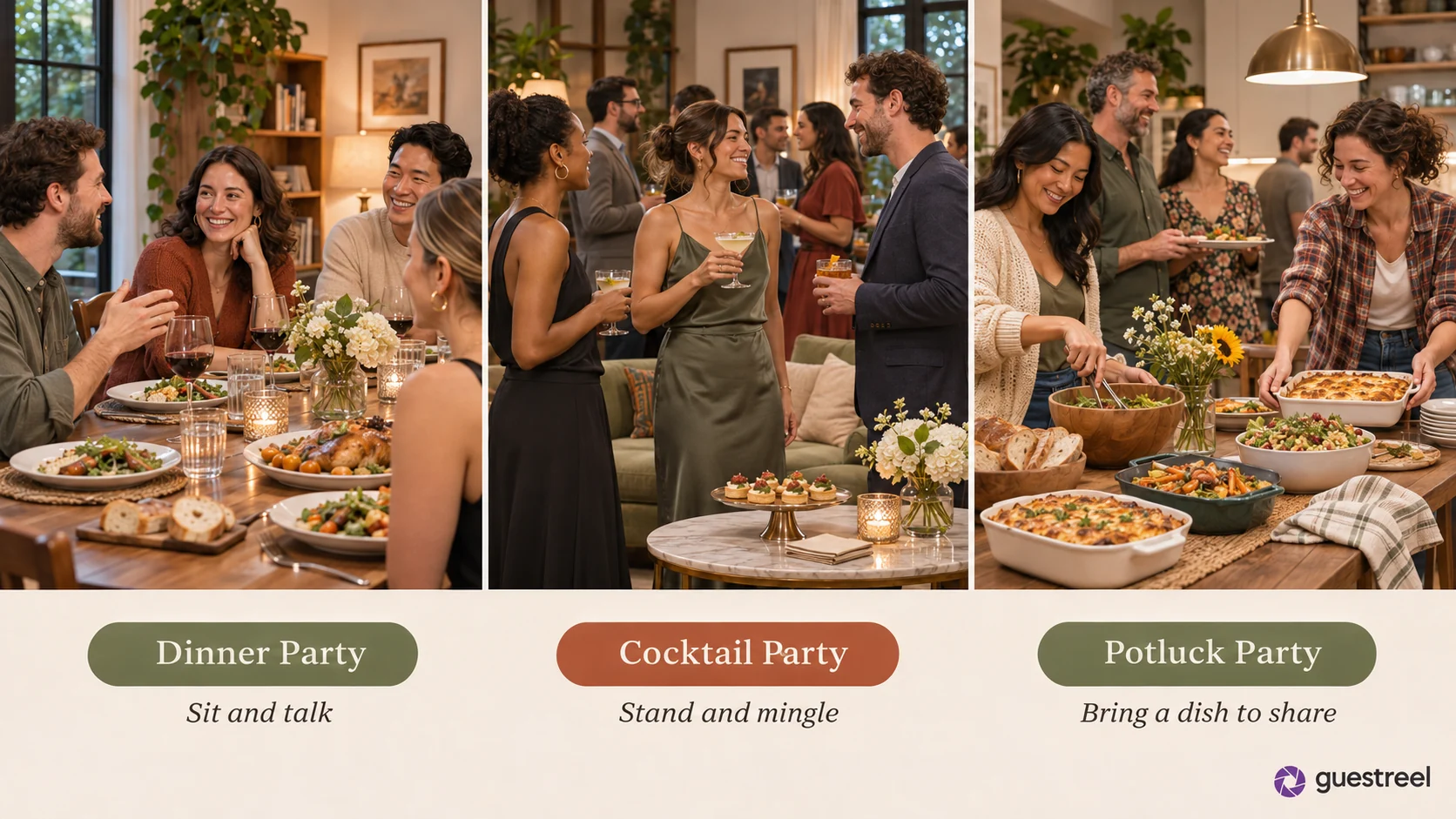
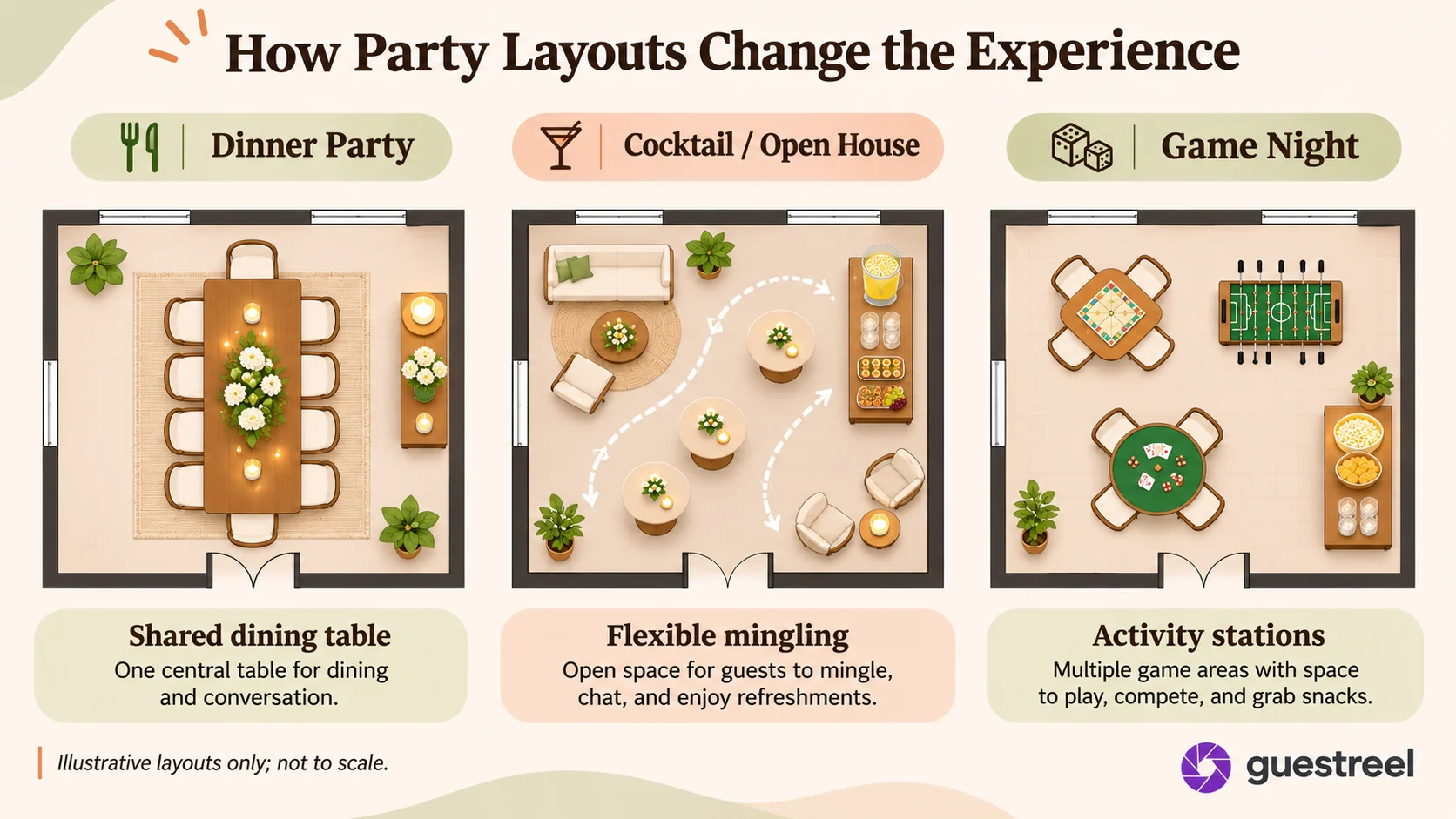
Dinner party. Guests share a meal, usually seated together. The pleasure is in lingering over conversation; the challenge is serving everyone without spending the entire evening in the kitchen.
-
Cocktail party. People mingle over drinks and bite-sized food instead of sitting for a full meal. Offer appealing non-alcoholic drinks and a few seats, even if the invitation suggests a standing reception.
-
Brunch party. A late-morning gathering built around breakfast and lunch favorites. It's a good alternative when evening commitments make a party difficult, and a serve-yourself spread keeps the host free to chat.
-
Afternoon tea party. Tea, small sandwiches, cakes, and conversation set a slower pace. It can be elegant without being rigid: the good china is optional, while comfortable seating is not.
-
Potluck party. Each guest brings something to share. Assign broad categories or keep a shared dish list; otherwise you may end up with six desserts and nothing substantial for dinner.
-
Barbecue party. Grilled food anchors a relaxed outdoor gathering. Think beyond the grill: shade, seating, dietary choices, and a rain plan matter just as much.
-
Garden party. A gathering in a garden or landscaped outdoor space, from casual afternoon drinks to a dressier reception. Check that guests can manage paths, grass, and uneven ground comfortably.
-
Picnic party. Food, blankets, and a park or other suitable outdoor space. Choose dishes that travel well, and check the location's rules before bringing amplified music or large equipment.
-
Open house party. Guests arrive at any point during an announced window. This takes pressure off people with busy schedules, but the food needs to hold up over several hours.
-
House party. A flexible gathering at home, with music, food, and conversation. Don't overlook the unglamorous details: where coats go, how many people can sit, and how late the music can run.
-
Banquet. A formal meal often linked to an award, organization, or major celebration. It usually needs advance seating, coordinated service, and a clear event program.
-
Ball. A formal event centered on dancing, sometimes with ceremonial traditions or a fundraising purpose. Dress expectations and protocols depend on the organizer, so invitations need to be specific.
Game Nights and Activity-Based Parties
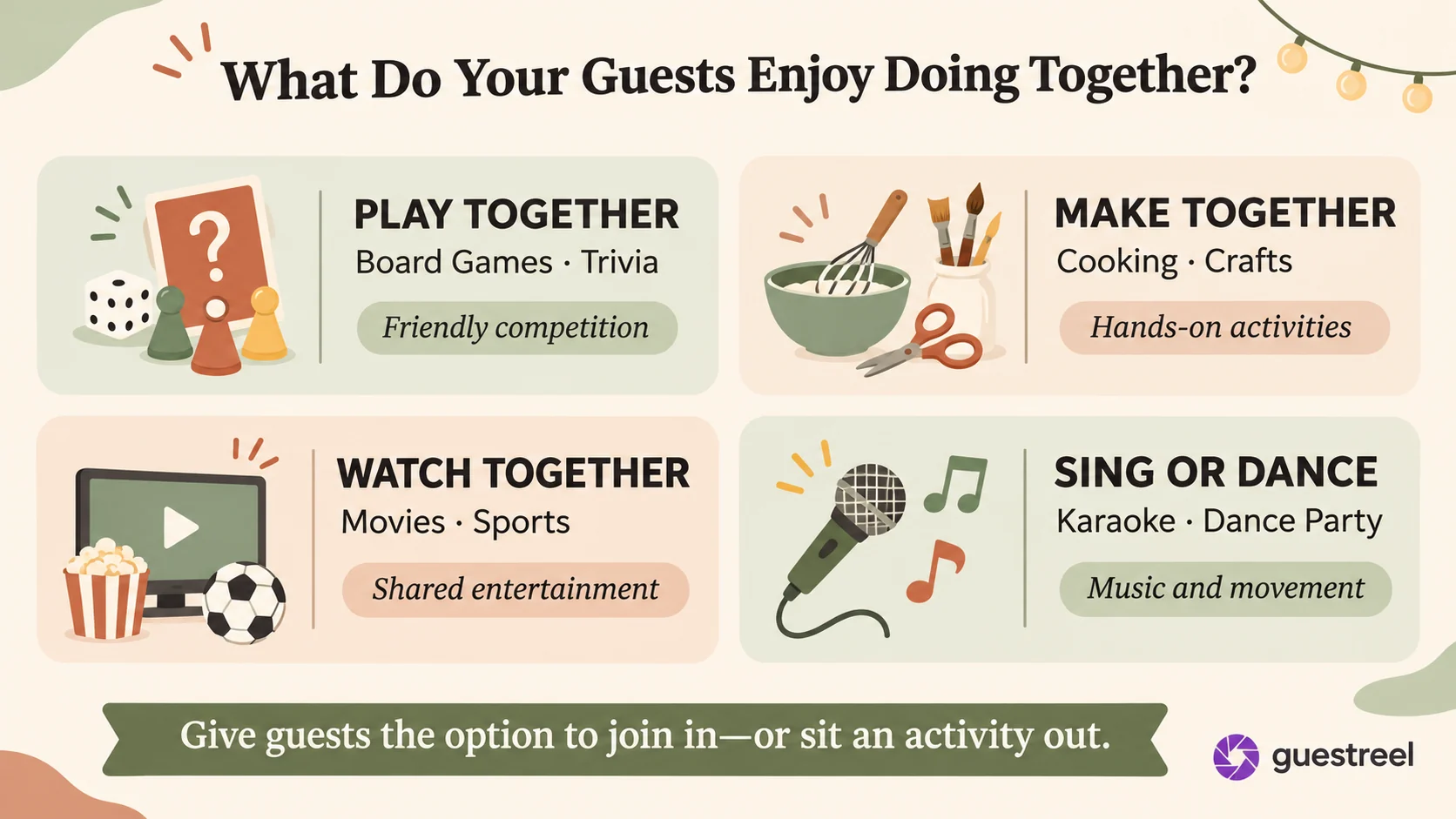
An activity gives people a shared starting point. That can be especially helpful when two groups of friends are meeting for the first time. Just don't make every minute compulsory.
-
Board game night. Set out games suited to your group's patience and experience. A quick party game is more welcoming to newcomers than a complicated game with an hour of rules.
-
Trivia party. Split guests into teams and mix categories so no one person has all the answers. A short music round or questions about the guest of honor can make it feel personal.
-
Video game party. Cooperative games or short tournaments bring players together. Have enough controllers, keep turns moving, and offer another activity for guests who'd rather watch than play.
-
Murder mystery party. Guests play characters or follow clues to solve a fictional crime. Send role details ahead of time and choose a format where quieter participants can still have fun.
-
Escape room party. Book a venue or organize puzzle challenges at home. Check difficulty and accessibility in advance; being stuck on the first puzzle isn't the exciting kind of suspense.
-
Scavenger hunt party. Teams follow clues or find objects around an agreed area. Make the route clear and safe, and avoid tasks that rely on approaching strangers or entering private spaces.
-
Movie night. Choose a film, make the seating comfortable, and keep food within reach. A movie is an excellent low-effort centerpiece; it's less suitable if your main goal is conversation.
-
Sports watch party. A match supplies the entertainment, while snacks and seating do the rest. Position the screen where people can actually see it, and leave room for non-fans to chat.
-
Karaoke party. Guests take turns singing solo or together. Duets and group songs help hesitant singers join in without being pushed into the spotlight.
-
Dance party. Music drives the evening, whether you're using a DJ or a carefully made playlist. Provide somewhere quieter to talk; not everyone wants to stay on the dance floor.
-
Craft party. Guests paint, decorate, or make something they can take home. Pick a project with a realistic finish time and provide spare materials for inevitable mistakes.
-
Cooking or baking party. Everyone makes pizzas, decorates cakes, or prepares a dish together. It's sociable, but only if the kitchen has enough room and the jobs can be shared.
-
Tasting party. Compare chocolates, cheeses, teas, coffees, or other foods. Simple tasting cards can prompt conversation without turning the event into an expert exam.
-
Pool party. Swimming and poolside conversation make a warm-weather gathering feel like a getaway. Safety, supervision where needed, shade, and comfortable dry seating come before decorations.
Themed, Community, and Online Parties
A theme changes the atmosphere; a community or online format changes who can take part. Some of these can be combined with any occasion above.
-
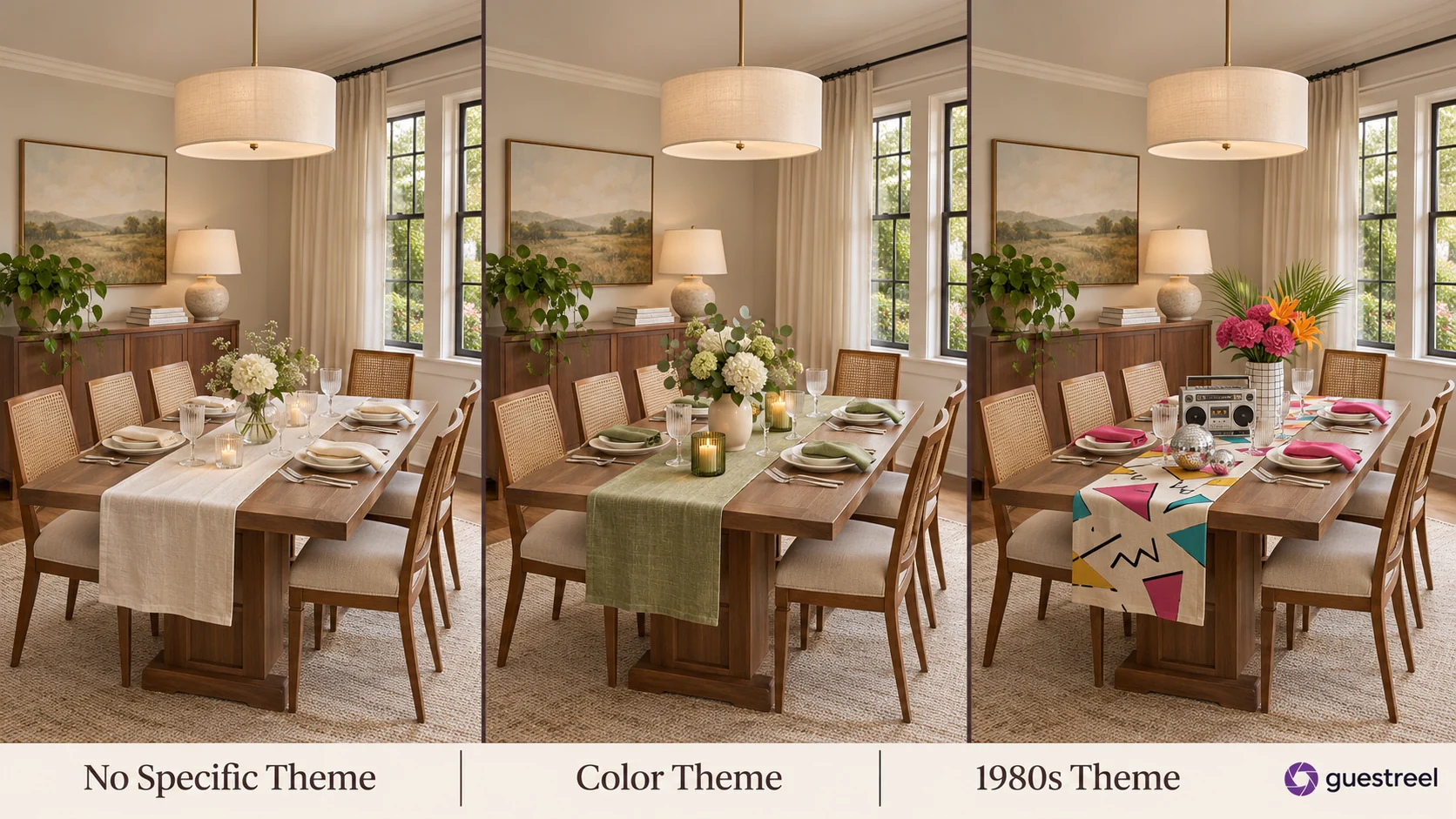
Costume party. Invite guests to dress as characters or follow a broad prompt. The more flexible the theme, the less likely anyone is to skip the event because they don't own the right outfit.
-
Masquerade party. Dressy clothes and decorative masks create a theatrical feel. Make masks optional or removable so they don't become awkward during dinner.
-
Decade party. Build a night around the music and style of the 1970s, 1980s, or another era. A strong playlist usually does more for the atmosphere than expensive props.
-
Color-themed party. Choose a palette for decorations and, if you like, suggested clothing. Tell guests whether the dress code is a fun invitation or a genuine requirement.
-
Holiday party. Christmas dinners, Halloween gatherings, and New Year's celebrations all fit here. Traditions differ between families, so plan around what your guests actually celebrate.
-
Neighborhood block party. Neighbors gather around shared food, games, and introductions. If the plan involves closing a street or using public space, check local permission and safety requirements.
-
Fundraising party. A dinner, auction, or casual gathering supports a cause. Make the purpose and donation arrangements transparent, and let guests know what their contributions support.
-
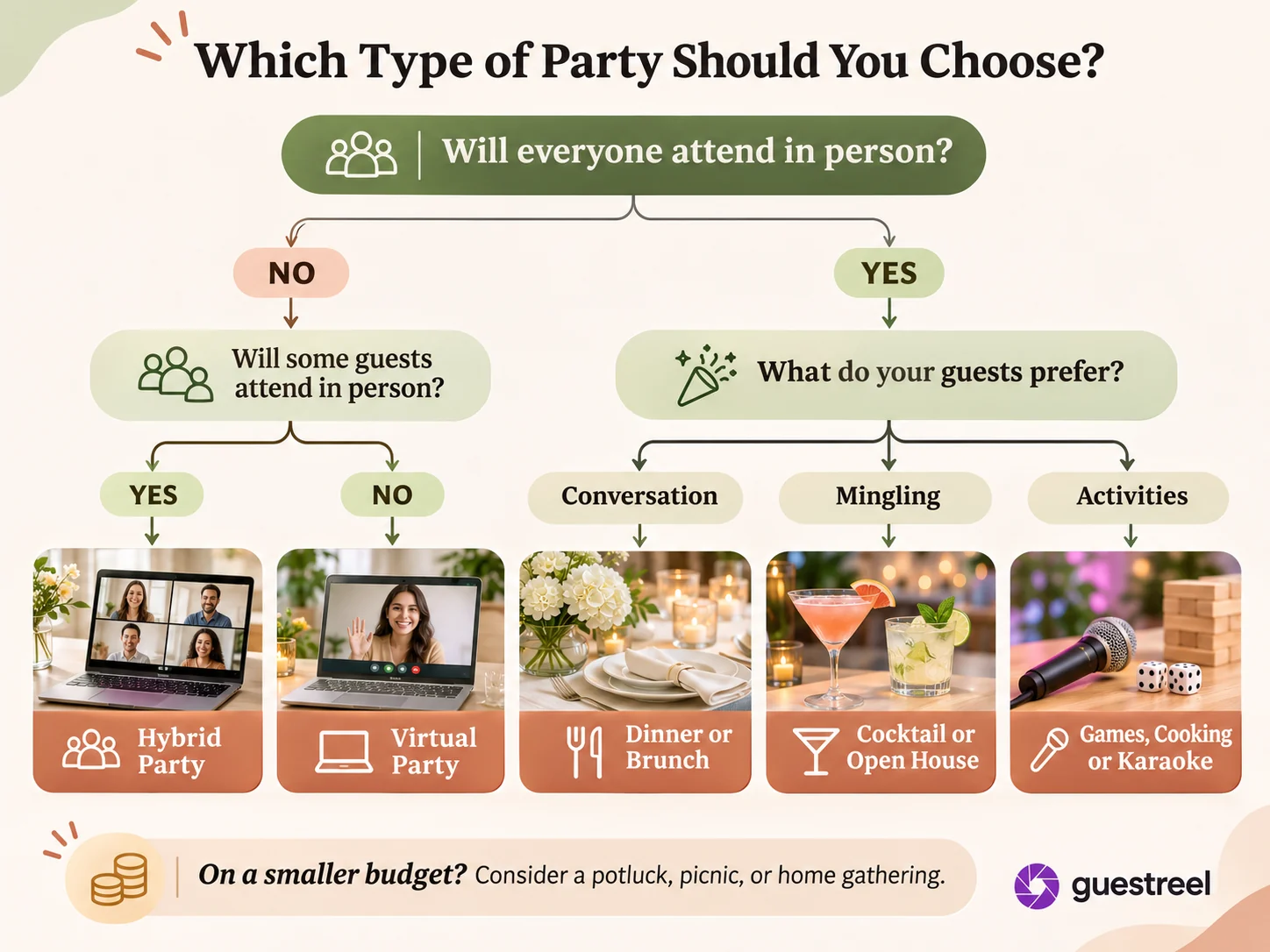
Virtual party. Friends or relatives join from different places over a video call. A short activity, such as trivia or a shared toast, gives the meeting more shape than an open-ended group chat.
-
Hybrid party. Some guests attend in person while others join remotely. Put someone in charge of the camera and sound so remote guests aren't forgotten once the room gets busy.
Cultural and religious celebrations deserve their own context, not treatment as interchangeable costume themes. If you're honoring a tradition unfamiliar to you, follow the guidance of people who practice it and learn what the occasion means before planning the festivities.
How to Choose the Right Type of Party
Start with a few honest questions. Who is it for? Do people already know one another? How much time and money can you spend? And when everyone goes home, what do you want them to remember?
Choose for the Guests, Not Just the Occasion
For six close friends, a long dinner may be perfect. For a graduation crowd with relatives, neighbors, and classmates arriving at different times, an open house may be kinder to everyone. A group of strangers often benefits from a shared activity, but only if participation feels optional.
| If your priority is... | Try... | Think twice about... |
|---|---|---|
| Conversation | Dinner, brunch, afternoon tea | Loud entertainment all night |
| Meeting new people | Cocktail reception, trivia | Fixed seats with no mingling |
| Low cost | Potluck, picnic, game night | Venue hire and multiple vendors |
| Flexible arrival times | Open house, backyard gathering | A tightly timed sit-down meal |
| High energy | Dance, karaoke, costume party | A quiet format with no activities |
| Long-distance guests | Virtual or hybrid party | A program they can't follow remotely |
These are starting points, not universal rules. People matter more than the label on the invitation.
Make the Budget and Venue Work Together
A party at home can save on venue hire, but food, furniture, equipment, and cleanup still cost money. A restaurant may cost more per guest yet spare you most of the setup. Compare the total work and spending, not just the venue price.
Outdoor plans need an indoor alternative or a realistic cancellation decision. If the venue is small, don't invite more guests than it can comfortably accommodate. And if the format requires specialist equipment, check availability before promising an activity.
For more affordable options, see low-budget birthday ideas for adults.
Picture the Evening From a Guest's Point of View
Imagine arriving alone. Would you know where to go and what to do? Is there somewhere to sit? Can someone who doesn't drink alcohol, dance, or join a competitive game still enjoy themselves?
Good hosting leaves people choices. A tasting party can have non-alcoholic samples. A dance party can have a conversational corner. A garden party can include indoor seating for guests who need it.
Three Quick Examples
- Eight friends and a tight budget: A potluck game night puts the money into food and keeps entertainment simple. Agree on the dishes first.
- A graduation with guests coming and going: An afternoon open house with self-serve food and photo displays makes visiting easy.
- A group of colleagues who barely know one another: A casual reception with optional trivia gives people something to talk about without making introductions feel forced.
These are illustrative plans, not reports from real events. Adjust them for your guests and setting.
A Simple Checklist Before You Send Invitations
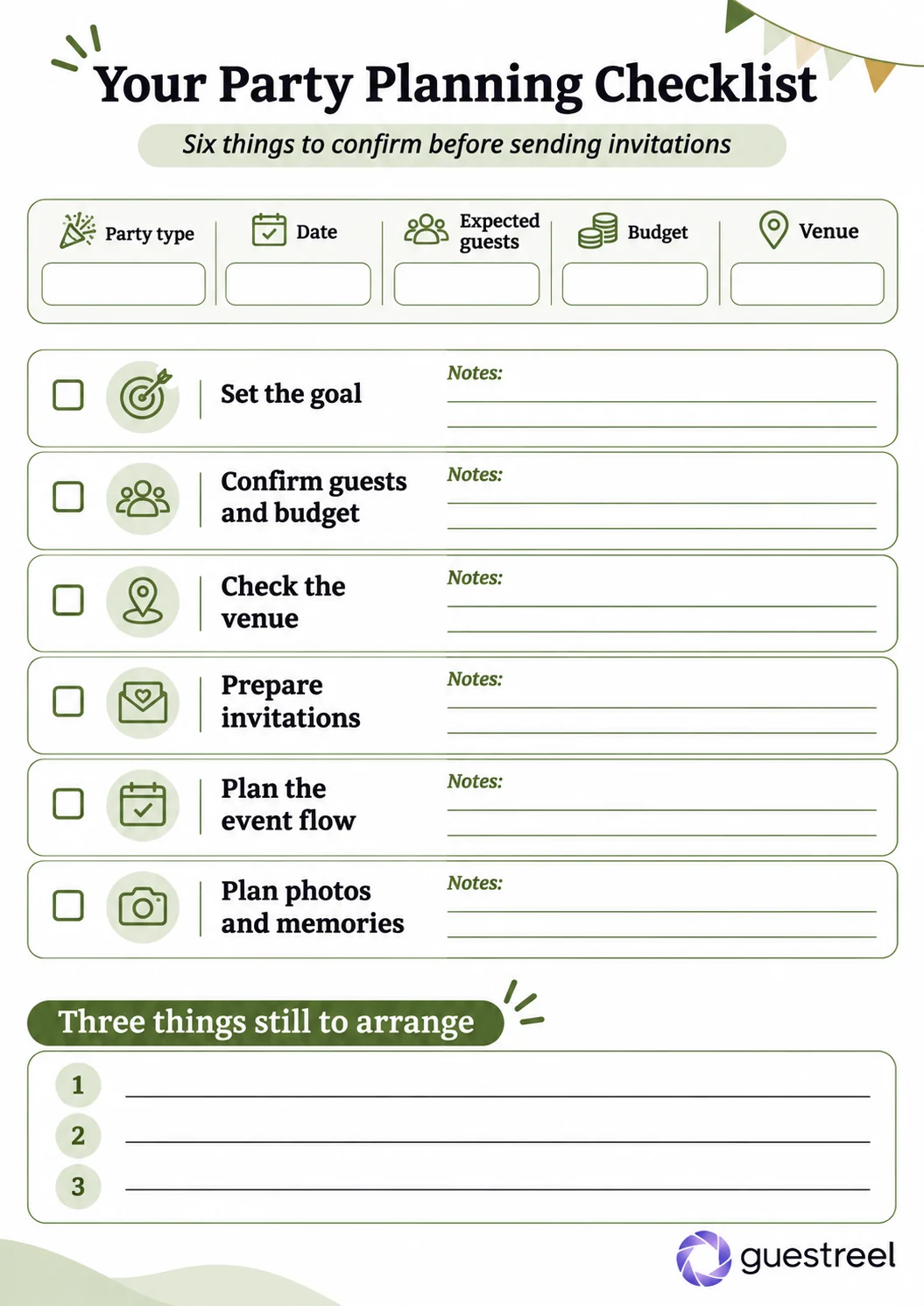
- Set the goal. Celebration, conversation, dancing, or an activity? Choose one main priority.
- Confirm the guest list and budget. They determine the space, food, and scope of the event.
- Check the venue. Review capacity, accessibility, seating, weather, and any relevant rules.
- Make the invitation clear. Include the time, location, RSVP details, dress expectations, and anything guests should bring. The Emily Post Institute's hosting guidance also recommends giving guests the practical details up front.
- Plan the flow. Decide how people arrive, eat, take part in activities, and leave. You don't need a minute-by-minute schedule.
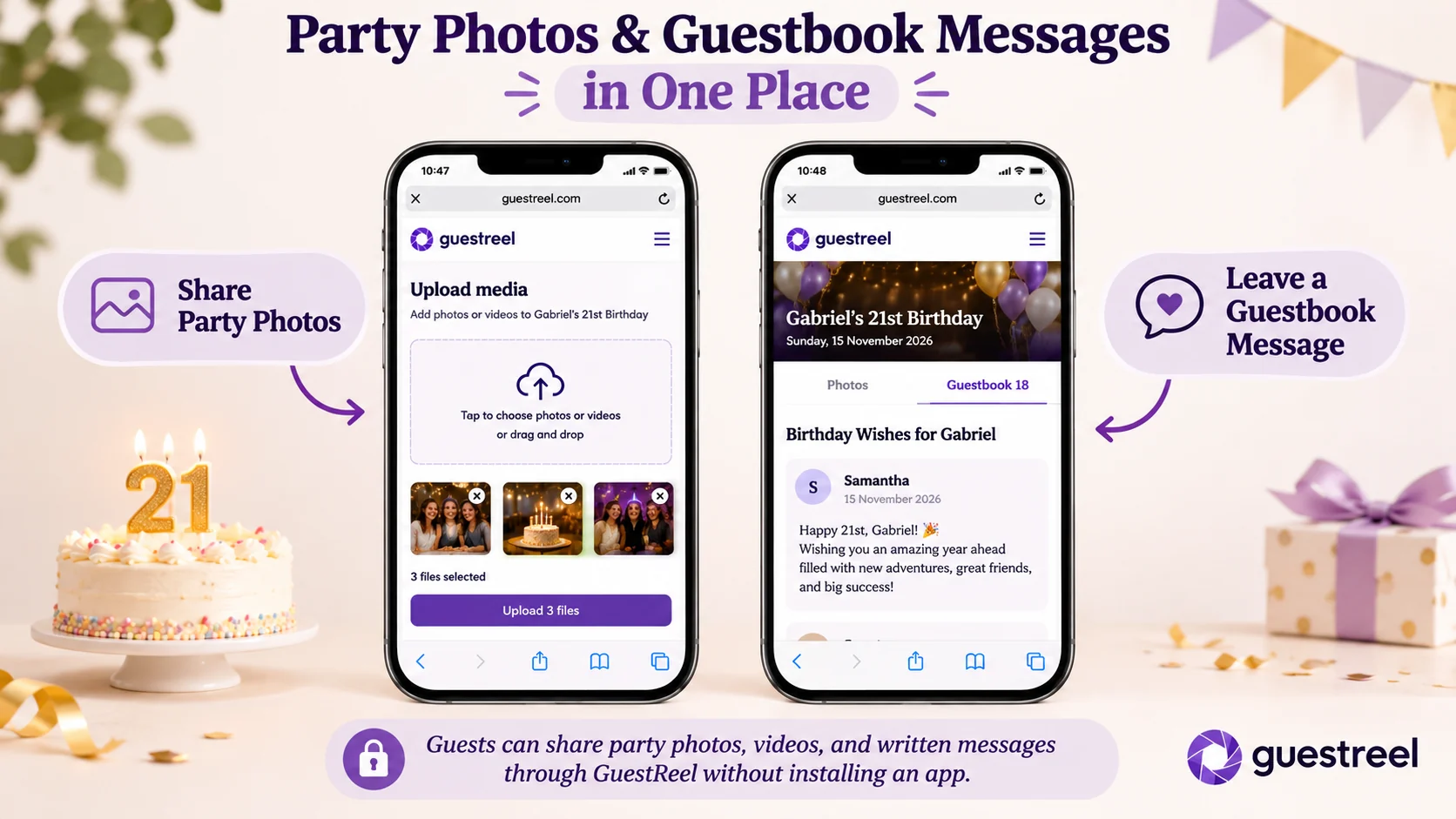
- Decide how to keep the memories. A shared album may be enough for a small group. For a larger party, Guestreel's QR-code photo sharing lets guests add photos and videos from a browser without an app or account; its digital guestbook can collect written messages too.
For a fuller timeline, use the step-by-step party planning guide.
Frequently asked questions
What Are the Most Common Types of Parties?
Familiar examples include birthday parties, dinner parties, house parties, cocktail receptions, holiday celebrations, and milestone events. There's no reliable universal ranking: traditions, age groups, and locations change which gatherings are most common.
What's the Difference Between a Formal and an Informal Party?
A formal party generally has clearer expectations around dress, seating, or timing, as at a banquet or ball. An informal party leaves more room for guests to mingle and follow their own pace. Either can be thoughtfully hosted.
What Type of Party Is Good for Adults Who Don't Know One Another?
Try a cocktail-style reception, a low-pressure trivia night, or a shared food activity. The goal is to give people a reason to talk without forcing personal introductions or competitive games on everyone.
What Is the Easiest Party to Throw at Home?
A potluck, movie night, or casual game night is often manageable because it needs little equipment or outside coordination. The easiest option depends on your space, cooking plans, and whether guests are happy with an informal evening.
Do You Need a Theme for a Party?
No. A clear purpose and a comfortable atmosphere are enough. Add a theme if it makes planning more enjoyable or gives guests an easy way to participate, not because you feel obliged to decorate everything.
Choose the Party People Will Enjoy
You don't need the most elaborate format on the list. A small dinner may be exactly right for old friends, while an open house gives a busy family room to reconnect. Choose the occasion, format, and optional theme that suit your guests. Once that's settled, food, invitations, and activities become much easier decisions.
Written by Linda DoWrites Guestreel’s planning guides.