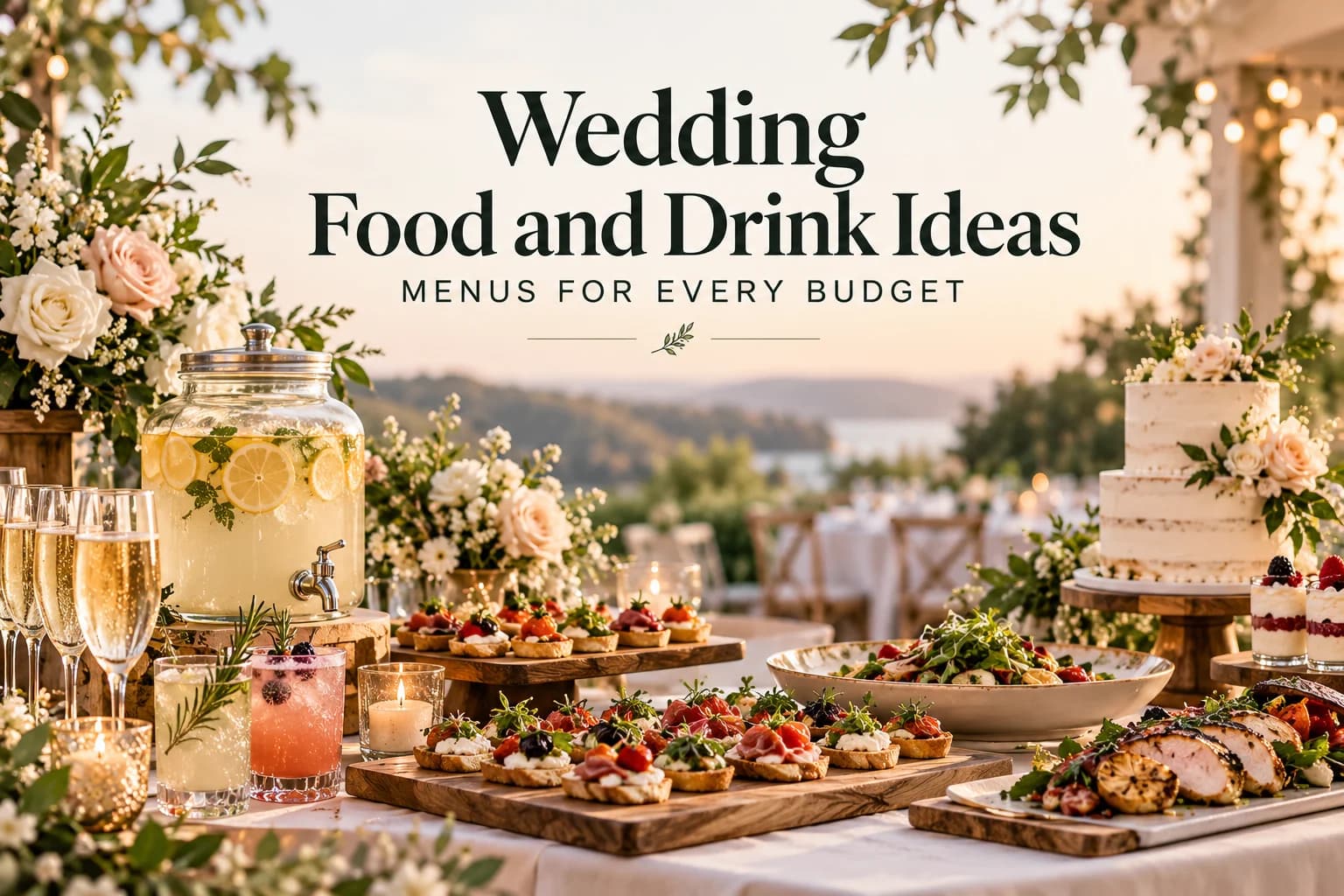
A great wedding menu doesn't have to be elaborate. It has to suit the celebration, give guests a proper meal, and work within the budget and facilities you've actually got.
For a formal reception, that might mean a plated dinner followed by cake. For a garden wedding, it could be barbecue, seasonal salads and a help-yourself dessert table. And if you'd rather skip a traditional sit-down meal, a well-planned combination of substantial small plates can work just as well.
The easiest way to choose is to start with how you'll serve the food, then pick dishes that fit. Use the ideas and sample menus below to put together something you can discuss with your caterer, rather than a wish list of dishes that may be difficult to serve together.
Wedding Food and Drink Ideas at a Glance
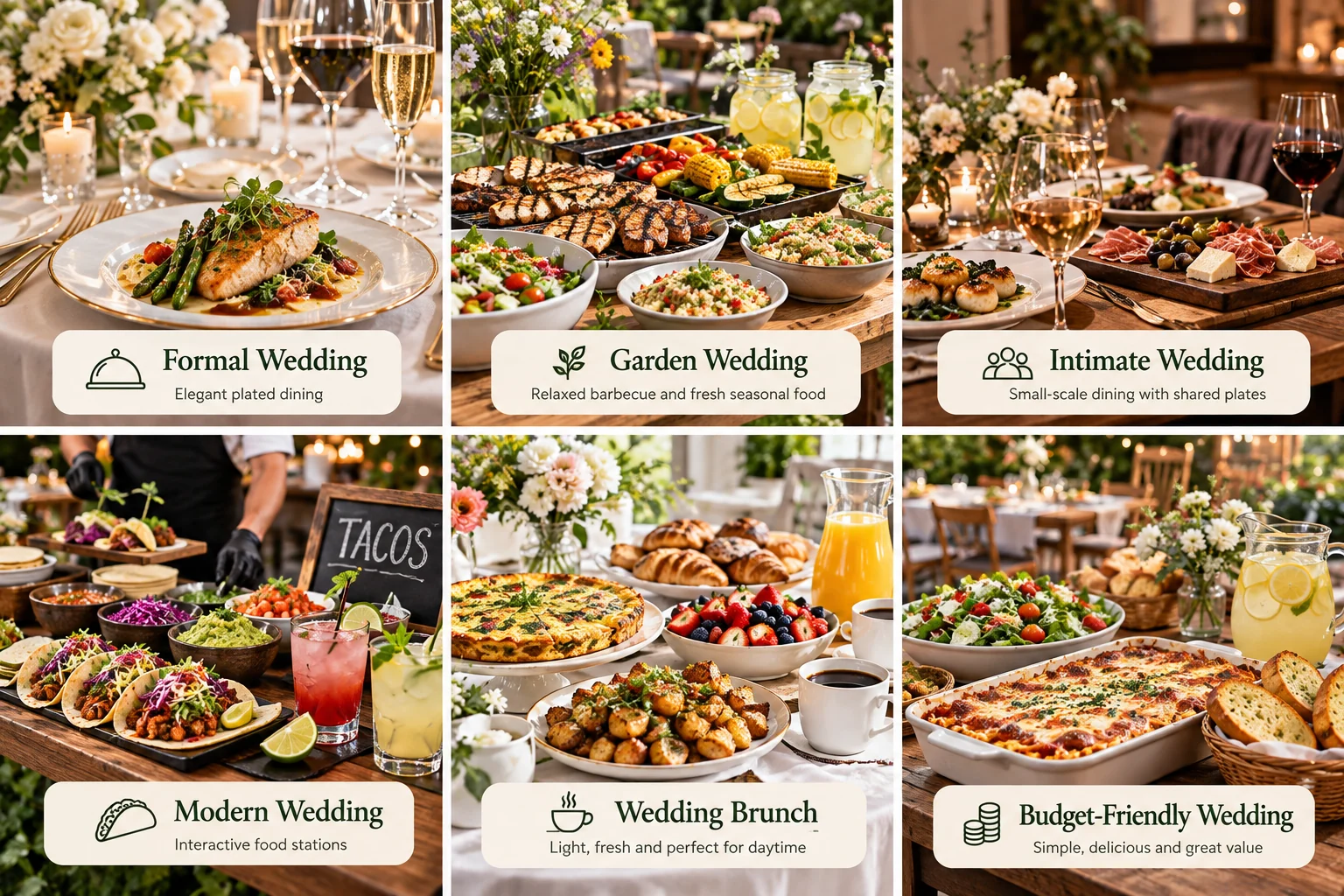
| Your reception | Food that fits | Drinks to consider |
|---|---|---|
| Formal evening | Canapés, roast chicken or fish, individual desserts | Wine, sparkling water, a signature cocktail |
| Relaxed garden wedding | Barbecue, grilled vegetables, fresh salads | Iced tea, lemonade, beer |
| Small, intimate dinner | Shared starters, a favourite family recipe, a simple cake | A short wine list, non-alcoholic pairings |
| Modern, sociable reception | Taco station, flatbreads, dumplings | Spritzes, fruit coolers, mocktails |
| Morning or brunch wedding | Frittata, breakfast potatoes, pastries | Coffee, tea, juice, sparkling drinks |
| Budget-conscious celebration | Baked pasta, seasonal vegetables, traybakes | Water, a limited bar, one house mocktail |
Don't feel you need to offer everything. A few dishes served generously and on time will usually make a better impression than an ambitious menu that leaves everyone waiting.
How to Choose a Wedding Menu That Works
Start With the Day, Not the Dishes
Think about when guests arrive, how long they'll be there and what else is happening. If your ceremony is at midday and dinner is at six, light canapés alone may not be enough to bridge the gap. If you're serving a three-course meal at eight, a large late-night snack station may be unnecessary.
Write down your guest count, the expected meal time and whether people will be sitting, standing or moving between spaces. Those details narrow the choices remarkably quickly.
Check the Venue Before Booking Food Stations
A wood-fired pizza oven looks wonderful in photographs. It's less wonderful if your venue doesn't allow outdoor cooking or the caterer can't move the equipment into position.
Ask whether you're required to use an in-house caterer, what the kitchen can support, whether outside suppliers are permitted, and who handles delivery, setup and clearing away. For outdoor receptions, confirm power, water, shelter and refrigeration too.
Our outdoor wedding venue guide goes deeper into those practical decisions.
Give Guests Real Choices, Not Token Alternatives
A guest who can't eat the main course should still receive a satisfying meal. Collect allergy and dietary information with RSVPs, pass it to the caterer, and agree how special meals will be identified and served. A salad shouldn't be the default vegetarian dinner just because it's already on the menu.
For food allergies, ingredient information and controls against cross-contact matter as much as the dish name. See the UK government's allergen guidance for food businesses; requirements vary by country, and your caterer should confirm the procedures that apply.
Keep One or Two Things Personal
Perhaps you both love the pasta from your first date. Maybe your family celebrates with a particular rice dish, or your partner makes a very strong case for sticky toffee pudding.
Those are good reasons to include something. You don't need a menu where every course carries a story.
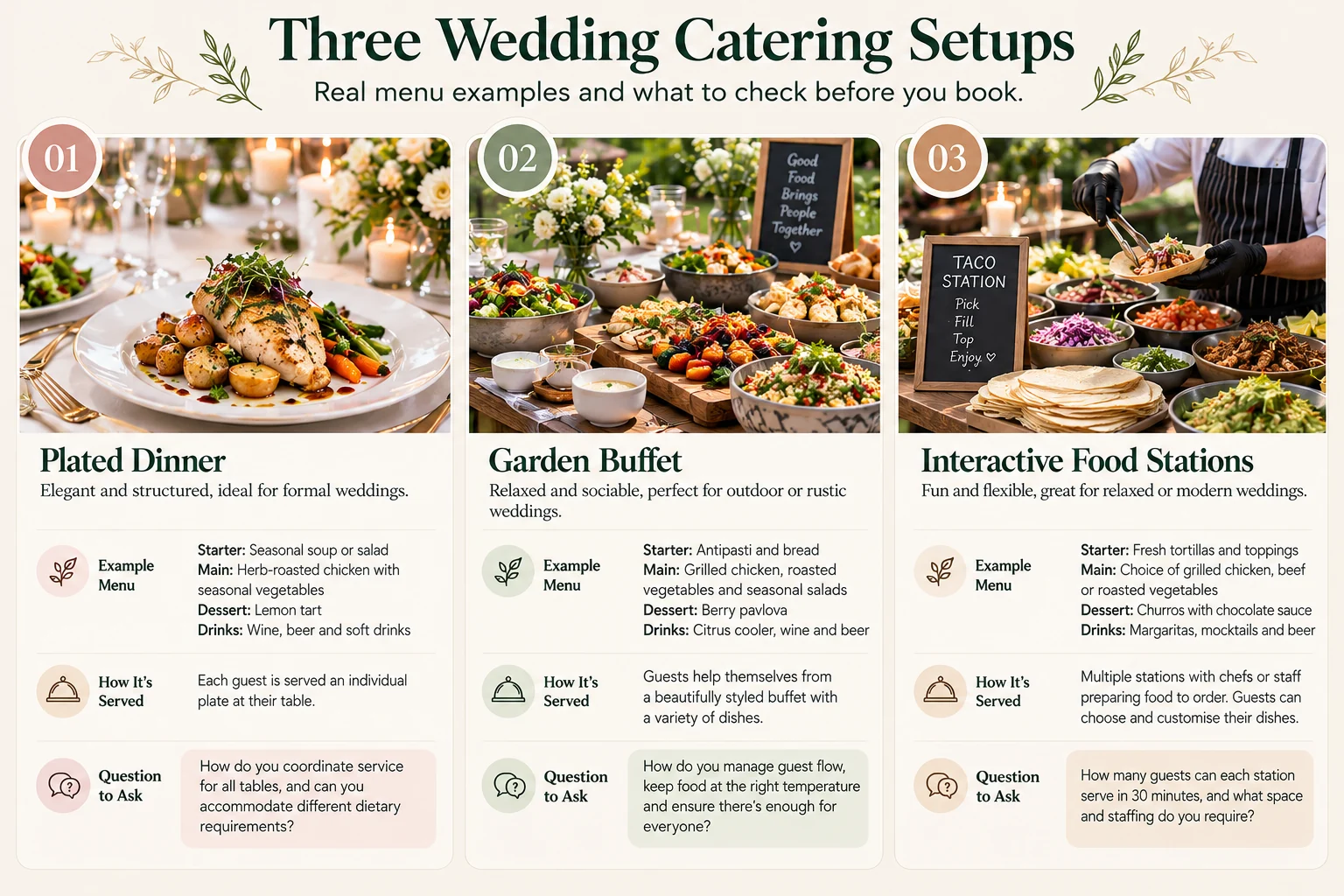
Plated Dinner, Buffet, Food Stations or Food Truck?
Choose the service format before deciding on the final dishes. It will affect staffing, timing, equipment and the feel of the reception.
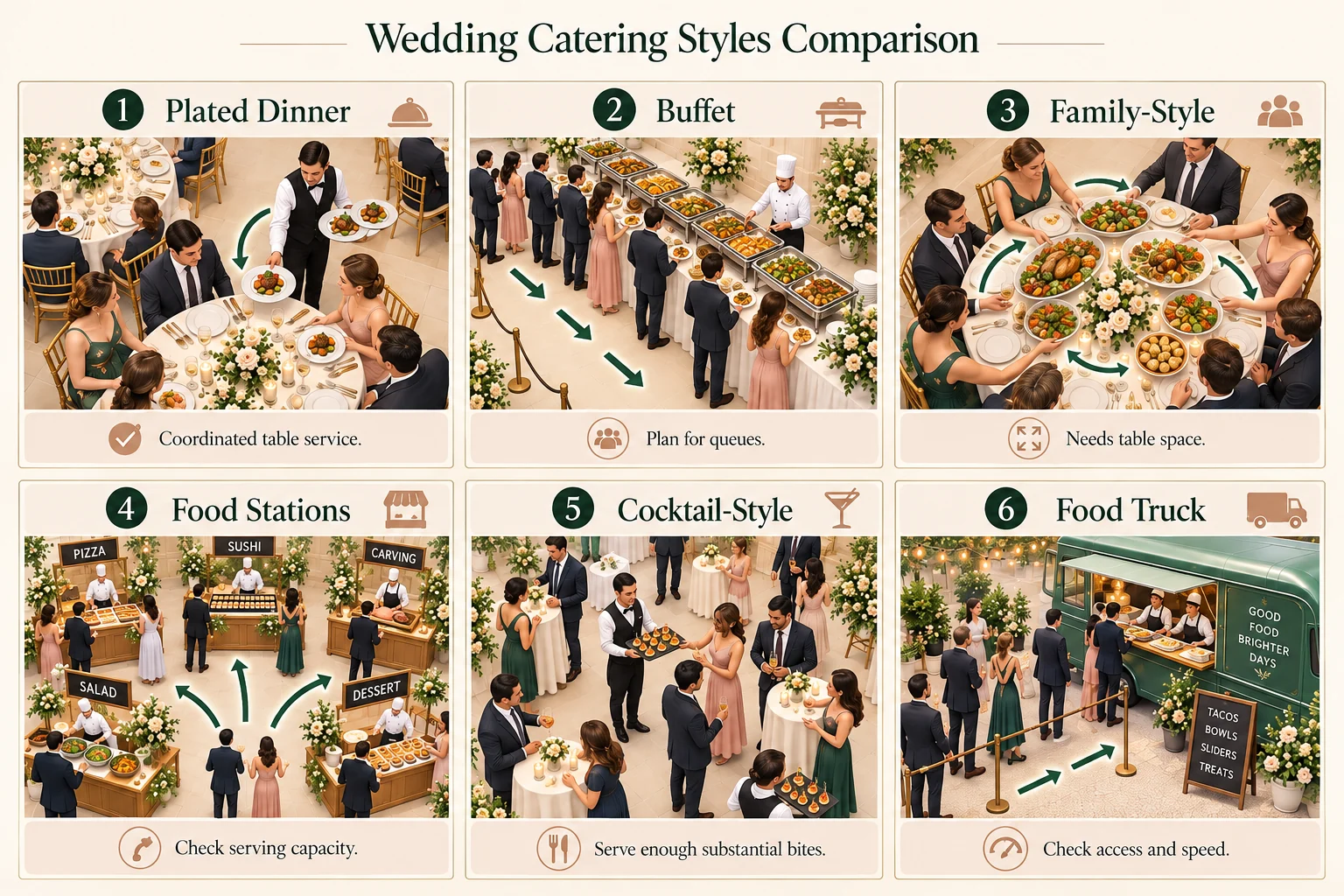
| Service format | Good fit for | Watch out for |
|---|---|---|
| Plated dinner | Formal receptions with assigned seats | Meal-choice tracking and coordinated service |
| Buffet | Varied tastes and a flexible atmosphere | Queues, replenishment and allergen management |
| Family-style | Shared tables and conversational meals | Serving space and adequate portions for each table |
| Food stations | Guests who enjoy choice and interaction | Cooking speed, multiple queues and extra staff |
| Cocktail-style meal | A reception built around mingling | Small bites must add up to a substantial meal |
| Food truck | Relaxed outdoor celebrations | Vehicle access, weather and portions per hour |
Is a Buffet Cheaper Than a Plated Dinner?
Sometimes, but not always. A buffet might need fewer table servers, while using more food, attendants or equipment. A plated dinner has tighter portion control but demands coordinated service. Compare complete quotes, not the price of a main course alone.
One especially useful question for stations and trucks is:
How many guests can you serve in 30 minutes?
It's more revealing than asking whether a supplier has catered a wedding of your size before.
Wedding Appetizer and Cocktail-Hour Food Ideas
Cocktail-hour food should be easy to pick up, eat and carry while chatting. Anything that needs a steak knife or leaves sauce running down a guest's wrist is probably better saved for dinner.
For an elegant drinks reception: whipped ricotta crostini, smoked trout blinis, mushroom tartlets, Parmesan gougères, mini crab cakes or roasted vegetable bruschetta.
For something fresh and colourful: caprese skewers, cucumber cups with herbed cream cheese, vegetable summer rolls, watermelon and feta bites, or individual mezze cups.
For heartier appetites: chicken satay, mini bao buns, spinach filo triangles, beef or lentil meatballs, and small savoury pies.
Grazing tables can be lovely, particularly when guests arrive in waves. But ask who will replenish the food and how perishable items will be kept safe. Individual cups or small platters spread around the room can also prevent a crowd gathering around one display.
Wedding Dinner Ideas Guests Will Actually Enjoy
The best main-course choice isn't necessarily the most expensive one. It's the dish your caterer can prepare beautifully for the whole room, including the final table served.
Formal Wedding Dinner Ideas
A plated menu might feature herb-roasted chicken with lemon, braised short ribs with mashed potatoes, baked cod with tomato and olives, roast duck with seasonal fruit, or pan-seared salmon with greens.
For a vegetarian main that feels like a proper occasion, consider mushroom Wellington, roasted squash filled with grains and herbs, wild mushroom risotto, or grilled aubergine with lentils and a bright herb dressing.
Ask about vegan adaptations rather than assuming all vegetarian dishes qualify.
Relaxed and Budget-Friendly Favourites
For a more casual meal, consider smoked brisket and slaw, a generous baked pasta, chicken shawarma with flatbreads, fish tacos, vegetable kebabs with pilaf, sausage and peppers, or a well-prepared barbecue with two or three sides.
Comfort food works because guests recognise it. The detail is in how it's served: crisp potatoes instead of soggy ones, fresh salads alongside rich mains, and sauces available separately when possible.
If you want the menu to reflect family or cultural traditions, dishes such as jollof rice, biryani, paella, Caribbean curry, dim sum or mole can be wonderful choices. Work with a caterer who knows the cuisine and can prepare it well at your guest count.
Interactive Wedding Food Station Ideas
Food stations are at their best when the interaction adds something: freshly stretched pizza dough, dumplings finished to order, or a chef carving roast meat in front of guests.
Other options include a taco-and-salsa bar, pasta or risotto station, loaded baked potatoes, a mezze spread, a noodle bar, a breakfast waffle station, or a build-your-own flatbread counter.
The trade-off is speed. A station cooking every portion individually may be slow, especially if most guests arrive at once.
Ask how many cooks will be present, what can be prepared ahead, and whether the caterer can open more than one serving point. A second identical taco station may improve the evening more than adding an entirely different dish.
Seasonal Wedding Food Ideas
You don't have to build a seasonal theme, but ingredients that are readily available locally can make a menu feel well matched to the setting.
| Season | Food to explore | A fitting sweet finish |
|---|---|---|
| Spring | Asparagus tart, pea-and-mint risotto, roast chicken with herbs | Rhubarb crumble |
| Summer | Grilled fish, tomato salad, sweetcorn, pesto orzo | Berry pavlova |
| Autumn | Roast pork with apple, squash soup, mushroom barley | Spiced pear cake |
| Winter | Braised lamb, root-vegetable gratin, baked gnocchi | Warm sticky toffee pudding |
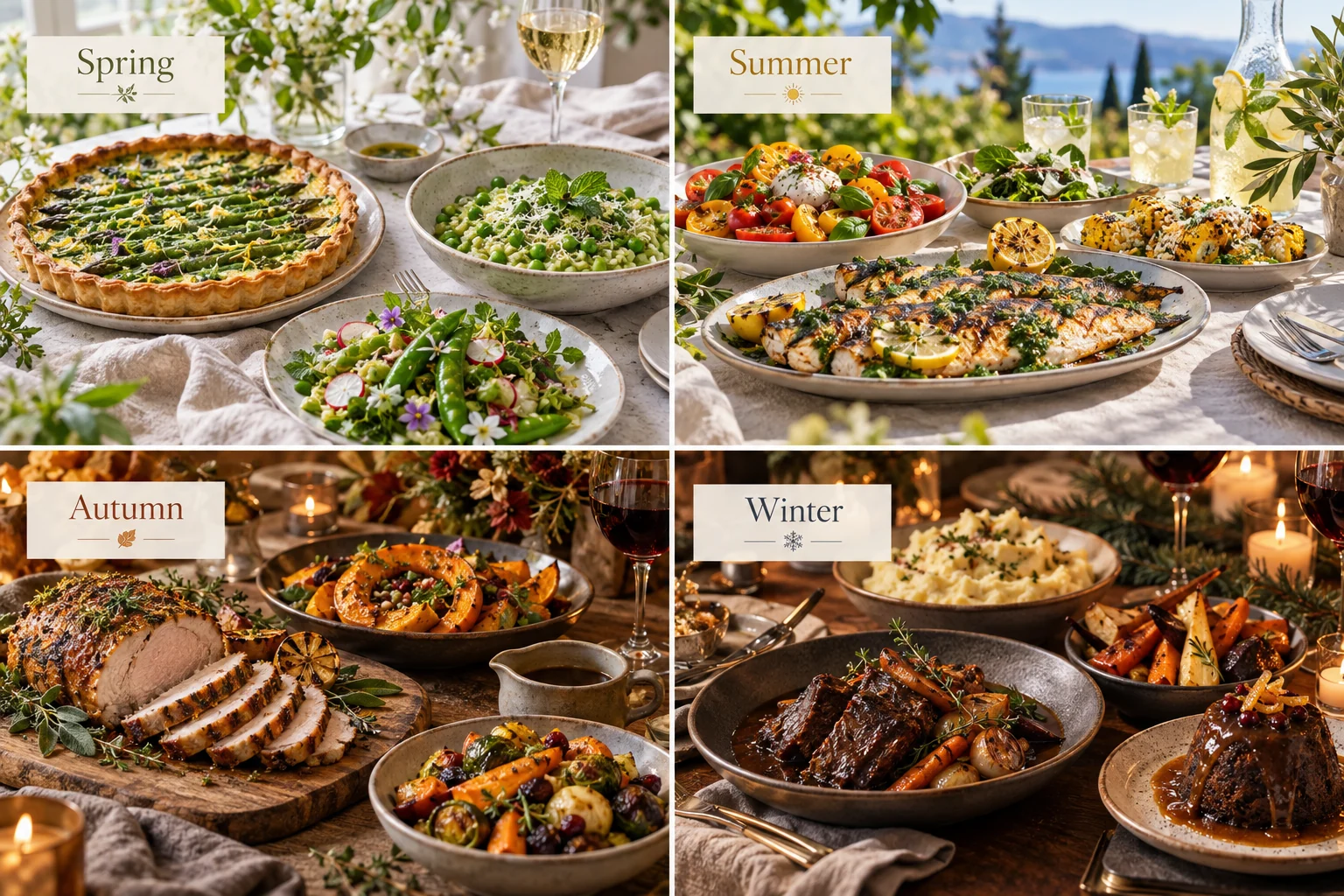
These are examples, not universal growing seasons. A spring wedding in London and one in Sydney have different produce, weather and catering conditions.
If you're serving outdoors, ask the caterer how they'll hold food safely during service. The FDA's guidance on serving safe buffets explains temperature and time controls for perishable food.
Don't plan to leave a cheese or seafood display outside all afternoon.
Wedding Drink Ideas, Including Non-Alcoholic Options
Start with water that guests can find without asking. Then choose a drinks selection suited to the food and the people attending, rather than trying to recreate a cocktail bar with an unlimited menu.
Signature Cocktails
Margaritas, mojitos, Aperol spritzes, French 75s, whiskey sours and espresso martinis are familiar starting points. Pick one or two that your bartender can make quickly and consistently. Complicated garnishes and individually muddled ingredients can slow a busy bar.
A personal name can be fun, but it isn't essential. A well-made drink with a clear menu description will be appreciated more than an obscure pun.
For recipes and more inspiration, see our wedding cocktail ideas.
Mocktails and Other Drinks
Guests who don't drink alcohol deserve more than a glass of plain cola. Offer choices such as grapefruit-and-rosemary soda, mint-and-lime cooler, passionfruit spritz, hibiscus iced tea, apple-and-ginger fizz, cucumber sparkling water or fresh lemonade.
Provide something not overly sweet, and make ingredients clear.
For a daytime or winter wedding, good coffee, tea and hot chocolate may be appreciated as much as elaborate mixed drinks.
How Much Should You Provide?
There isn't one reliable drinks calculation for every wedding. A brunch, a four-hour dinner and an all-night reception have different patterns.
Ask the bar provider for a quantity estimate based on guest numbers, service hours, the proportion of non-drinkers, weather and whether drinks are included with dinner. Confirm any licensing rules, minimum spend, corkage and staffing fees.
Wedding Cakes, Desserts and Late-Night Snacks
It's easy to order too much sweet food because every dessert sounds appealing during planning. Start by choosing what guests will be offered after dinner, then decide whether you need something later.
For an elegant plated dessert, consider lemon tart, chocolate mousse, poached pear, miniature cheesecake or a seasonal fruit tart. For a less formal reception, cupcakes, macarons, brownies, doughnuts and mini pies are straightforward choices.
If you'd like an experience rather than a dessert course, a gelato cart, crêpe station, churro counter or supervised s'mores station can work well. Check serving speed and refrigeration requirements just as you would for a dinner station.
What About Late-Night Food?
It's worth considering when dinner finishes early and the reception continues for several more hours. Fries, pizza squares, pretzel bites, grilled cheese, arancini and savoury hand pies are easier to eat between dances than another full meal.
Don't order late-night snacks automatically for every invited guest. Discuss how many people are likely to be there when food comes out.
And don't plan to re-serve dishes left out earlier unless your caterer confirms they've been stored and handled safely.
Six Sample Wedding Menus to Adapt
These are example combinations, not menus from actual weddings. Use them to discuss flavours, service and prices with your caterer. Each needs adjustment for allergies, portions and local availability.
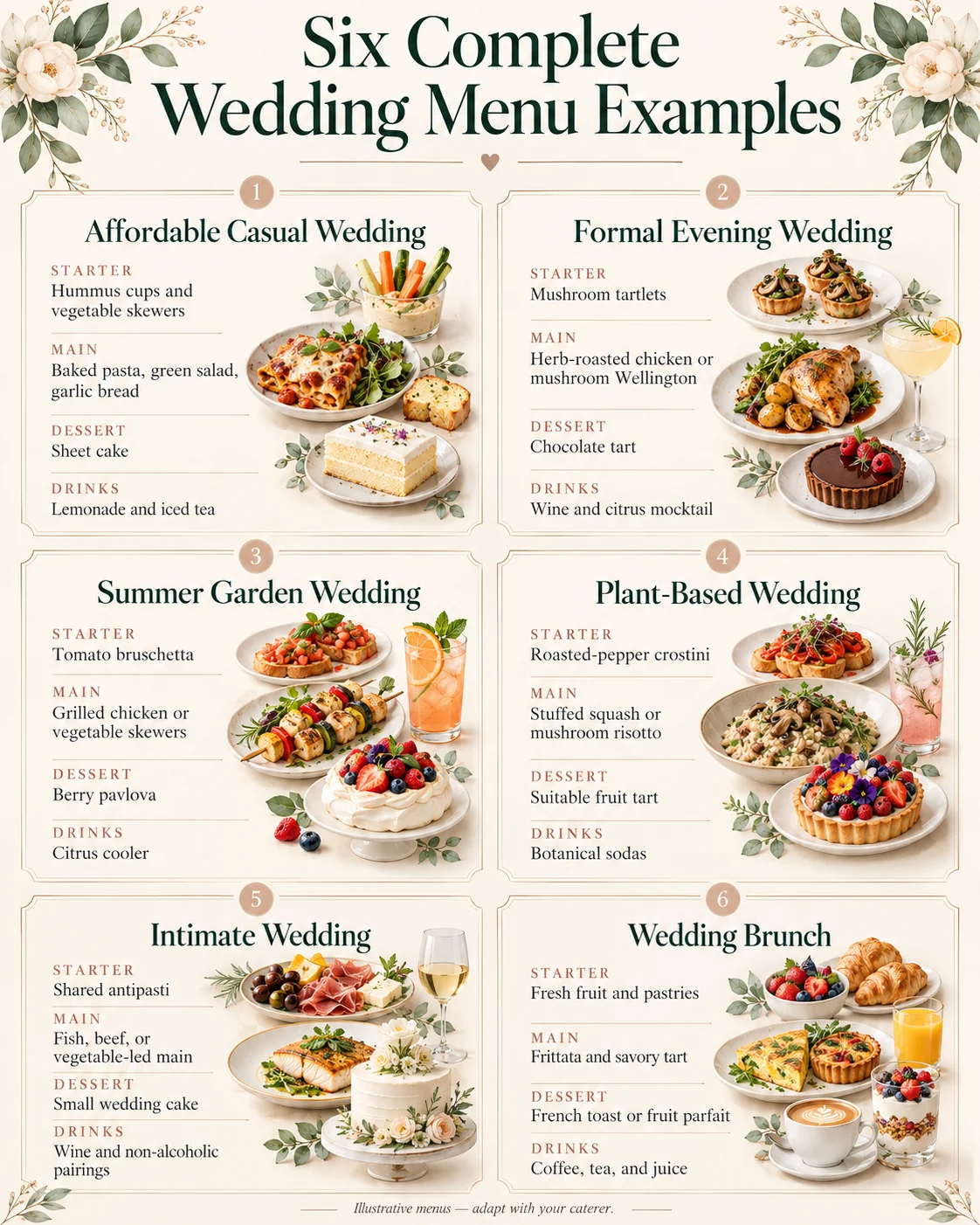
1. Affordable, Relaxed Reception
- To start: hummus cups and vegetable skewers;
- Main: baked pasta with a satisfying plant-based alternative, green salad and garlic bread;
- Dessert: sheet cake;
- Drinks: lemonade, iced tea, water and an optional limited bar.
This keeps preparation focused rather than hiring several separate station teams.
2. Formal Evening Dinner
- To start: passed mushroom tartlets;
- Main: herb-roasted chicken or mushroom Wellington with potato gratin and greens;
- Dessert: chocolate tart;
- Drinks: wine, sparkling water and a citrus mocktail.
A small selection of properly planned meal options helps the kitchen coordinate service.
3. Summer Garden Wedding
- To start: tomato bruschetta;
- Main: grilled chicken and vegetable skewers, herbed couscous and seasonal salad;
- Dessert: berry pavlova;
- Drinks: citrus cooler, water, beer and wine.
Check refrigeration and weather protection before committing to an outdoor buffet.
4. Mostly Plant-Based Celebration
- To start: roasted-pepper crostini;
- Main: stuffed squash or wild mushroom risotto, with roasted vegetables;
- Dessert: fruit tart with a suitable dairy-free option;
- Drinks: botanical sodas and a short wine selection.
Confirm which dishes are vegan and how allergen cross-contact will be managed.
5. Intimate Restaurant Wedding
- To start: shared antipasti;
- Main: a choice of roast fish, slow-cooked beef or a vegetable-led main, with family-style sides;
- Dessert: a small cake and seasonal fruit;
- Drinks: curated wines and non-alcoholic pairings.
Smaller groups may have room for more personalised service.
6. Wedding Brunch
- To start: fruit and miniature pastries;
- Main: frittata, roasted potatoes and a savoury tart;
- Sweet course: French toast or fruit parfaits;
- Drinks: coffee, tea, juice and sparkling water.
Keep the brunch menu distinct from what the wedding party eats while getting ready that morning.
What a Real Catering Menu Can Tell You
Ask shortlisted caterers for examples of menus they've actually served at weddings of a similar size.
Look at the courses, the dietary alternatives and the photographs of how dishes were presented. Ask what they'd change if they served that menu again.
It's a much better conversation than asking for their most impressive menu without context.
How Much Does Wedding Catering Cost?
As a reference point, The Knot's 2026 Real Weddings Study reports average US wedding catering spending of $80 per person, based on a survey of 10,474 US couples married in 2025.
This is a national study average, not a quote for your event or a benchmark for the UK, Australia or other markets.
The useful figure is the complete quoted cost. Ask whether the number includes food, chefs and servers, equipment, rentals, delivery, bar staff, tax, service charges and clearing away.
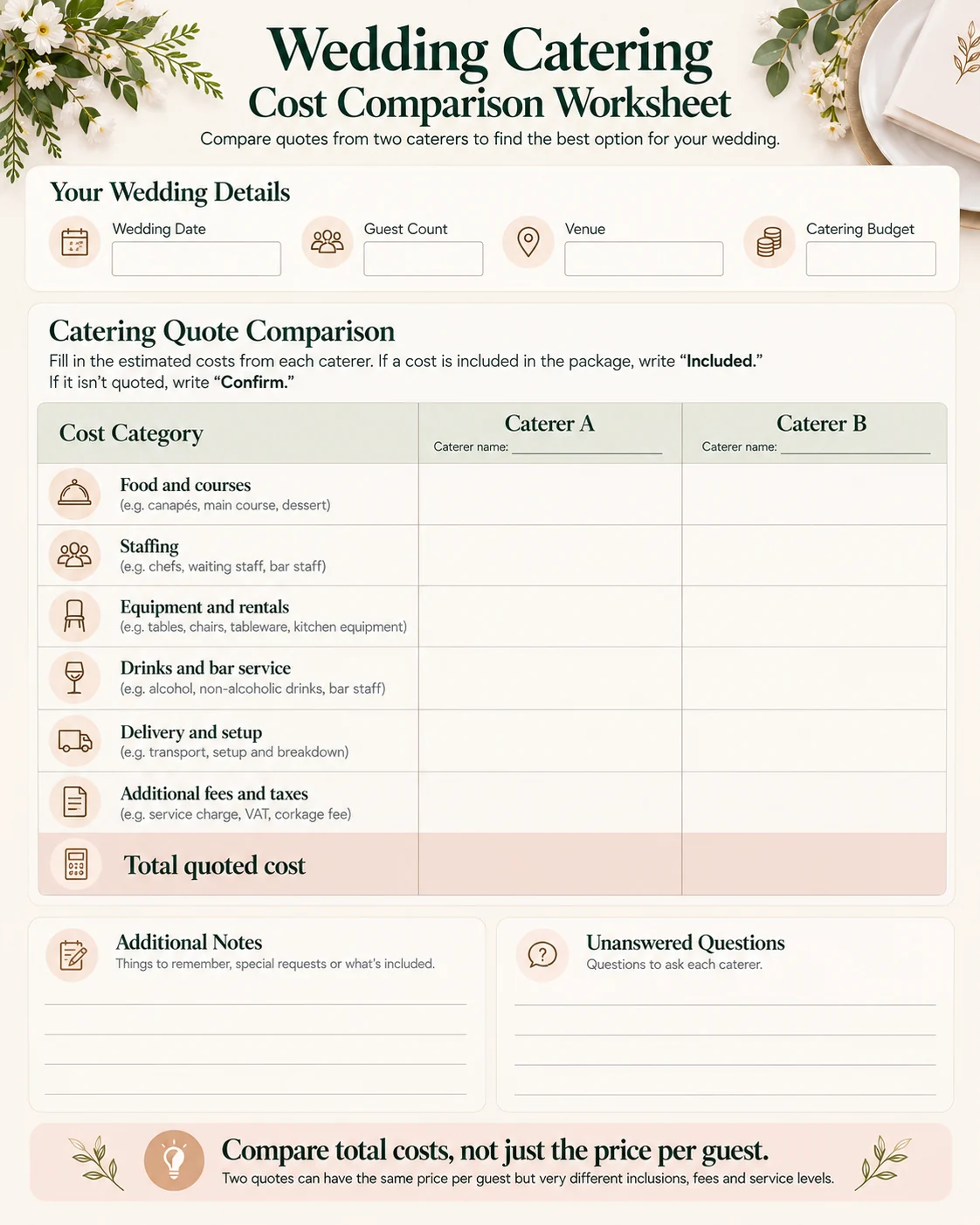
Compare Like With Like
Imagine you're hosting 100 guests and receive these hypothetical proposals:
| Item | Caterer A | Caterer B |
|---|---|---|
| Food | $6,500 | Included |
| Staff and setup | $2,000 | Included |
| Rentals | $850 | Included |
| Package price | Not applicable | $9,000 |
| Subtotal before any additional taxes or fees | $9,350 | $9,000 |
Caterer A's advertised $65-per-guest food price looks cheaper than Caterer B's $90 package. Once the comparable services are included, the order reverses.
Compare total costs, not just the price per guest.
This is why you need itemised proposals with the same scope.
To keep the overall cost under control, ask whether a simpler main course, fewer separate stations, a smaller dessert selection or a shorter bar menu would reduce the total bill. Our guide on how to cut wedding costs covers related decisions.
Plan the Food Around the Wedding-Day Timeline
Food is part of the schedule, not something that happens between the important bits.
Guests shouldn't be called away from dinner halfway through a course, and a catering team shouldn't have to stop serving because a speech has unexpectedly begun.
Here's one illustrative afternoon-to-evening timeline:
| Time | What happens |
|---|---|
| 3:30 PM | Welcome water and refreshments |
| 4:30 PM | Drinks and passed appetizers |
| 6:00 PM | Main meal service |
| 7:30 PM | Dessert and cake |
| 9:30 PM | Optional late-night food |
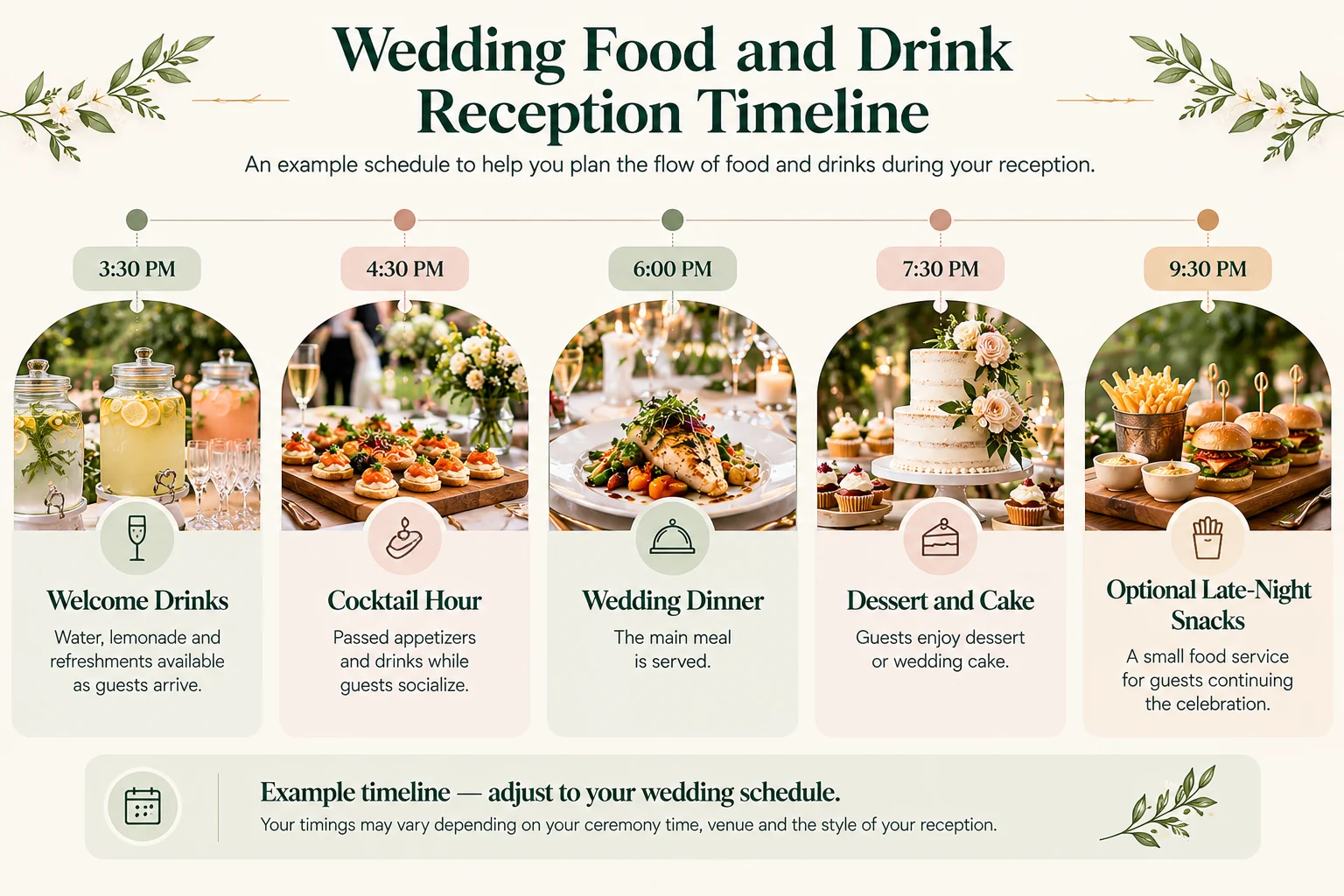
The right times depend on your ceremony, photographs, speeches, venue rules and how long service actually takes.
Share the plan with the caterer, venue coordinator and whoever is running the reception, so the meal, speeches and entertainment fit together.
If guests are taking their own photos of the food stations, speeches and dance floor, you may also want a way to collect wedding photos from guests after the wedding.
Guestreel lets guests add photos and videos to a private event gallery using a QR code or link, without downloading an app or creating an account.
Wedding Menu Planning Checklist
Before paying a deposit, make sure you can answer these questions:
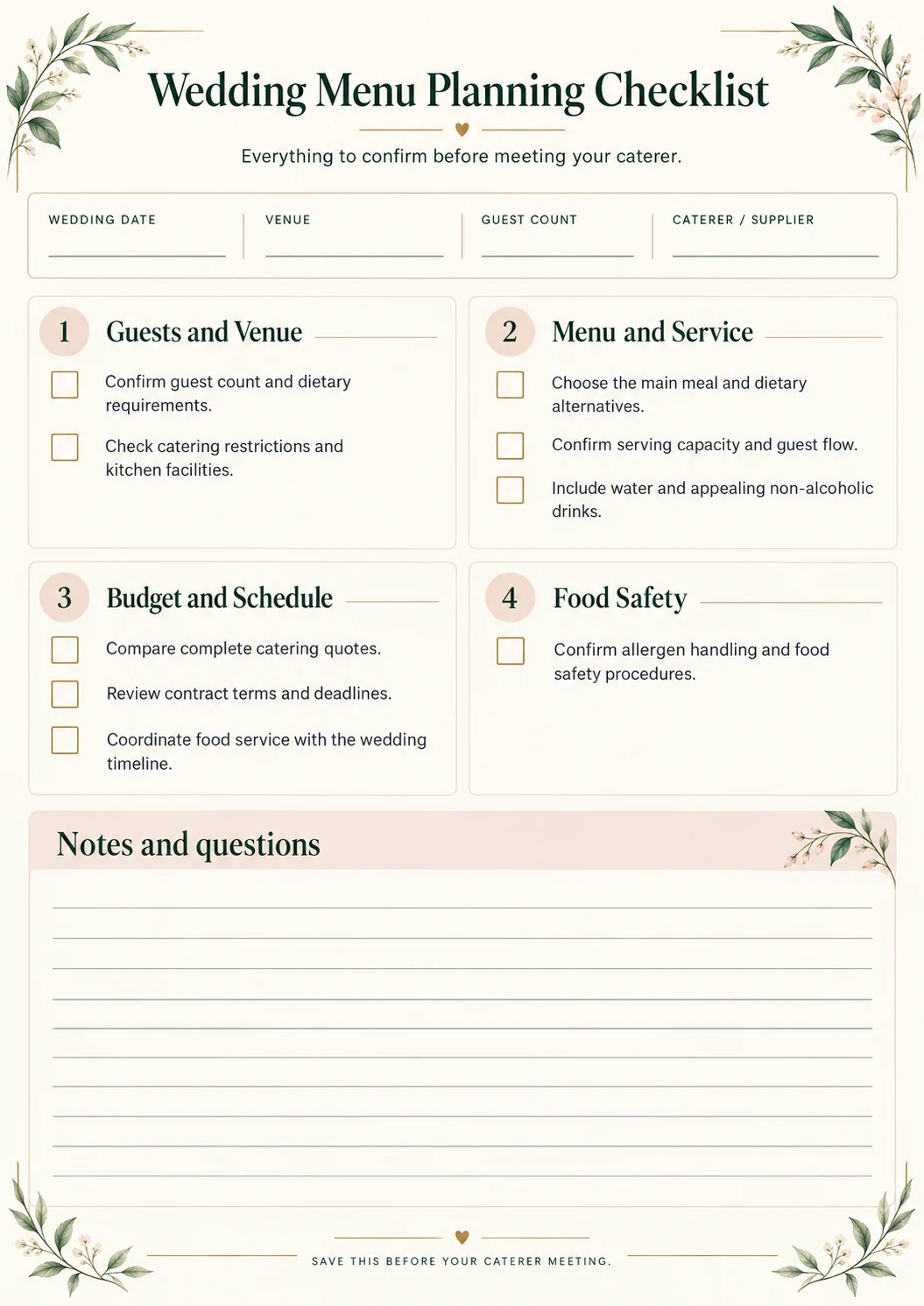
- Guests: do we have a realistic count and a method for collecting dietary requirements?
- Venue: have we confirmed approved caterers, kitchen facilities and outside-cooking restrictions?
- Menu: is there a substantial meal and a genuine alternative for every dietary need?
- Service: can everyone be served within the planned time, without long queues?
- Drinks: are water and good non-alcoholic options covered throughout the event?
- Budget: have we compared complete costs, including staff, rentals and additional charges?
- Contract: are the deposit, cancellation terms, final headcount deadline and overtime fees clear?
- Schedule: does catering fit around the ceremony, speeches, photographs and entertainment?
- Safety: has the professional caterer confirmed food handling and allergen procedures?
If you're organising several parts of the day at once, keep this list alongside your wider planning notes.
The Best Wedding Menu Is One You Can Actually Enjoy
Choose a few food and drink ideas you love, then pressure-test them against the venue, your budget and the number of people coming.
If the dishes can be served well, guests have satisfying choices, and the schedule leaves room to enjoy the celebration, you're on the right track.
Then let the caterer handle the service and enjoy the celebration you planned.
Frequently asked questions
What food is usually served at a wedding?
Many receptions include small appetizers, a main meal and dessert. The meal may be plated, buffet-style, family-style or served through food stations.
Brunch and cocktail-style weddings follow different patterns. There is no requirement to serve a traditional three-course dinner if another format provides guests with a satisfying meal.
What's the cheapest way to feed wedding guests?
Focus on menus your caterer can prepare and serve efficiently, such as baked pasta, rice dishes or a limited selection of substantial mains and sides.
But don't judge by ingredients alone: staff, equipment and venue requirements often change the final cost. Request comparable all-in quotes.
Is buffet catering cheaper than plated service?
Not necessarily. A buffet can reduce some table service, but may increase food quantities, equipment or replenishment needs.
Plated meals require coordinated staffing and advance meal choices. The better value depends on your venue, guest count and the actual quoted inclusions.
How much food should we order for 100 guests?
Ask your caterer to calculate portions for the menu and service style you're using.
A grazing reception requires a different quantity and mix of dishes from a plated three-course dinner. Confirm children's meals, dietary alternatives and any vendor meals separately rather than relying on a universal formula.
What drinks should we serve at a wedding?
Start with water and appealing alcohol-free drinks.
Add beer, wine, cocktails or other options according to your preferences, venue rules and budget. Your bartender can estimate quantities using the reception length, guest count and expected drinking preferences.
Do we need late-night wedding snacks?
Only if the schedule and guests make them worthwhile.
Late-night food is more useful when dinner ends early and many people are still celebrating hours later. If the reception finishes shortly after dessert, it's fine to skip it.
How should we handle wedding guests' food allergies?
Collect relevant information before finalising the menu and share it directly with your caterer.
Confirm ingredients, cross-contact procedures, meal identification and what staff should say when asked about allergens. Don't promise a dish is safe for a particular guest without checking with the professional preparing it.
Written by Linda DoWrites Guestreel’s planning guides.