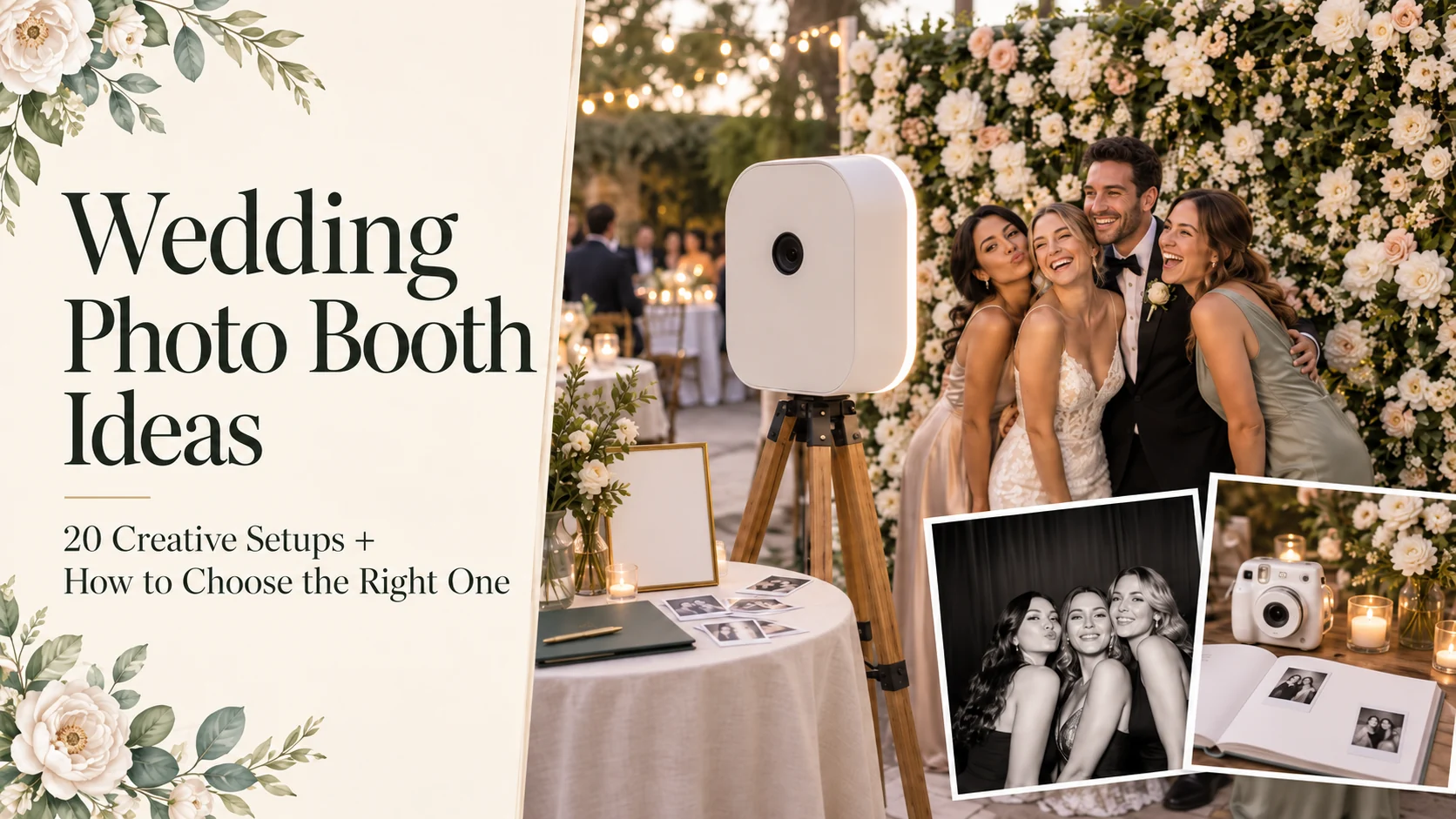
A wedding photo booth can be anything from a classic enclosed booth with printed strips to a simple corner where guests take photos on their own phones. The right choice depends less on what looks impressive online and more on what fits your venue, budget and guests.
Start with the outcome you want. Do you want printed keepsakes? Polished portraits? Short videos? A guest-book activity? Or simply more candid photos from the reception?
That answer will narrow the options quickly.
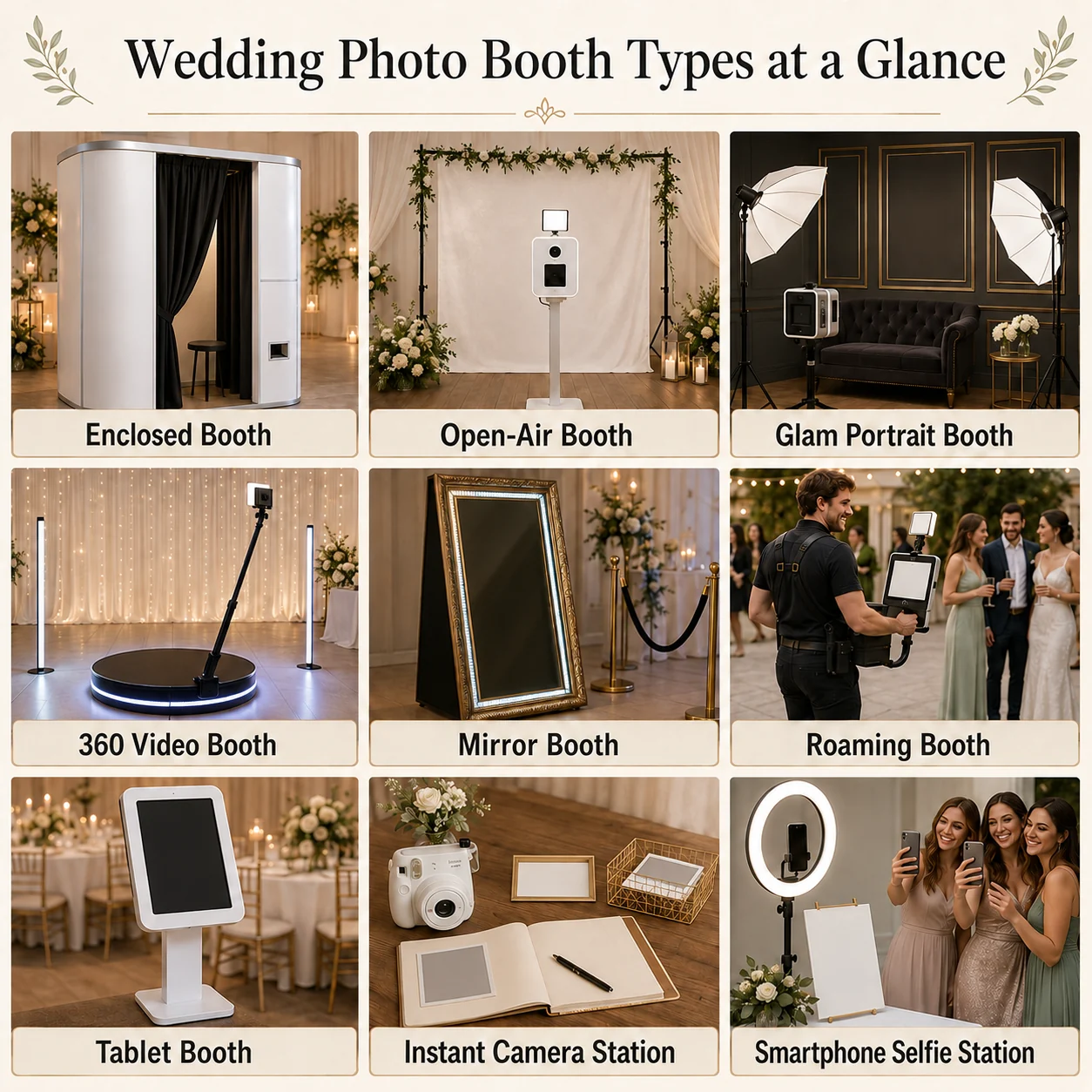
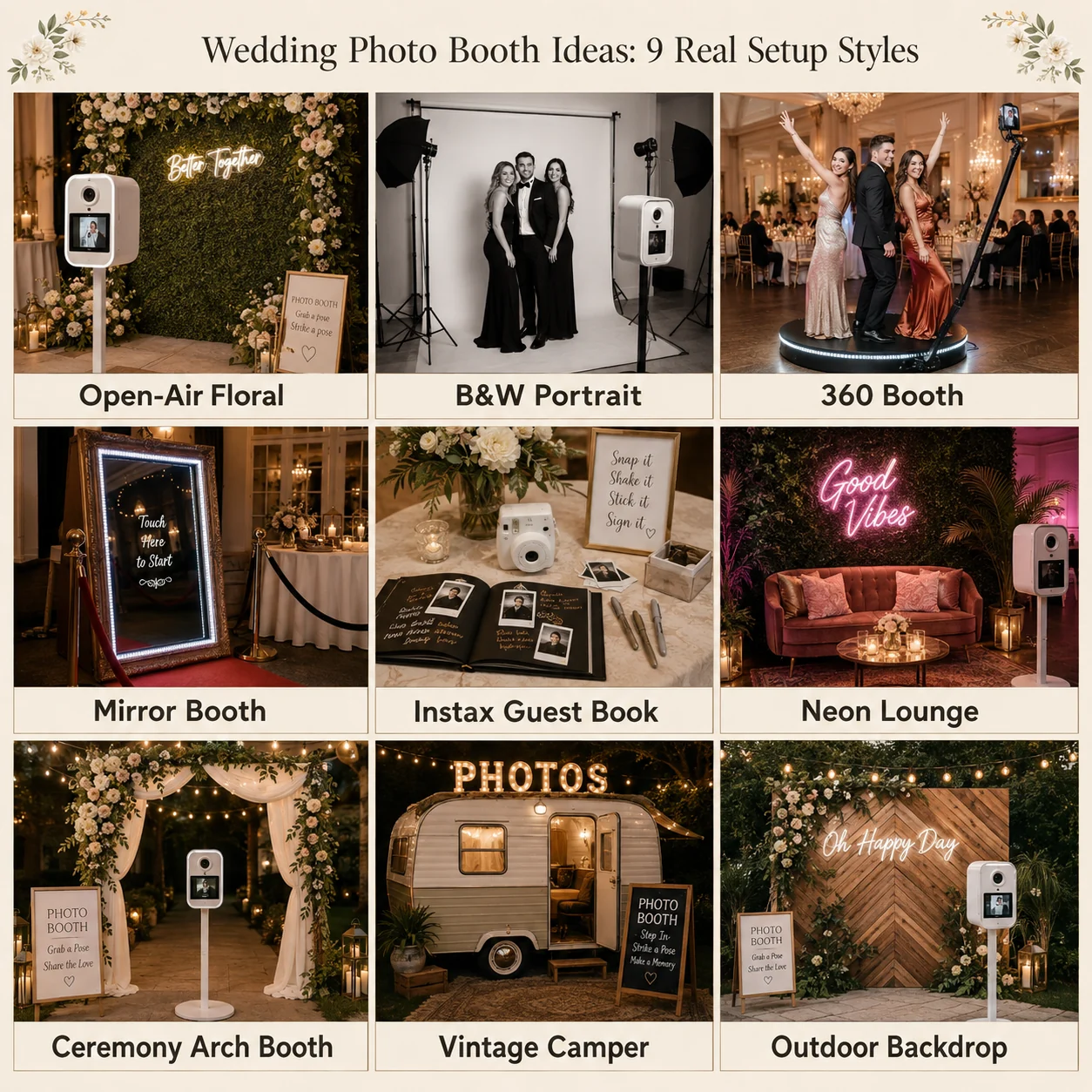
Which Wedding Photo Booth Is Right for You?
| Photo booth type | Best for | Main output | Setup | Relative cost |
|---|---|---|---|---|
| Enclosed booth | Classic photo-strip experience | Prints + digital photos | Medium | $$ |
| Open-air booth | Groups and busy receptions | Prints and/or digital photos | Medium | $$ |
| Glam portrait booth | Formal or modern weddings | Polished portraits | Medium | $$$ |
| 360 booth | High-energy receptions | Short videos | High | $$$ |
| Mirror booth | Interactive experience | Digital photos + optional prints | Medium | $$$ |
| Roaming booth | Large venues | Digital photos | Medium | $$ to $$$ |
| Tablet booth | Self-service setups | Digital photos or clips | Low | $ to $$ |
| Polaroid/Instax station | DIY weddings and guest books | Instant prints | Low | $ to $$ |
| Smartphone selfie station | Small budgets and simple setups | Guest phone photos | Low | $ |
If physical keepsakes matter most, start with a traditional booth or instant-camera setup. If you care more about stylish portraits, put the budget into good lighting and photography. For energetic video, a 360 booth makes more sense. And if you mainly want guests to take and share more photos, you may not need a conventional booth at all.
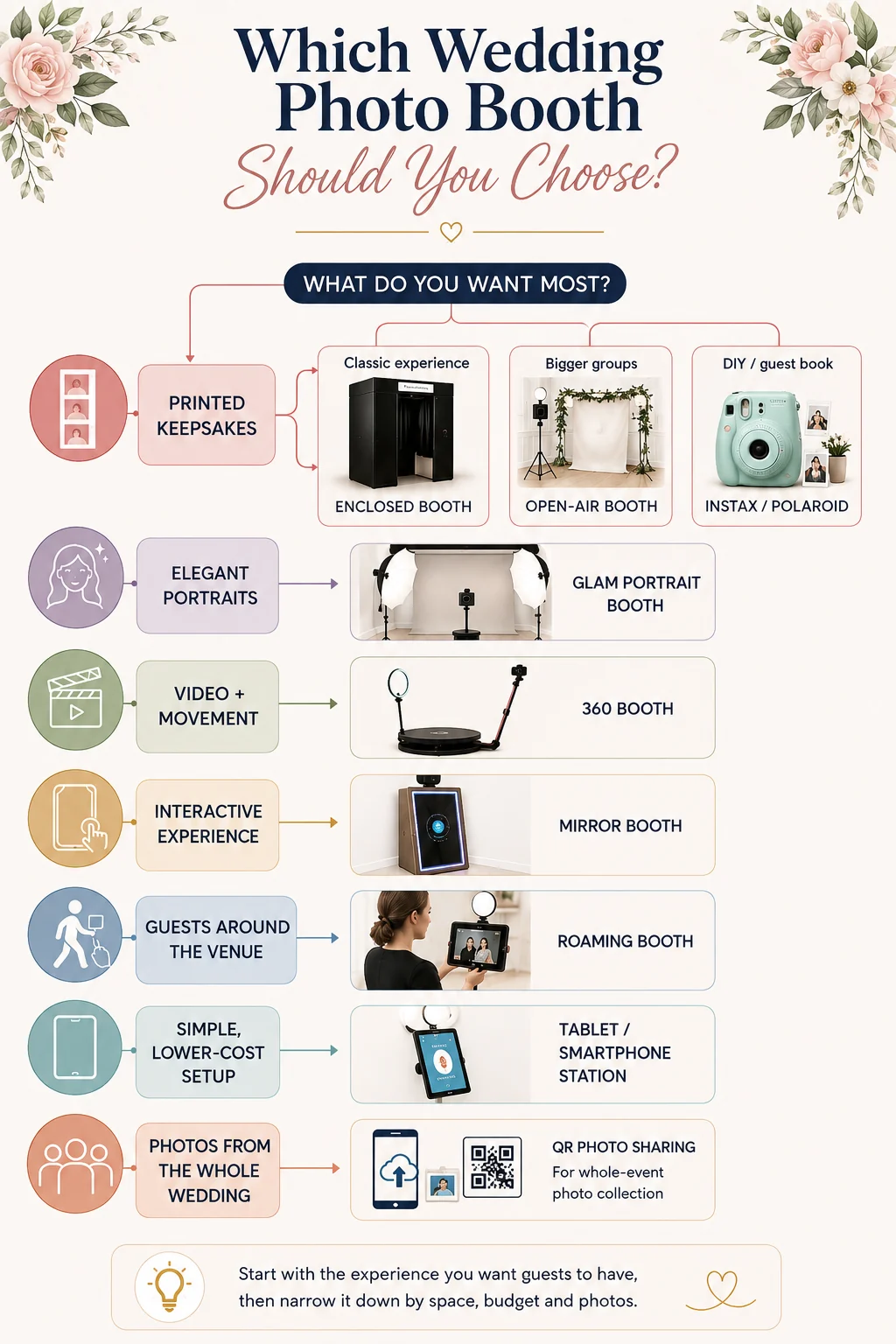
20 Wedding Photo Booth Ideas
1. Classic Enclosed Photo Booth
The old-school version still works: guests step inside, pull the curtain, pose through a few shots and leave with a photo strip.
Choose this if nostalgia and printed keepsakes matter more than fitting large groups into one frame. Before booking, check how many people fit comfortably and whether you'll receive the digital images too.
2. Open-Air Photo Booth
An open-air booth keeps the camera and backdrop but removes the walls.
It is easier for groups, feels less cramped and lets other guests see what is happening. That visibility can also help participation because people are more likely to join in when they can see friends using it.
3. Black-and-White Glam Booth
For a more grown-up look, lose the novelty props and focus on flattering lighting, a simple background and black-and-white portraits.
This suits black-tie, modern and minimalist weddings particularly well. Ask to see full galleries from the provider, not just a handful of their strongest promotional images.
4. 360-Degree Video Booth
A 360 booth records a short video while a camera moves around the guests.
It is built for movement, dancing and dramatic clips rather than traditional photographs. These booths generally need more operating space than a standard setup, so get the exact footprint from your supplier before committing.
5. Mirror Photo Booth
Mirror booths hide the camera and interactive interface inside what looks like a full-length mirror.
Depending on the supplier, guests may be able to select options, add graphics or receive prints. They can suit elegant venues where a large box-style booth would feel visually out of place.
6. Roaming Photo Booth
A roaming booth removes the fixed location completely.
Instead, an attendant moves through the reception taking guest photos and sending or printing them according to the package. It is useful for cocktail hours, larger venues and weddings where guests naturally move between several spaces.
7. GIF or Looping-Video Booth
Take several images in quick succession and turn them into a GIF or short looping clip.
It adds movement without requiring a full 360 platform and tends to suit informal weddings. Keep the process quick; the more screens and effects guests have to navigate, the easier it is to create a queue.
8. Green-Screen Booth
A green screen lets guests pose against digitally created backgrounds.
The backdrop could reference your honeymoon, a favourite film, your hometown or something completely ridiculous. The quality depends heavily on lighting and software, so judge suppliers by real event galleries rather than mockups.
9. Self-Serve Tablet Booth
A tablet on a secure stand can create a compact digital booth for venues where floor space is limited.
Add flattering light and a good background, then let guests take their own photos. It is a practical option when digital delivery matters more than prints.
10. Smartphone Selfie Station
Sometimes the camera guests already have is enough.
Create a clearly defined photo spot with flattering light and a strong backdrop, then let people use their own phones. Add a straightforward way for guests to send those pictures to you afterwards rather than leaving them scattered across individual camera rolls.
11. Polaroid or Instax Guest Book
Place an instant camera beside a guest book and invite guests to add a photograph alongside their message.
It combines two wedding details into one activity and gives you something tangible at the end of the night. Keep extra film nearby and add a short instruction card so nobody has to guess what to do.
For more variations, see our guide to wedding guest book ideas.
12. Photo-Strip Guest Book
If your booth produces duplicate prints, ask guests to stick one copy into an album and take the other home.
It turns the booth into both entertainment and a keepsake. Confirm the print format and number of copies with the supplier before building the guest-book plan around it.
13. Flower or Greenery Wall
A floral wall can double as reception decor and a photo backdrop.
You do not need to reproduce your entire floral scheme. A restrained arrangement often photographs better because faces remain the focal point. Artificial flowers or greenery can also be more practical for a long reception.
14. Neon-Sign Lounge
Pair a neon sign with a sofa, armchairs or a small lounge area.
Instead of looking like a conventional booth, the setup becomes part of the venue. Leave enough room in front for group shots and test the lighting beforehand; a bright sign behind poorly lit faces rarely photographs as well as it looks in person.
15. Sequin, Streamer or Balloon Backdrop
If elegant portraits are not the goal, lean into something playful.
Metallic streamers, balloons or sequins can create plenty of visual energy without complicated construction. Test reflective materials under the actual camera lighting, particularly if flash will be used.
16. Repurpose the Ceremony Arch
Your ceremony installation already matches the wedding. Why build another backdrop?
If the venue layout allows it, move the arch or floral structure to the reception and turn it into the photo area. Coordinate the move with the planner, venue and florist rather than assuming the structure can simply be carried across.
17. Vintage Camper or Vehicle Booth
A camper, bus or vintage vehicle makes the booth itself part of the experience.
This is most practical at venues with straightforward outdoor access. Confirm parking, arrival times, power, weather plans and access routes before you book.
18. Build a Theme Around the Couple
The most memorable photo booth theme is often something guests immediately associate with you.
That could mean records for music lovers, vintage travel posters, a miniature library, a disco set, references to your favourite film or a suspiciously large cardboard version of your dog.
Personal details usually land better than generic "wedding" props.
19. Use the Venue as Your Backdrop
Look around before ordering another wall.
A staircase, courtyard, old stonework, garden or city view may give photographs more character than a temporary installation. Check the area once the reception layout is in place because bars, tables and service routes can change how usable a location actually is.
20. Build an Outdoor or Seasonal Photo Spot
Outdoor weddings already come with scenery. Use it.
Gardens, woodland, beaches or autumn foliage can make a natural photo setting, but outdoor setups need a backup. Wind, rain and fading light can quickly turn a beautiful idea into an unusable one.
Is a Wedding Photo Booth Worth It?
A photo booth is worth considering if you want another guest activity, informal group photos or a physical keepsake. It is not something every wedding needs.
Wedding-planning communities tend to reflect both sides of that decision. Some couples love having a digital archive of silly photos they would never get from the formal photography, while guests often mention taking the printed strips home as one of the more useful wedding favours. Others say they enjoy booths when they are there but would not stretch the budget to add one.
A booth is more likely to earn its place when:
- you want an activity beyond dancing;
- your guests enjoy taking photos;
- you value informal group pictures;
- prints can double as favours;
- the venue has a visible place for it;
- the cost fits comfortably within the budget.
If money is tight or the reception already has plenty happening, skipping the booth is a perfectly reasonable decision. You can explore other wedding entertainment ideas before deciding where the budget will have the most impact.
How Much Does a Wedding Photo Booth Cost?
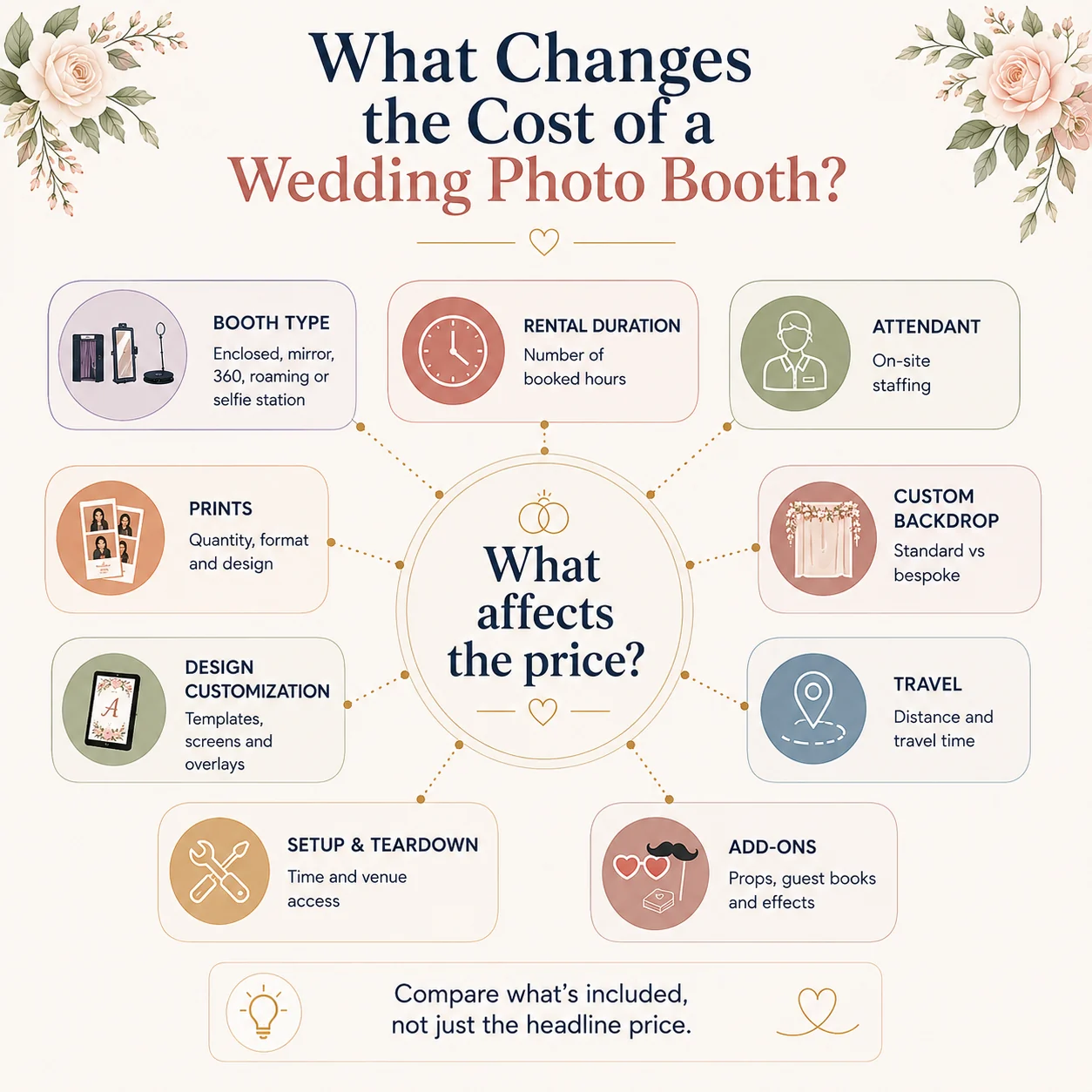
There is no meaningful worldwide average because prices depend on location, booth type, rental time, printing, staffing, travel and customisation.
As a U.S. reference point, WeddingWire's 2026 cost guide lists starting prices around $551 for a three-hour package. Treat that as a budgeting reference, not an expected quote for every market.
When comparing suppliers, look beyond the headline price.
| Cost factor | What to check |
|---|---|
| Rental time | Hours the booth is actually available |
| Staffing | Attended or self-service |
| Output | Digital files, prints or both |
| Printing | Quantity and format |
| Backdrop | Standard or custom |
| Delivery | How and when you receive the files |
| Logistics | Travel, setup and teardown |
| Extras | Props, guest book, custom graphics or effects |
For a DIY booth, include the entire setup in your budget: lighting, stands, backdrop materials, instant film or printing can cost more than expected.
How to Make a DIY Wedding Photo Booth
A DIY booth works best when you keep it simple.
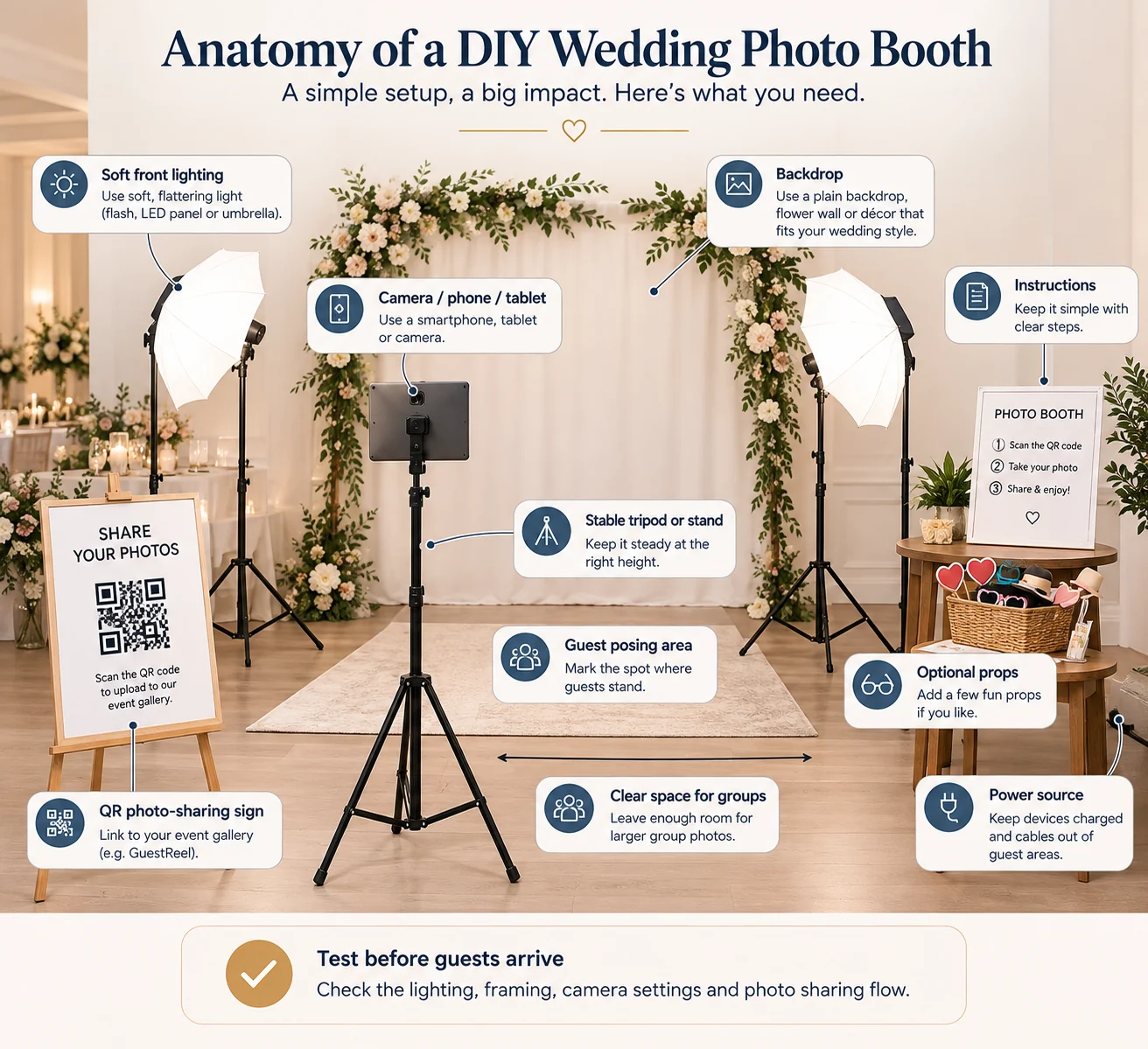
- Choose the camera. A phone, tablet or instant camera may be enough.
- Use a stable stand. Nobody wants to rescue a falling tablet halfway through the reception.
- Add flattering light. Test it under evening conditions, not only in daylight.
- Choose a clean backdrop. Fabric, a wall or your ceremony arch can all work.
- Keep props selective. A few good ones beat a table full of random novelty glasses.
- Decide what happens to the photos. Prints, digital delivery and guest uploads all require different setups.
- Check power and connectivity. Do not assume Wi-Fi or charging points will be available exactly where you need them.
- Run a full test. Take solo and group photos before guests arrive.
If you are handling more of the wedding yourself, these DIY wedding ideas cover more ways to save money without making the day feel homemade for the wrong reasons.
How to Get Guests to Actually Use the Photo Booth
A beautiful booth hidden in an empty side room is still an empty booth.
Put it near existing traffic. The edge of the reception, cocktail area or another place guests already pass is usually more practical than a separate room.
Let people see it. Watching friends use an open booth is a much better prompt than a tiny sign pointing down a corridor.
Keep the instructions obvious. Guests should understand what to press, scan or collect within a few seconds.
Avoid major wedding moments. Speeches, dinner and the first dance are not prime booth time.
Leave room for groups. Some of the best photos happen when six friends pile in at once.
Think about accessibility. Seated guests, children, older relatives and people using mobility aids should be able to enter the area and appear comfortably in the frame.
Where Should You Put a Photo Booth?
Aim for visible, close to the reception and out of the way of essential traffic.
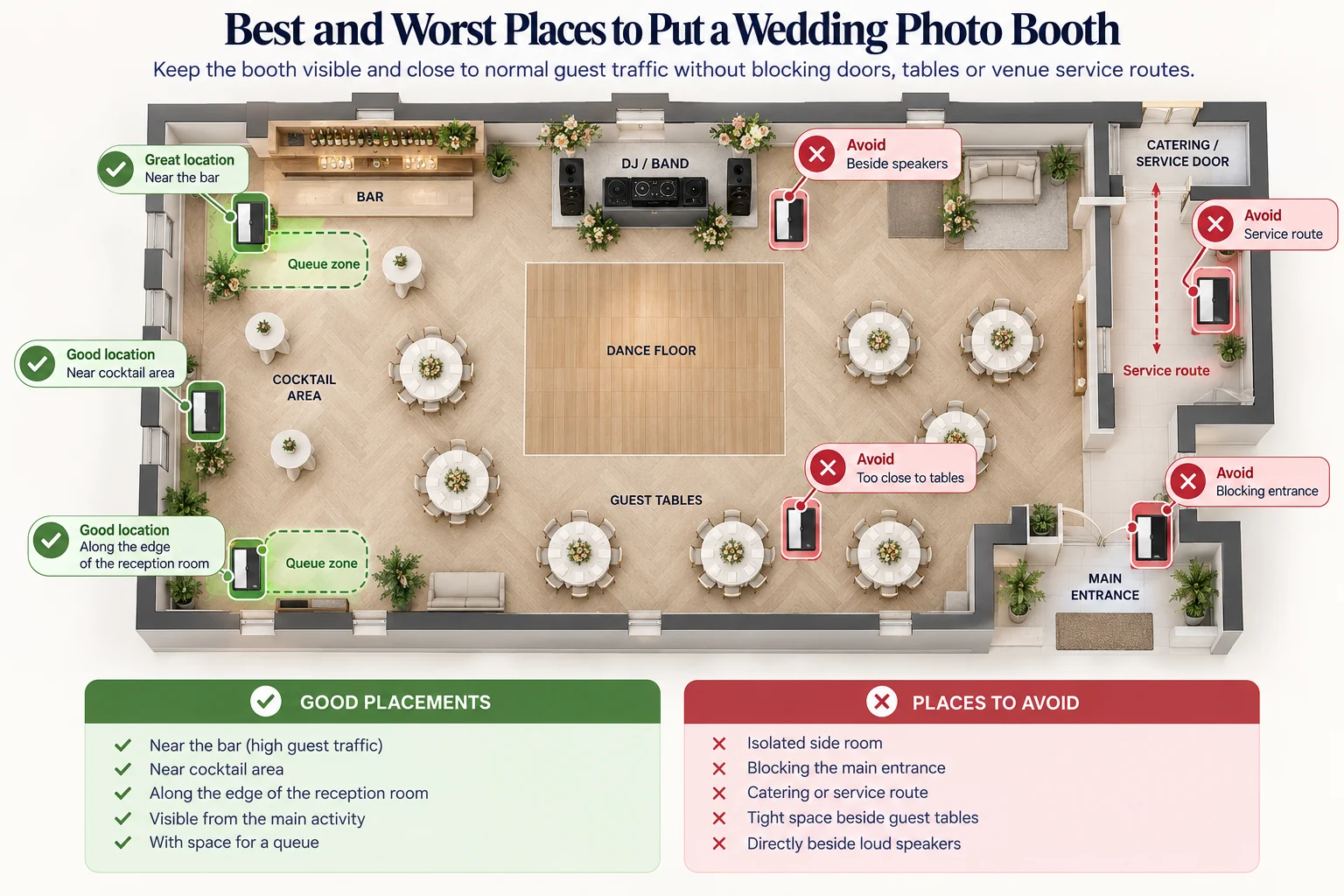
The edge of the main room, near the bar or beside a cocktail area can all work. Avoid service routes, narrow doorways and distant spaces guests have no other reason to visit.
The practical requirements matter too. Your supplier may need power, connectivity or a particular floor surface, and a queue needs somewhere to form without blocking tables.
Confirm the position with both the venue and booth provider before the reception layout is finalised.
Make the Backdrop Work for the Camera, Not Just the Room
Some backdrops look beautiful in person and surprisingly messy in photos.
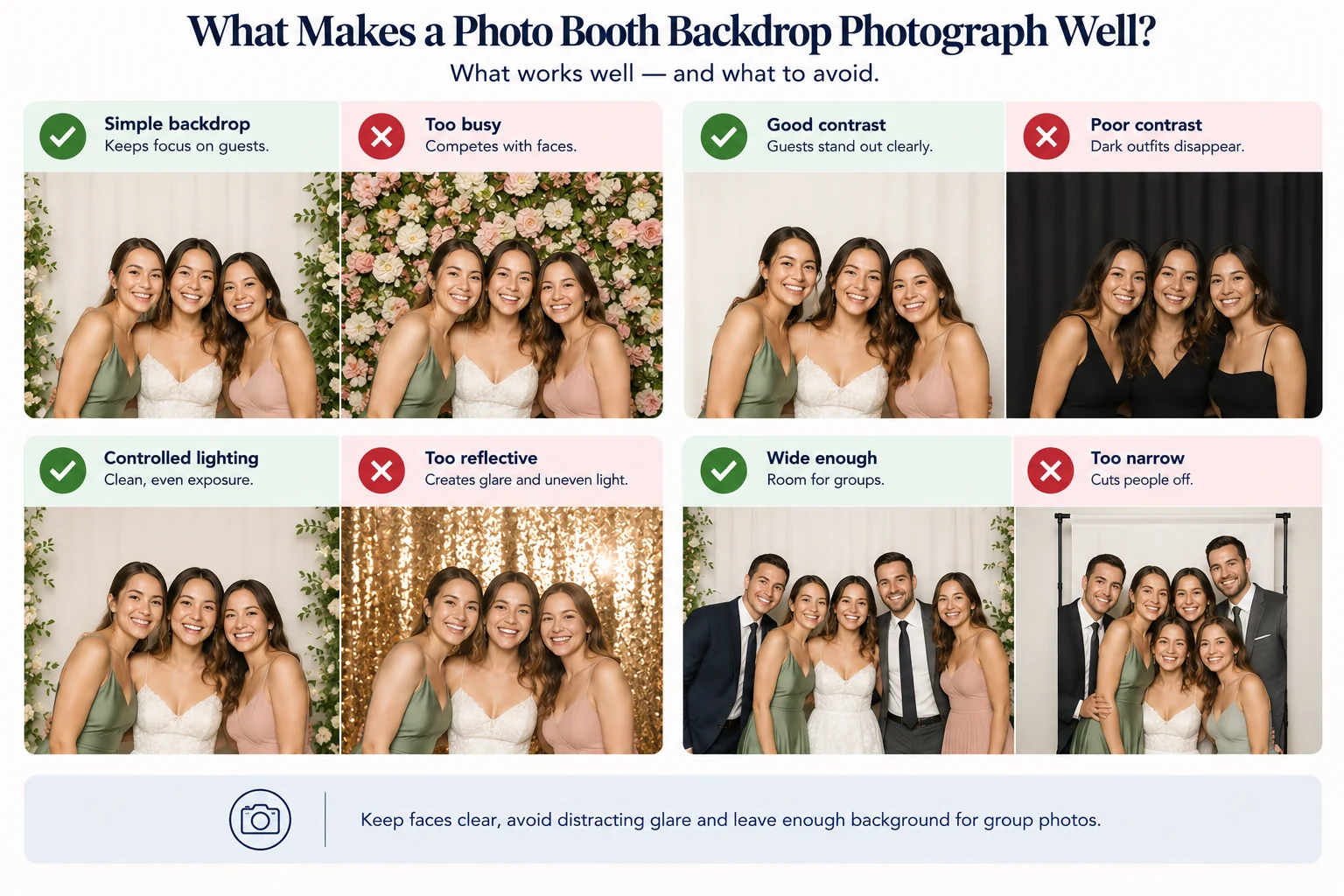
Keep the background simple enough
Busy patterns and lots of tiny decorative elements can compete with people's faces.
Watch contrast
Think about what guests will be wearing. Dark formalwear against a dark wall, for example, may need much stronger lighting than you expect.
Test anything reflective
Mirrors, sequins, metallic curtains and neon signs can produce glare or strange exposure when flash or strong LEDs are involved.
Think about group photos
A narrow floral wall might look perfect behind two people but fall apart visually when seven guests squeeze into the shot.
And remember that props are optional. Personalised items, pet cutouts, a couple of genuinely funny signs or accessories linked to your wedding can add personality. A polished portrait setup often looks better with no props at all.
How to Keep the Photos Guests Take Outside the Booth
A photo booth records what happens in one small part of the venue. Your guests are taking photos everywhere else.
They will capture getting ready, drinks at the bar, table conversations, children on the dance floor and moments the professional photographer could not physically be present for. The challenge is actually getting those files afterwards.
Before booking a booth, ask whether the couple receives every digital file and how long the gallery remains available.
For smartphone photos, choose a collection method before the wedding rather than chasing guests afterwards. Shared albums and messaging groups can work, but they depend on guests remembering where to send everything.
Guestreel gives guests a personalised QR code that opens an upload page in their browser, so they can add photos and videos to one event gallery without downloading an app. Guestreel also supports original-resolution uploads and downloading the collected media.
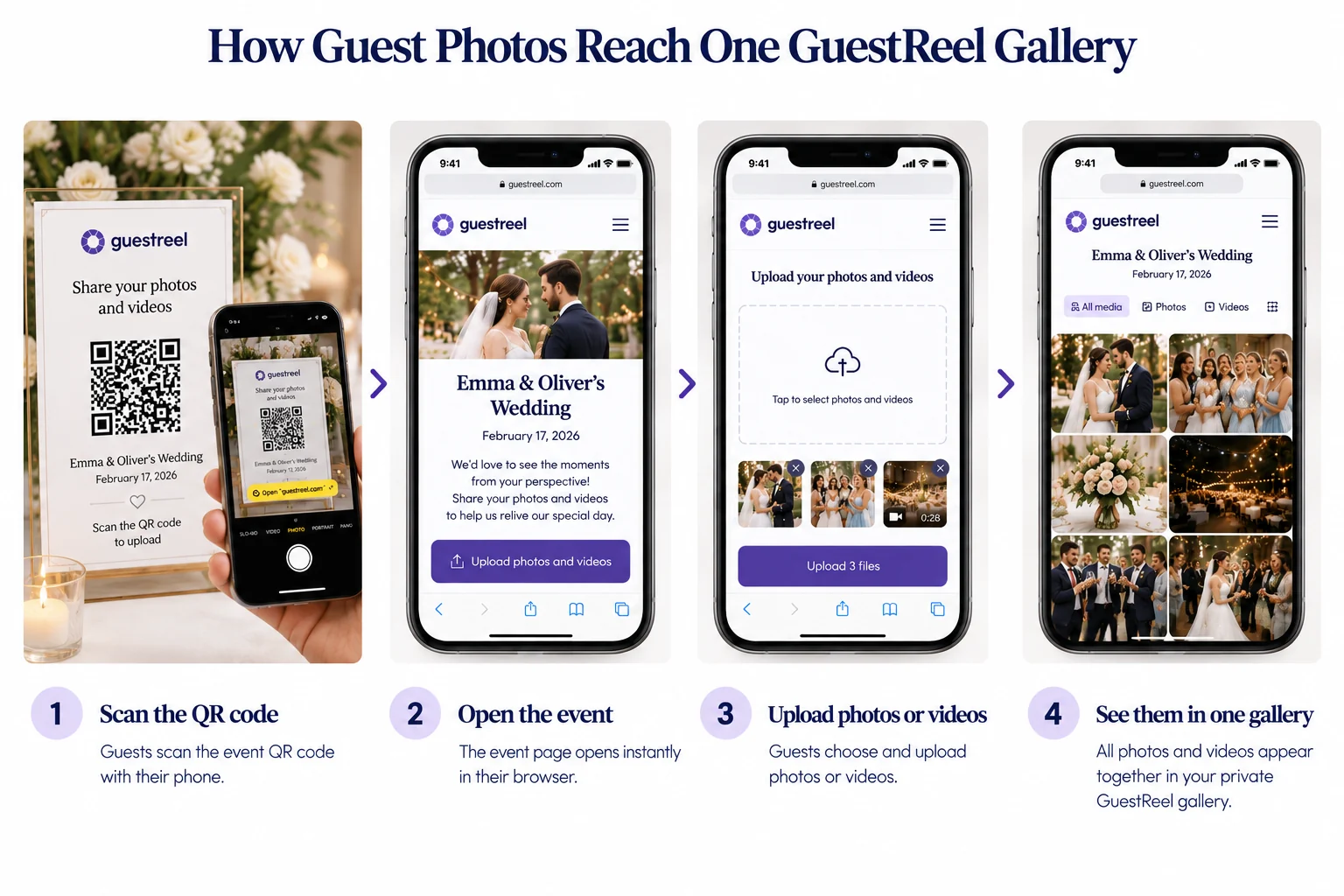
You can read the full guide to collecting wedding photos from guests or see how Guestreel works for weddings.
A QR gallery is not the same thing as a photo booth. A booth creates a photo-taking experience in one location. QR photo sharing helps collect the pictures guests take throughout the rest of the event.
Photo Booth vs Selfie Station vs QR Photo Sharing
The three are often discussed together, but they solve different problems.
| Option | Takes the photo? | Collects wider guest photos? | Prints? | Best for |
|---|---|---|---|---|
| Traditional booth | Yes | Usually no | Often | Entertainment + keepsakes |
| Selfie station | Guest or booth device | Usually no | Optional | Simple photo area |
| Instant-camera station | Yes | No | Yes | DIY guest books |
| 360 booth | Yes, as video | Usually no | No | Video experience |
| QR photo sharing | Guests use their own phones | Yes | No | Collecting guest media |
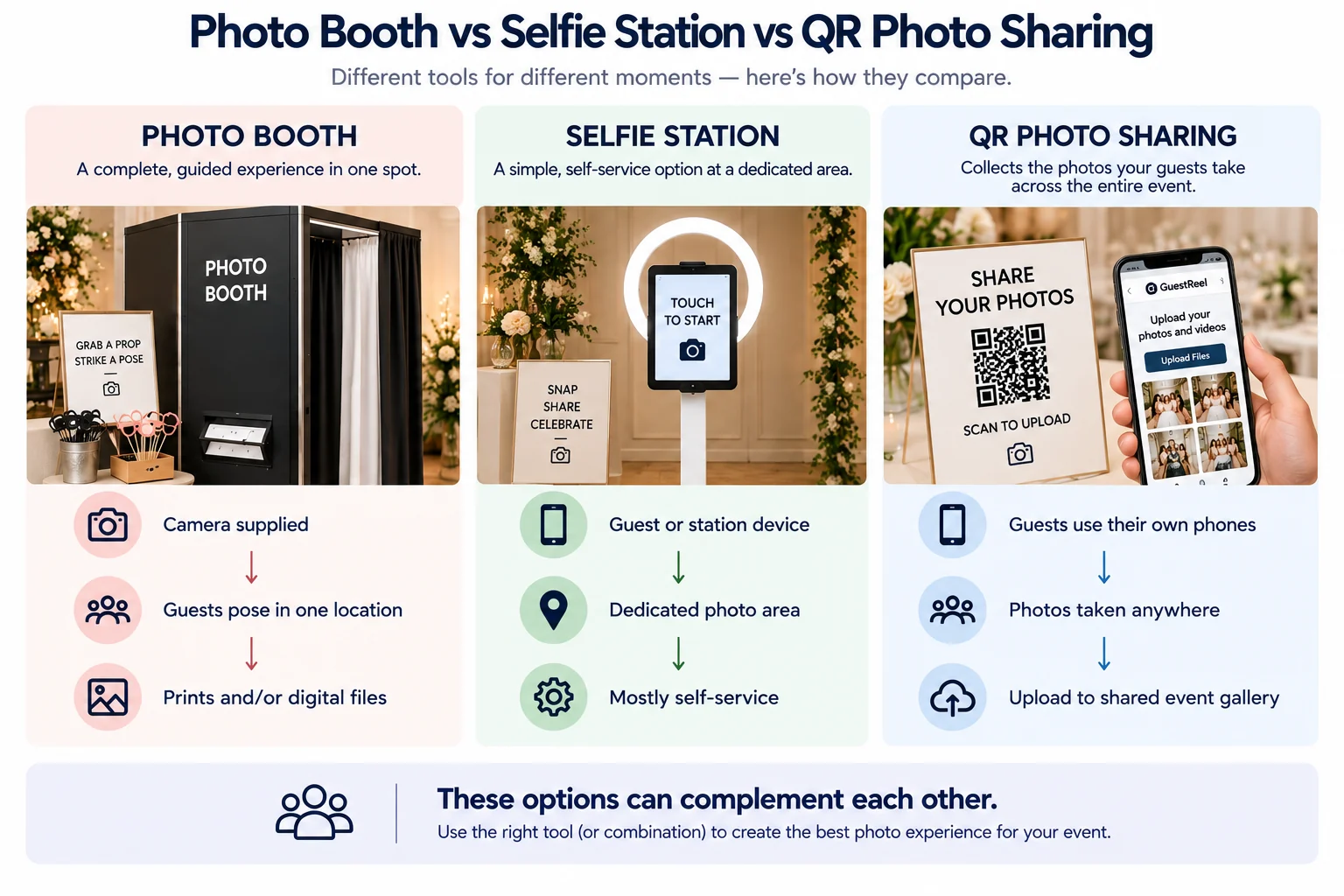
If the priority is entertainment, focus on a booth.
If the priority is collecting as many perspectives from the wedding as possible, a sharing method that travels with guests' phones solves a different (and often complementary) problem.
Questions to Ask Before Hiring a Wedding Photo Booth
Get the practical details in writing before comparing prices.
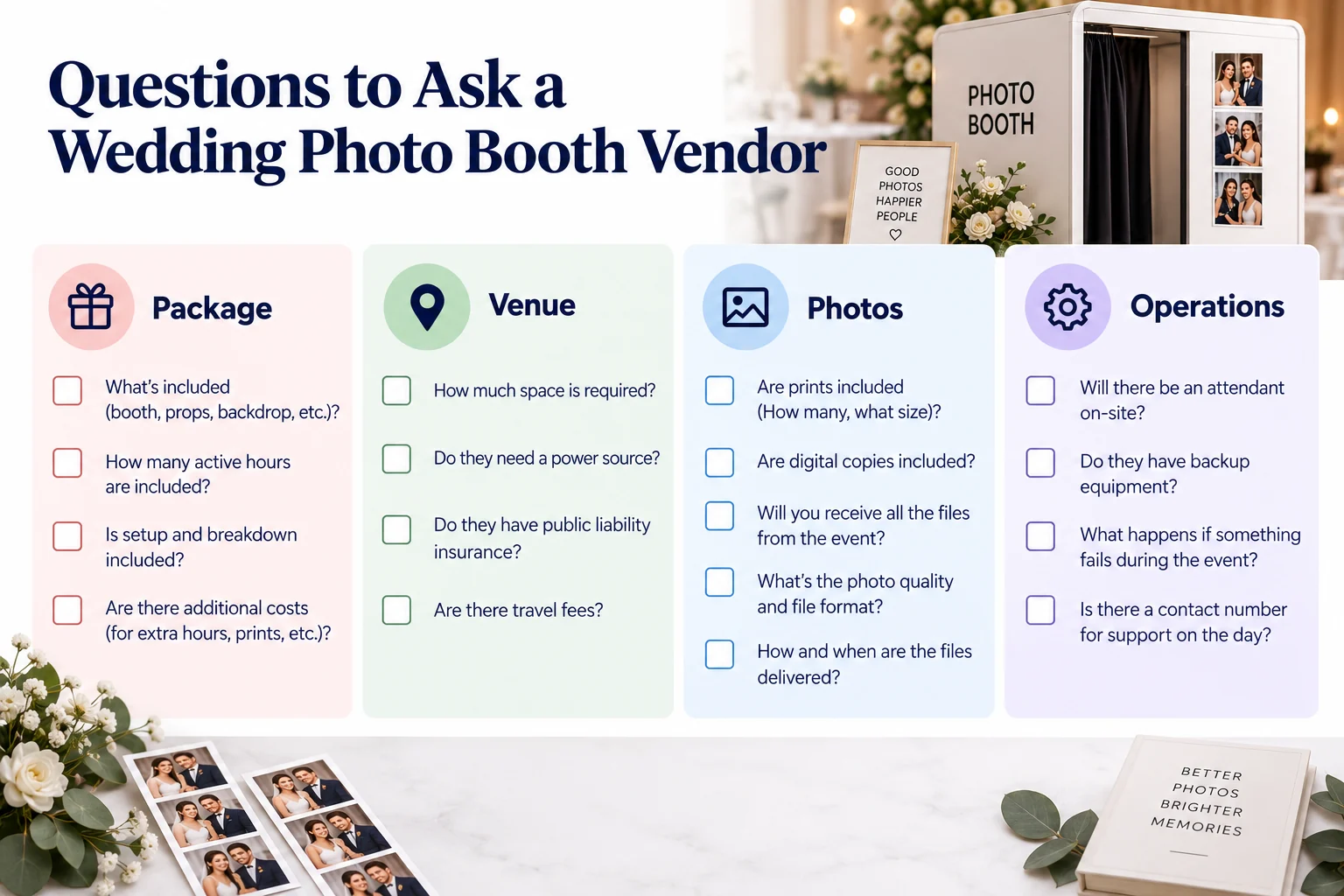
Ask:
- What exactly is included in the package?
- How many hours of active booth time do we get?
- Are setup and teardown included in those hours?
- Will an attendant be there?
- What floor space and power do you need?
- How many people fit comfortably in one photo?
- Are prints included?
- Is there a print limit?
- Do guests receive digital copies?
- Does the couple receive every final image or video?
- What resolution are the final files?
- How and when are they delivered?
- Can the backdrop or print design be customised?
- What happens if equipment fails?
- Are travel or parking fees extra?
- Do you meet any insurance requirements set by our venue?
Using the same questions with every supplier makes it much easier to compare like with like.
Wedding Photo Booth Setup Checklist
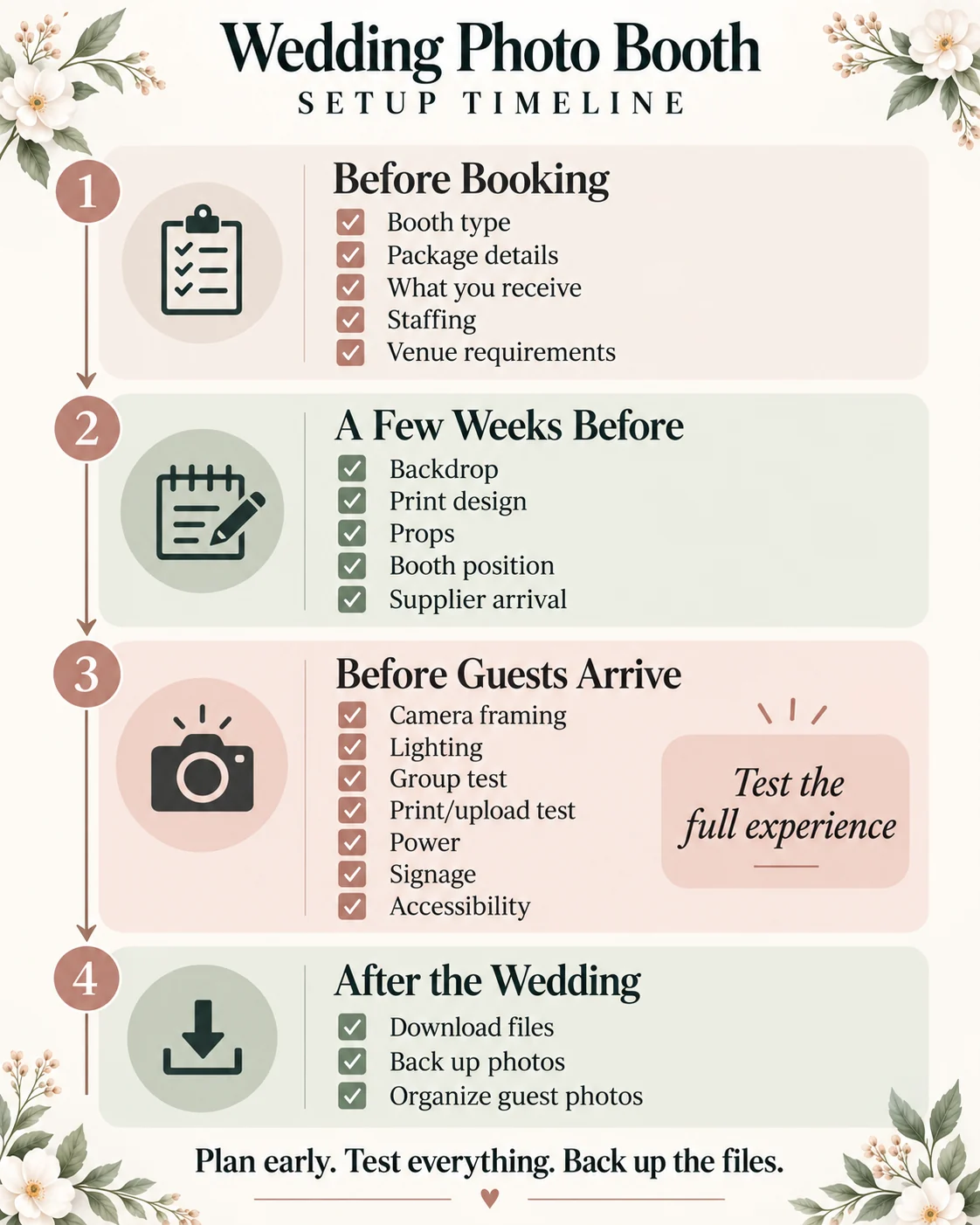
Before booking
Confirm the booth type, total price, package inclusions, output, staffing and venue requirements.
A few weeks before the wedding
Finalise the backdrop, print design, booth location, props and delivery method. Share arrival and setup information with your venue or planner.
Before guests arrive
Test:
- camera framing;
- solo and group photos;
- lighting;
- backdrop position;
- printer, if applicable;
- digital delivery;
- QR code or upload flow, if used;
- power and connectivity;
- signage;
- accessibility;
- space for a small queue.
After the wedding
Download the final gallery while it is available, back up the files and combine booth images with the other photographs guests shared.
Choose the Experience First
Do not start by choosing the booth with the longest feature list.
Decide what you want guests to get from it. Printed favours call for one kind of setup; elegant portraits, video clips and DIY guest-book photos call for others. If the bigger goal is keeping the candid photos people take throughout the day, plan how those files will reach you as carefully as you plan the booth itself.
The right setup is the one that fits naturally into the wedding rather than becoming another thing you have to manage.
Frequently asked questions
How long should a wedding photo booth run?
There is no ideal number of hours for every wedding. Cover the part of the reception when guests have free time to mingle, rather than paying for long periods that overlap with dinner, speeches or other scheduled moments.
How much space does a wedding photo booth need?
It depends on the booth. Ask the provider for the full operating footprint, including room for the equipment, guests posing and any queue. A 360 platform, enclosed booth and simple tablet setup can have very different requirements.
Do you need a photo booth attendant?
Not always. Traditional rental booths and more complex setups may benefit from an attendant who can manage guests and technical problems, while simple tablet or smartphone stations can often run unattended. Check what the provider recommends and whether staffing is included.
Can a photo booth replace a wedding photographer?
No. A booth photographs guests in one controlled setup, while a wedding photographer documents the wider event, people and key moments throughout the day. They serve different purposes.
Written by Linda DoWrites Guestreel’s planning guides.